Event 1
Shelby and Connor’s move from Los Angeles to Ellensburg
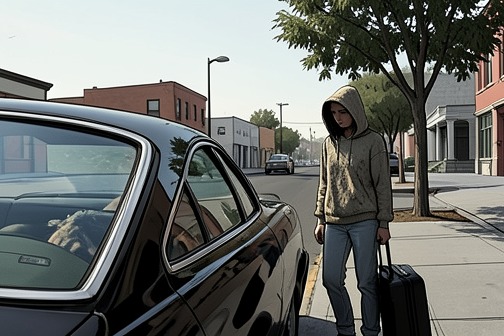
[Shelby and Connor’s move from Los Angeles to Ellensburg](entity:event-recall-event-shelby-and-connor-s-mov-bb871f905b92) is the decisive displacement that begins Shelby’s attempt to reconstruct herself after experiences that made their former city unbearable. Although the move is presented as necessary for both father and daughter, it is not experienced as liberation at first. [Los Angeles](entity:location-recall-location-los-angeles-11eff639bdf5) remains associated with the sea, beaches, sunsets, and the home Shelby considers incomparable, while [Ellensburg](entity:location-recall-location-ellensburg-f2b1300b3b7f) represents an imposed break with the past and the difficult uncertainty of starting again.
## Causes and Background
The relocation is driven by the destructive weight of Shelby’s past in Los Angeles. [Connor](entity:character-recall-character-connor-49e9ac9fb7e5) understands that his daughter is struggling to rise above her demons and fears that she may fall back into her worst condition. He believes that remaining among streets filled with painful memories would keep the past present at every turn, so changing environments becomes an act of protection rather than a rejection of their former home.
Shelby does not blame Connor for the decision, even though she resists it. She understands that he wants the best for her and gradually recognizes that the move was made because the previous life had become inseparable from bad memories. Connor’s reasoning is therefore both practical and emotional: Los Angeles is still their home, but the family needs a different atmosphere in which recovery might become possible.
## What Happens
The new setting is [Central Washington University](entity:location-recall-location-f3f99ea15cd4) in Ellensburg, where Shelby begins university life while still emotionally attached to California. The contrast between the two places governs her early response. She misses the beach, ocean waves, sunsets, and nighttime walks, and Ellensburg seems morose beside the beauty of the Los Angeles home she has left behind. She even wonders whether they might return to Los Angeles during the summer, asking Connor about spending a week there, but he refuses to promise anything and reminds her that completing her first year must come before planning a holiday.
After a difficult session with [Sunmi](entity:character-recall-character-sunmi-46eb799eb5da), Shelby takes the bus to visit Connor. She arrives wearing earphones and walks to a warm-looking house whose facade still impresses her despite her dislike of it. The house cannot compete with the Los Angeles home or its view of the sea, yet Connor’s welcome gives the new place a different emotional meaning. He embraces her, kisses her forehead, and holds her until she feels safe and loved. The move has not made Ellensburg home, but her father’s presence creates a temporary refuge within it.
Connor later sits beside Shelby in the garden and draws her against him. He tells her that she can speak to him and encourages her not to remain isolated. He has noticed that she is not eating and is smoking more often, signs that the relocation has not immediately eased her distress. Shelby admits that he is right, and his concern makes the cost of the move visible: the change of place has removed familiar triggers but has not erased the wounds carried within her.
## Consequences and Aftermath
The move produces a sharp value shift from belonging to estrangement, then toward the possibility of safety. Shelby begins in resistance, grieving Los Angeles and feeling that Ellensburg has no equivalent to the landscape she loves. Yet the new environment also offers distance from the scenes of her former life. Connor’s hope is that the forests and the hidden lake around Ellensburg may eventually become a new place for her to walk and recover, even if she cannot yet accept that possibility.
The relocation also coincides with Shelby’s continuing psychological treatment. She has previously seen a psychologist in Los Angeles and now receives follow-up care from a colleague in Ellensburg, whom she considers kind. Her recovery remains marked by self-harm, an eating disorder, and cannabis use, so the move functions not as a cure but as the physical condition for sustained support. The new city changes the circumstances around her without allowing the narrative to pretend that trauma can be left behind simply by crossing a state line.
Connor is affected as well. He is comfortable in Ellensburg, but he knows that Shelby is not, and he feels guilty about making her endure the transition even while believing it was unavoidable. Their shared past has made Los Angeles both beloved and dangerous. The move thus becomes a joint act of mourning: father and daughter leave behind a beautiful city because its beauty cannot outweigh what happened there.
## Narrative Significance
Shelby’s relocation establishes the novel’s central tension between escape and recovery. Ellensburg is not merely a new address or university setting; it is an attempt to produce a livable distance from memory. The later return to Los Angeles, where the home of [Jungkook](entity:character-recall-character-jungkook-40c36baa104a) and Shelby is identified, gives the move a further structural importance: the displacement is not an absolute erasure of California but part of a longer movement through departure, healing, and eventual redefinition of home.
The event also introduces the contrast between institutional and intimate forms of refuge. Central Washington University and the new therapeutic setting represent formal structures of a new life, while Connor’s embrace provides the immediate security Shelby can still trust. Her body remains reluctant to inhabit Ellensburg, but the relationship with her father gives the unfamiliar space an opening through which belonging may eventually be rebuilt.
As a traumatic transition, the move is defined less by a single dramatic confrontation than by repetition: Shelby repeatedly compares the new place with Los Angeles, repeatedly misses the sea, and repeatedly struggles with isolation and harmful coping behaviors. That repetition shows why relocation alone cannot resolve her suffering. Ellensburg can interrupt the geography of the past, but recovery requires treatment, attachment, and the gradual creation of new meanings in the place where she has been forced to begin again.
Event 2
Sara Anderson’s death

[Sara Anderson’s death](entity:event-recall-event-sara-anderson-s-death-79fc0c9cef65) is the formative bereavement that structures [Shelby Anderson Barnum](entity:character-recall-character-shelby-anderson-bar-2e17bb137697)’s emotional life. Sara dies of generalized cancer when Shelby is eight, leaving behind not only grief but a memory of overwhelming tenderness: a mother imagined as sunlight, whose smile illuminated every place she entered and whose voice felt angelic and calming. The loss becomes both Shelby’s most consoling memory and one of the deepest sources of pain she carries into adulthood.
## The Childhood Loss
Shelby remembers wanting to return to her mother’s arms and describes missing her intensely. In recollection, Sara appears as a radiant, optimistic presence who seemed untouched by the negative side of life. This idealized warmth gives the memory a double force: Sara remains an enduring source of happiness, yet the very vividness of that happiness sharpens the absence created by her death.
The illness transforms that warmth into helpless witnessing. Shelby recalls watching Sara deteriorate from generalized cancer and describes the experience as the first truly severe ordeal she endured with her father. Although seeing her mother so ill caused profound emotional pain, Shelby remained beside her and tried to be her sunshine. The child therefore occupies an impossible role, attempting to comfort the parent while lacking the power to prevent the approaching death.
## Return Through Therapy
The death is not introduced as a detached item of family history. It returns during Shelby’s psychological treatment, where [Sunmi Eun](entity:character-recall-character-sunmi-eun-c82ef680ac18) asks whether there is an element of the past Shelby would want to relive. Shelby answers immediately that she would recover the feeling of being in her mother’s arms, showing how instinctively the loss remains available beneath her guardedness. She can speak of Sara’s joy and voice more readily than of other traumatic experiences, but the recollection still carries an acute bodily charge.
As Shelby describes the cancer and Sara’s death, she begins to cry involuntarily. Her hands tremble, her breathing becomes rapid and difficult to control, and she loses the ability to decide what to say or do next. [Sunmi](entity:character-recall-character-sunmi-46eb799eb5da) responds by taking her hands, soothing their backs, and guiding her breathing while maintaining eye contact. The scene presents mourning as an embodied experience rather than a completed past event: the childhood death continues to produce fear, disorganization, and a need for immediate safety.
## Long-Term Consequences
Sara’s death is one of the losses within the broader history that leaves Shelby struggling to integrate herself with the people around her. Early in treatment, Sunmi identifies that Shelby has difficulty opening herself to others after a past event, while Shelby declines to discuss that event immediately. The therapeutic relationship is consequently built around patience and confidentiality rather than forced disclosure. When Shelby later speaks about the consequences of her trauma, those consequences include self-harm, an eating disorder, and cannabis use, all of which show that her suffering has extended far beyond ordinary sadness.
The novel does not reduce Sara’s death to a single explanation for every later difficulty. Instead, the bereavement becomes part of a layered traumatic history whose effects surface unevenly through avoidance, bodily distress, memory, and dependence on protective relationships. Shelby’s grief can coexist with gratitude for the mother she remembers; the same past contains memories she wants to preserve and experiences she wishes she could remove from her mind.
## Witnessing and Recovery
Sara’s death also gives later acts of listening their moral weight. Shelby needs someone who will not demand immediate disclosure, and Sunmi’s protective attention allows the memory to be spoken without turning it into an obligation to recover on command. Later, when Shelby reveals the depth of another trauma to [Jungkook Jeon](entity:character-recall-character-jungkook-jeon-fc9d9ff5a3bc), his response that he believes her offers immediate relief. That reassurance does not erase Sara’s death or the wounds that followed it, but it establishes a second form of witnessing: Shelby’s pain can be recognized by another person without being doubted or dismissed.
By the conclusion, Shelby and [Jungkook](entity:character-recall-character-jungkook-40c36baa104a) have advanced both separately and together, leaving their demons behind despite the difficulty of doing so. This ending does not undo Sara’s death or promise that grief disappears. It places the bereavement within a wider movement from helpless endurance toward connection, self-knowledge, and a renewed ability to keep living. Sara remains the lost center of Shelby’s childhood, but the memory no longer has to be the only force determining her future.
## Narrative Significance
Sara Anderson’s death is narrated through recollection rather than as a fully dramatized present-time scene, making its delayed return central to its meaning. The event is first encountered through Shelby’s longing for her mother’s arms, then through the concrete memory of cancer, the child’s attempt to be her mother’s sunshine, and the final fact of death. The narrative therefore moves from sensory intimacy to medical suffering and then to bodily collapse in therapy, reproducing the way grief can remain quiet until a question opens it.
The event’s decisive significance lies in its contrast between light and helplessness. Sara is remembered as a sun-like figure, while Shelby’s adult life is marked by fear, self-destruction, guardedness, and difficulty trusting others. Recovery does not require abandoning the luminous memory of Sara; it requires learning to carry that memory without being immobilized by the loss. In this sense, the death is both the origin of Shelby’s deepest sorrow and one of the memories through which she gradually rediscovers tenderness, trust, and the possibility of moving forward.
Event 3
Shelby and Jungkook’s first confrontation
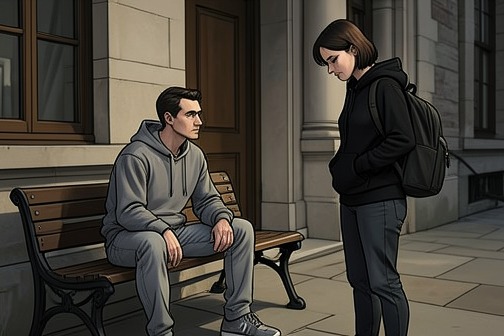
[Shelby and Jungkook’s first confrontation](entity:event-recall-event-shelby-and-jungkook-s-f-6dd90efba32c) is the decisive opening encounter between two wounded students who initially recognize one another through irritation rather than welcome. At the campus entrance, an accidental collision and a demand for an apology turn a fleeting meeting into a contest over dignity. The exchange reveals [Jungkook](entity:character-recall-character-jungkook-40c36baa104a)’s rigid pride and volatility, Shelby’s refusal to submit to social pressure, and an attraction neither character is prepared to acknowledge. What appears to be a trivial dispute therefore becomes the first value reversal in their story: an ordinary university arrival becomes charged with hostility, curiosity, and the possibility of intimacy.
## The Campus Encounter
Jungkook is sitting on a bench near the campus entrance after observing the students moving through the grounds. He has already noticed Shelby during the preceding two months but has not paid much attention to her. Shelby, meanwhile, arrives wearing earphones and listening to "Highway To Hell" by AC/DC, carrying a visible desire to return to California rather than embrace the beginning of university life. Their first contact occurs indirectly. [Dorcas](entity:character-recall-character-dorcas-551d5ed1ad82), walking with her head lowered, collides with someone and falls onto the concrete. She rises without noticing the person she has struck, while Jungkook shouts after her that she should not expect to avoid apologizing.
Shelby turns back when she hears him. Jungkook approaches with a severe expression, a visible vein marking his anger, and an expectation that she will provide the apology he believes is owed. The scene is built around a simple but immediate conflict between accidental harm and demanded accountability. Shelby has not caused the collision deliberately, yet Jungkook treats the absence of an apology as an affront. The narrow dispute gives both characters an opportunity to display the defenses that will govern their later encounters: he presses for recognition, while she resists being commanded.
## Recognition Through Hostility
The confrontation becomes more charged when the two students study one another instead of ending the exchange. Shelby notices Jungkook’s black eyes, the piercing on his right eyebrow, the musculature visible beneath his leather jacket, and the tattoos on his hands depicting Japanese demon masks and lettering across his fingers. She cannot decide whether his appearance is frightening or intensely attractive. Jungkook, looking at her more closely, is affected by her powerful aura and by the fact that her manner is unlike that of the other students. His curiosity surfaces beneath the anger: he wants to know more about her even while he is demanding that she submit to his version of the encounter.
This mutual scrutiny briefly interrupts the argument. Both characters realize that they have been observing each other in a way that exceeds the practical question of who owes an apology. The scene thus places attraction inside antagonism rather than after it. Their bodies and visual details communicate what their dialogue refuses to admit: each has become unusually attentive to the other. The first meeting is not a neutral introduction but a collision of competing defenses, with fascination appearing as an unwanted consequence of resistance.
## The Refusal and Its Immediate Consequences
When Jungkook states that he is waiting, Shelby asks what he is waiting for. He answers that he expects an apology, but she questions why she should offer one when the incident was accidental. His nervous laugh, apparently sharpened by anger, exposes how completely her refusal unsettles him. Shelby then turns away and continues toward the dormitory, leaving him behind in a black rage. The decisive result is not reconciliation but an imbalance: Jungkook expects his authority to end the matter, while Shelby refuses even to acknowledge that he has the right to command her.
[Namjoon](entity:character-recall-character-namjoon-4109d4fa2b00) has witnessed the exchange and laughs at Jungkook afterward. He identifies the unusual nature of what has happened, observing that it is the first time a girl has rebuffed Jungkook since the beginning of university. The mockery matters because it confirms that Shelby has not merely irritated Jungkook; she has disrupted a social identity that others recognize as powerful. Jungkook’s anger is therefore tied to wounded pride, while Namjoon’s amusement turns the confrontation into an event that will remain memorable beyond the two people directly involved.
## Repeated Conflict and Forced Proximity
The first confrontation does not remain an isolated exchange at the campus entrance. Shelby later chooses a seat at the back of an art classroom as a form of protection from teachers, attention, and the rest of the world. Jungkook sits beside her and immediately renews the dispute, saying that he is still waiting for her apology. Shelby answers that he will wait for a long time. Their argument is interrupted by the professor’s exercise, which requires the students to draw whatever comes into their minds for the next two hours. The classroom therefore converts their accidental encounter into enforced proximity and places their opposing temperaments within a shared artistic space.
Shelby responds to the assignment by drawing a glass vase filled with rose stems covered in thorns. The flowers remain beautiful but have begun to wither, while the thorns retain their capacity to wound; the image expresses fragility, anger, hatred, and the passage of time. Jungkook’s demand for an apology meets a visual language that does not offer easy access to Shelby’s interior life. The drawing becomes an early emblem of the relationship itself: beauty is present, but it is surrounded by defenses, pain, and the threat of breakage.
## From Aggression to Care
Although the first encounter establishes Jungkook as easily angered, later crises complicate that impression by showing him repeatedly moving toward Shelby when she is in distress. During an anxiety attack, [Cassiopée](entity:character-recall-character-cassiop-e-2eb1ec801364) initially attempts to approach Shelby, but Shelby cries out in pain and recoils from being touched. At the underground boxing venue, Jungkook finds her trembling and crying in the changing-room shower area, turns off the water, crouches in front of her, and remains beside her until she calms. After she has recovered enough to sit against the cold tile, he asks what she is doing there rather than treating her vulnerability as an inconvenience.
His care becomes more deliberate after she is injured. When Shelby looks at the damage in a mirror and slides down the bathroom wall in tears, Jungkook crouches beside her and places his right hand on her knees, offering contact at a moment when she is actively seeking comfort. He regrets taking her to the place where she was hurt. The gesture does not erase his earlier aggression; instead, it reveals a contradiction at the center of his characterization. The same person who once demanded an apology with a groan and a severe stare becomes capable of staying, waiting, and offering physical reassurance.
That contradiction is also visible in [Sunmi](entity:character-recall-character-sunmi-46eb799eb5da)’s perception of him. While helping Shelby regulate her breathing after Shelby speaks about her mother’s death from generalized cancer when Shelby was eight, Sunmi sees an almost frightening emotional void in her patient. She thinks of another person whose inner darkness once seemed equally inaccessible: Jungkook. The comparison links the two characters before either can articulate the connection. Their first confrontation is retrospectively transformed from a simple clash between strangers into the meeting of two people whose guarded surfaces conceal profound damage.
## Meaning Within the Larger Relationship
The later relationship repeatedly revises the terms established at the campus entrance. Jungkook, who once insists on being obeyed, eventually tells Shelby to stay with him and interlaces their fingers when she tries to move away. Shelby, who first refuses even a demanded apology, later takes his hand while he discloses that [Kayla](entity:character-recall-character-kayla-33460f2ea995) kissed him without his consent; she explicitly identifies the act as sexual assault rather than minimizing his paralysis or allowing his male identity to invalidate his victimhood. Their intimacy consequently challenges the rule imposed on Jungkook during childhood, when [Dong-hyun](entity:character-recall-character-dong-hyun-f4e8bf200fa5) told him that a man never cries. The relationship makes room for fear, tears, touch, and dependence without treating them as failures of masculinity.
The first confrontation also anticipates the pair’s recurring struggle over control and consent. Much later, when [Madison](entity:character-recall-character-madison-53d0d83590ae) informs Jungkook that Shelby is suffering an anxiety attack and believes Madison may hurt her, Jungkook runs to Shelby, embraces her, and calms her through familiar presence rather than force. In the courtroom, before Shelby faces the case connected to her assault, Jungkook promises that he will remain with her whatever happens; she kisses him, and he interlaces his fingers with hers as the audience fills with Cassiopée, Namjoon, and Dorcas, who have come to support her. The hostile demand for an apology has become a chosen promise of presence.
The event’s significance lies in this reversal. The meeting begins with Jungkook trying to impose recognition and Shelby denying him the satisfaction of compliance. It ends, across the larger arc, with recognition becoming mutual: each learns to see the other’s injury, respect the other’s boundaries, and remain present without demanding submission. Their first confrontation is therefore both a conflict scene and a structural seed. Its anger supplies the initial charge, its mutual scrutiny introduces attraction, and its refusal of easy reconciliation creates the difficult path through which Shelby and Jungkook eventually learn to care for one another.
Event 4
Shelby’s panic attack during art class

[Shelby’s panic attack during art class](entity:event-recall-event-shelby-s-panic-attack-d-a01bff0f9c79) transforms an ordinary university exercise into a visible crisis of traumatic memory. While Shelby is trying to imagine a drawing, an earlier scene at [Santa Monica State Beach](entity:location-recall-location-santa-monica-state-b-c1f175735500) returns to her: as a six-year-old, she ran across the sand beneath the affectionate attention of [Connor](entity:character-recall-character-connor-49e9ac9fb7e5) and Sara, fell, and was gathered into her mother’s arms before playing again near an abandoned house. The memory’s apparent innocence becomes the immediate threshold through which her present distress breaks into the classroom.
## Trigger and Memory
During the lesson, Shelby first attempts to organize the image she wants to place on the blank page. Her effort to concentrate is interrupted when the recollection takes hold. The remembered beach scene is saturated with parental tenderness: Connor lifts her onto his shoulders when she reaches for him, while Sara watches over her after the fall. Yet the setting also contains the abandoned house that has stood empty for years, an image of neglect positioned inside an otherwise protective family memory. The narrative therefore places warmth and desolation together before returning Shelby to the classroom.
The attack is not presented as a chosen interruption or a verbal confession. It begins as a bodily seizure of experience. Pain spreads through Shelby’s body, her heart accelerates and tightens in her chest, tears rise, and her breathing becomes rapid. Without saying anything, she abruptly leaves the room, alarming both the teacher and the students. Her flight shows how little conscious control remains once the memory has crossed into the present.
## Flight and Bodily Crisis
Shelby finds an isolated place and covers her pierced ears while trying unsuccessfully to regulate her breathing. Panic and anxiety are figured as oppressive forces clinging to her shoulders, while the surrounding world appears dark even under the sun. This contrast makes the crisis both physical and perceptual: the environment has not changed, but Shelby’s capacity to inhabit it has collapsed.
When [Cassiopée](entity:character-recall-character-cassiop-e-2eb1ec801364) finds her and places both hands on her shoulders, Shelby recoils and cries out in pain. The gesture is not treated as automatically comforting; in the middle of the attack, unexpected touch intensifies her distress. Shelby curls inward and clearly refuses further contact, establishing a boundary that Cassiopée respects. The scene makes her body the most reliable record of her condition, speaking through breath, pain, withdrawal, and tears before Shelby can explain what has happened.
## Cassiopée’s Intervention
Cassiopée remains calm and identifies herself, asking Shelby to look at her. Shelby cannot ask directly to be left alone, but her distressed expression communicates the request’s emotional force. Cassiopée then offers a simple, structured form of help by instructing Shelby to follow her breathing. The intervention does not demand an explanation, force physical contact, or interpret the memory for her. Shelby nods and imitates the rhythm, allowing the immediate crisis to subside.
Over the following minutes, her breathing steadies and the painful pounding of her heart eases. Cassiopée wipes Shelby’s cheeks, and Shelby loosens her legs, unintentionally moving farther away from her companion. Even after the physical symptoms recede, Shelby remains uncertain about how to behave with someone who has witnessed her vulnerability. Cassiopée recognizes that Shelby is not comfortable speaking openly and offers companionship without making disclosure a condition of care.
Shelby’s only verbal response is gratitude. When Cassiopée asks whether she wants to talk, Shelby shakes her head. Cassiopée accepts the refusal, helps her stand by extending a hand, and tells her to rest. She promises to bring Shelby’s belongings to room 33 and to tell the professor that Shelby had been unwell. The practical details matter: care is converted into a concrete plan that returns Shelby to safety without taking control away from her.
## Witnesses and Immediate Consequences
Back in the classroom, [Jungkook](entity:character-recall-character-jungkook-40c36baa104a) remains confused along with the other students. He resumes his work, and his own sketch gradually begins to resemble the image he had imagined. Cassiopée’s return interrupts his concentration again; her drawn expression makes the seriousness of Shelby’s absence visible. She explains that Shelby did not feel well and that she had taken her to her room.
This is the moment when Jungkook learns Shelby’s name. He silently decides to remember it for their next encounter, even though he does not yet understand why the information matters. The attack therefore alters not only Shelby’s immediate circumstances but also the structure of Jungkook’s attention. The student who had been merely the woman who bumped into him becomes a named person whose hidden suffering has entered his awareness.
The episode also becomes part of the wider history of concern surrounding Shelby. Later accounts connect her panic to a broader pattern of traumatic reactions, self-harm, and difficulty trusting others. Her isolation in the classroom crisis is countered by Cassiopée’s intervention, while [Sunmi](entity:character-recall-character-sunmi-46eb799eb5da)’s therapeutic attention later recognizes the extent of Shelby’s psychological fragility. The event thus marks both the severity of her condition and the first visible operation of a support network that does not require her to disclose everything at once.
## Narrative Significance
The attack is framed as a memory-triggered rupture rather than an isolated moment of nervousness. Its sequence is precise: an attempt to draw, the return of childhood imagery, chest pain and accelerated breathing, escape, failed self-regulation, distress at unwanted touch, guided breathing, and gradual stabilization. The value shift is equally clear. A classroom that begins as a place of controlled artistic work becomes a site of danger, then changes into a passage toward temporary safety through Cassiopée’s presence.
The scene also establishes a contrast between two responses to suffering. Shelby’s instinct is withdrawal, silence, and physical self-protection; Cassiopée’s is patience, observation, and assistance without coercion. That contrast becomes important within the larger story, where care repeatedly has to be offered in forms that respect trauma rather than override it. The attack does not resolve Shelby’s pain, but it makes the pain legible to others and gives her a small, concrete experience of being helped without being forced to explain herself.
Event 5
Jungkook’s underground boxing match at Ares Garden

[Jungkook’s underground boxing match at Ares Garden](entity:event-recall-event-jungkook-s-underground-a2d860197947) is a decisive display of the violence that structures his hidden life. In the darkness of [Ares Garden](entity:location-recall-location-ares-garden-5a1d38541469), [Ellensburg](entity:location-recall-location-ellensburg-f2b1300b3b7f), [Jungkook](entity:character-recall-character-jungkook-40c36baa104a) enters an illegal ring where his body is both weapon and commodity, cheered by spectators who throw dollar bills into the arena. The match confirms his reputation as the venue’s emblematic fighter, but it also exposes the trauma, anger, and fragile restraint beneath that reputation: he fights until opponents are unconscious, yet refuses to accept a death on his conscience.
## Setting and Hidden Economy
Ares Garden presents itself as a bar while functioning as a site for illegal fights. [Chen](entity:character-recall-character-chen-1d684f527331), the manager, maintains the establishment’s cover by treating visiting police officers well; some officers watch the bouts, becoming complicit in the corruption that protects the business. The arrangement places the fighters outside ordinary legal protection while leaving them directly exposed to physical danger and financial exploitation. Jungkook’s participation therefore belongs to an economy in which violence is openly consumed but officially denied.
The match takes place on Saturday, September 7, at 23:30, when darkness becomes part of Jungkook’s persona. Night is described as his refuge and chosen terrain, the hour in which he can release the “beast” within him. Before entering the ring, he wraps bandages around his fists and wrists, turning preparation into a ritual of controlled transformation. The bandages do not make the violence safe; they mark the body for use, binding Jungkook to a role that the spectators already recognize.
## The Bout and Its Escalation
Jungkook’s opponent is a large, muscular man who appears physically superior. The gong begins the contest, but Jungkook’s confidence comes from speed, aggression, and experience rather than size. He evades the first right hook, drives his knee into the larger man’s stomach twice, and follows with heavy blows. Instead of immediately seeking a knockout, he deliberately exhausts the opponent so that a final decisive strike will be easier. The crowd’s demands for speed compete with its encouragement, making the fight a performance whose rhythm is shaped by spectators as much as by the fighters.
The strategy changes when the opponent manages to hit Jungkook in the face. Jungkook absorbs several blows before rising and fixing the man with a dark stare. The opponent then directs racist insults at him. That provocation transforms the contest from calculated combat into uncontrolled retaliation. Jungkook answers with repeated punches delivered without restraint, and the spectators show no shock at the sudden brutality. His anger does not merely intensify the fight; it appears to erase the difference between winning and destroying.
Jungkook’s rage reaches its most dangerous point when he senses his opponent’s bones breaking and his muscles giving way. He raises his fist for what could have been a fatal blow, but the referee enters the ring and stops him, awarding Jungkook the victory while the unconscious opponent is removed in grave respiratory distress. The official decision names a winner, yet the scene makes clear that the referee’s intervention, rather than Jungkook’s own calm judgment, prevents the bout from becoming a killing.
## Rage, Restraint, and Complicity
[Namjoon](entity:character-recall-character-namjoon-4109d4fa2b00) watches from between the stands. He knows Jungkook is an underground boxer and understands how far the young man may go when he needs to discharge his anger. Unlike the audience, Namjoon is not simply entertained by Jungkook’s ferocity; he is afraid of it. His concern identifies the fight’s central contradiction: Jungkook’s violence is publicly rewarded as skill, while the person closest to him recognizes it as a destructive force capable of consuming anyone who comes too near.
After the match, Chen takes Jungkook to the changing rooms, praises his performance, and promises to pay him. Jungkook showers, massages his injured knuckles, and reflects on the man’s racist remarks. He believes he could have killed the opponent if he had truly wanted to, but also recognizes that intervention prevented him from doing so and that resisting would have brought a sanction. This is not complete moral control. It is a narrow restraint produced by external limits, fear of punishment, and the remaining knowledge that another person’s life cannot be treated as merely part of the spectacle.
Chen then gives Jungkook a substantial amount of money, enough to make him smile. The payment completes the transaction: injury, rage, and the risk of death have been converted into cash. Jungkook thanks Chen before leaving with Namjoon. The smile does not cancel the violence; it shows how the illegal economy makes that violence materially useful, reinforcing the cycle that keeps drawing him back to Ares Garden.
## Origins of the Violence
The bout also carries the pressure of a much older violence. Years earlier, in a house in Gangnam, [Seoul](entity:location-recall-location-9736e5d4feee), eight-year-old Jungkook tried to intervene while his parents fought downstairs. His older brother, [Ye-jun](entity:character-recall-character-ye-jun-e26530f9fe6e), held him back because he feared that the child would place himself in danger, but Jungkook broke free as the shouting intensified. His anger was directed not only at the quarrel but at the helplessness of being unable to stop it. The underground ring later offers a distorted answer to that childhood powerlessness: instead of remaining trapped beneath other people’s violence, Jungkook becomes the person capable of imposing it.
[Sunmi](entity:character-recall-character-sunmi-46eb799eb5da)’s recollection makes the connection more explicit. When Jungkook first came to her house with a badly injured face, he claimed that he had fought at school and that Namjoon had rescued him. Sunmi eventually learned that his father had beaten him, and at sixteen Jungkook fled his home and sought refuge with her. She welcomed him, while remaining increasingly worried about the darkness surrounding him and the things he began to touch as an adolescent. The Ares Garden fight is therefore not an isolated act of youthful recklessness. It is a later form of behavior shaped by domestic abuse, secrecy, flight, and the absence of dependable protection.
## Repetition Beyond the Ring
Ares Garden becomes a recurring structure in Jungkook’s life rather than a single location for one contest. Before another scheduled fight, he packs his sports bag, drives to the establishment, and insists that preparation must come first when Chen remarks that he is early. The venue’s bar façade continues to conceal the illegal boxing operation, while Chen’s relationship with corrupt police protects the business from exposure. Jungkook’s return shows that the money and the temporary release offered by combat outweigh his awareness of the danger, at least for a time.
That repetition is set against his other attempts to construct an identity through skilled bodily work. At a tattoo shop, [Abby](entity:character-recall-character-abby-ac246d0bcb18) pierces his nipples, and Jungkook treats the pain as intensely pleasurable rather than something to avoid. Much later, after moving into tattoo work at N’s Ink, he discusses building a flash portfolio and waiting for his first client. These scenes do not erase the boxing career, but they reveal competing ways of using the body: the ring turns injury into spectacle and income, while tattooing transforms pain and control into a chosen craft. The contrast helps explain why the boxing match matters so much to his trajectory: it is both a livelihood and a destructive identity from which another future must eventually emerge.
## Effects on Those Around Him
The violence of Ares Garden repeatedly crosses the boundary between Jungkook and the people who care for him. Namjoon’s presence at the match is protective but limited; he can recognize the danger, encourage his friend, and worry about the point at which anger may carry him, yet he cannot control what happens once the gong sounds. Later, Namjoon tells Sunmi that Jungkook has relapsed into his destructive behavior and refuses the help he urgently needs. The concern that begins in the stands thus becomes an ongoing burden shared by his closest relationships.
Shelby’s encounters with Jungkook further complicate the meaning of the ring. After she suffers a panic attack at Ares Garden because she encounters the man who harmed her, Jungkook describes the event to Sunmi among the many accidental meetings that have begun to unsettle his life. When Shelby later breaks down, Jungkook remains beside her rather than demanding contact, and, in another crisis, he runs to her when [Madison](entity:character-recall-character-madison-53d0d83590ae) reports what has happened, holds her, and helps her regain a normal breath. His capacity for care does not negate the brutality displayed in the ring, but it establishes a consequential contrast: the same person who nearly destroys an unconscious opponent can also learn to respond to another person’s fear with patience and physical reassurance.
Shelby’s change becomes visible to others as well. [Dorcas](entity:character-recall-character-dorcas-551d5ed1ad82) observes that she is more open and less cold, and credits the improvement primarily to therapy while acknowledging Jungkook’s importance. Jungkook resists taking sole credit, recognizing Sunmi’s professional help and Shelby’s own work of moving forward. This exchange matters to the boxing match’s aftermath because it places his violent persona beside a developing ethic of responsibility. He is no longer defined only by what he can do to another body; he is also measured by whether his presence makes another person safer.
## Narrative Significance
The match crystallizes the book’s recurring opposition between darkness as refuge and darkness as threat. Jungkook enters the night believing that it permits him to become whoever he wants, and the ring gives that belief a public form. Yet the fight reveals that the hidden self he releases is not freely chosen in any simple sense. It is fed by childhood fear, accumulated anger, racist humiliation, economic need, and an institution that rewards escalation while pretending to be only a bar.
Its decisive image is the raised fist halted at the edge of a fatal act. Jungkook does not independently complete the movement toward mercy; the referee intervenes, and the possibility of punishment also constrains him. Nevertheless, the fact that he knows he could have killed the man and does not resist the stoppage leaves open the possibility of change. The later scenes of friendship, therapeutic support, creative work, and tenderness do not present an instant conversion. They show a gradual contest between the identity Ares Garden pays him to perform and the more difficult identity formed through restraint, care, and recovery.
Event 6
Shelby’s assault and hospitalization
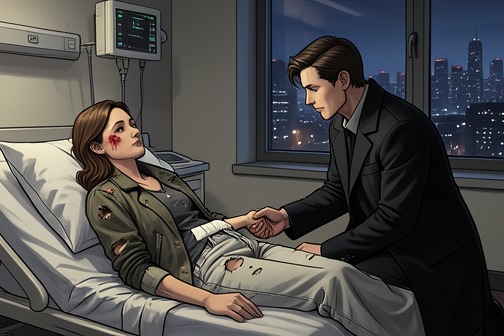
[Shelby’s assault and hospitalization](entity:event-recall-event-shelby-s-assault-and-ho-c0b913eae668) is a turning point built around a sudden reversal: an evening in which she is trying to escape other people ends with her dependent on the reluctant help of [Jungkook](entity:character-recall-character-jungkook-40c36baa104a), one of the people with whom she has the least affinity. The attack leaves her wounded and unconscious, but the encounter also begins a pattern in which Jungkook’s physical presence becomes unexpectedly reassuring to her. The episode connects Shelby’s private distress to visible danger, medical vulnerability, and the beginnings of a difficult bond.
## Causes and Background
Before the attack, Shelby is already in a state of acute distress. After a call with [Connor](entity:character-recall-character-connor-49e9ac9fb7e5), she hangs up abruptly and throws her phone onto a bed disordered by a night of nightmares. Wanting air, she pulls on jeans and boots, puts up her hood, and hurries outside. When she spots [Dorcas](entity:character-recall-character-dorcas-551d5ed1ad82) and [Cassiopée](entity:character-recall-character-cassiop-e-2eb1ec801364), she panics. Dorcas recognizes her and approaches, relieved to see her, but Shelby flees rather than accept the contact. Her attempt to find solitude takes her away from the university and into downtown [Ellensburg](entity:location-recall-location-ellensburg-f2b1300b3b7f).
The flight matters to the scene’s shape: Shelby is not seeking confrontation, and the danger does not arise from a dispute she has chosen to pursue. At 20:16, she hears a whistle behind her, recognizes its threatening implication, and quickens her pace. A man catches up and seizes her arm. His breath reeks of alcohol, his face is badly bruised, and his appearance suggests that he has recently been in a fight. When Shelby tries to pull free, he tightens his grip. Her fear escalates as his control of her movement becomes physical.
## The Attack and Rescue
Shelby shouts for the man to let her go, then strikes him in the stomach with her knee and manages to free her arm. He immediately grabs her by the throat and pins her against a wall. When he draws a pocketknife, she tries to strike his face, but he moves faster and stabs her in the abdomen. He lets her go, looks around, and runs off, leaving her on the ground. The assault turns her attempt to protect herself into a struggle for survival; her resistance does not prevent the injury, but it creates the brief opening through which she can get away from him.
Despite the wound, Shelby manages to stand and tries to find her way while holding her abdomen. At a red light, Jungkook sees a figure collapse and notices passersby gathering around it. He puts on his car’s hazard lights, gets out, and recognizes Shelby. He lifts her and holds her against him as the bystanders watch. Shelby is still conscious, partly because an older woman has been speaking to her calmly. Although she wants to pull away from Jungkook, she also finds herself leaning into the warmth and security of his embrace. Jungkook tells the onlookers that she is his friend and that he will take her to the hospital.
## Hospitalization and Immediate Aftermath
Jungkook places Shelby in the back seat of his black [1968 Ford Mustang GT](entity:object-recall-object-1968-ford-mustang-gt-f290e2b6da82) and drives her to the hospital. She stirs at the sound of his voice but cannot keep her eyes open. By the time they arrive, she is unconscious. Jungkook carries her inside, frightened by the possibility that she might die beside him, and a doctor takes her into care. His uncertainty about why he has stayed is part of the scene’s tension: he says that he barely knows Shelby and that she is only a first-year student he sometimes sees on campus. When medical staff ask him to identify her so he can complete the paperwork, he admits that he cannot provide much information. He nevertheless sits back down rather than leave, and guilt settles over him.
Shelby wakes in a hospital room, a place she intensely dislikes, and panics. After an examination, the doctor authorizes her to leave. When she dresses, she realizes that her top and hoodie are missing. The hospital gown makes her feel exposed; the realization that others have seen her undressed brings a shiver of fear and disgust. At the reception area, she finds Jungkook paying the hospital expenses, though without enthusiasm. Noticing that she has no suitable top, he takes her wrist and leads her to an empty room. His abrupt handling is not presented as comfortable for her, but he turns away while she changes into his black hoodie. Its scent, associated with spring, unexpectedly reassures her. The moment makes care tangible through an ordinary object, even as the manner of offering it remains rough-edged.
The doctor tells Jungkook that Shelby is weak and lacks iron and vitamins, and that the assault has worsened her condition. Once she has completed the necessary forms, they leave together in his car. Shelby is fascinated by the vintage vehicle; Jungkook, in turn, looks at her with new curiosity, now aware that her physical vulnerability is more serious than he had expected.
## Care, Trauma, and the Event’s Significance
Jungkook does not stop at the hospital. At 22:31, he parks at [Central Washington University](entity:location-recall-location-f3f99ea15cd4), carries the sleeping Shelby to the student dormitory, asks the attendant for her room, and takes her to room 33. After laying her on the bed and removing her shoes, he is about to leave when she begins to cry and move restlessly in her sleep. He sits beside her and holds her right hand. The simple gesture surprises him, since tenderness is unfamiliar to him, but Shelby gradually calms. The rescue thus continues after the immediate medical crisis: his presence gives her a measure of comfort when she cannot consciously ask for it.
The episode also gains meaning from the book’s later scenes of distress and care. In a separate earlier episode, Cassiopée discovers that Shelby recoils from unexpected touch during a panic attack; later, Jungkook finds her crying in a shower at the boxing gym and stays beside her without knowing what to do. When Shelby breaks down in another crisis, [Madison](entity:character-recall-character-madison-53d0d83590ae) recognizes that she needs help and fetches Jungkook, whose embrace and familiar spring scent help her recover her breath. These repetitions do not make the original attack the sole cause of Shelby’s trauma, but they show how bodily fear and the need for safety recur in her story—and how support depends on recognizing when contact may frighten her as well as when it may comfort her.
Jungkook’s decision to remain with Shelby is significant precisely because it begins without established affection or obligation. Their connection is still uncertain, and he does not claim to understand what she has endured. Yet the event shifts their relationship from mutual distance toward an imperfect form of practical care: a hospital bill paid, a hoodie offered, a journey back to her room, and a hand held through a nightmare. The rescue does not resolve Shelby’s vulnerability, but it gives the story an early image of safety arriving from an unexpected source.
Event 7
Jungkook and Andrew Wilson’s motorcycle race

[Jungkook and Andrew Wilson’s motorcycle race](entity:event-recall-event-jungkook-and-andrew-wil-c8d8706c3b2d) is a decisive escalation of the rivalry between two young men who measure dignity through dominance. The event begins as an illegal nighttime road race in [Ellensburg](entity:location-recall-location-ellensburg-f2b1300b3b7f), with [Jungkook](entity:character-recall-character-jungkook-40c36baa104a) returning to the danger and exhilaration that also draw him toward underground boxing at [Ares Garden](entity:location-recall-location-ares-garden-5a1d38541469). He wins the race, but the victory does not settle the contest: Andrew’s humiliation becomes the immediate cause of a fight, transforming a sporting challenge into a public test of pride, anger, and restraint.
## Causes and Background
[Namjoon Kim](entity:character-recall-character-namjoon-kim-0444585766b6) introduces the possibility of the race after noticing that Jungkook has just left an intimate encounter and is still visibly unsatisfied. Jungkook accepts immediately because he has never been able to refuse this kind of danger. The invitation brings him back into a world organized by speed, spectacle, and risk, much as the Ares Garden ring does. His [Harley-Davidson Iron 1200 2018](entity:object-recall-object-harley-davidson-iron-1-a58194989dc0) has been taken out of the garage at [Namjoon](entity:character-recall-character-namjoon-4109d4fa2b00)’s mother’s house, making the race a concrete return to an activity that had been waiting for him.
The setting is an improvised nighttime racing scene on one of Ellensburg’s major streets. Motorcycles fill the road, ranging from heavy, imposing machines to more refined and elegant models. The participants and spectators are united by the same attraction to danger: the riders seek the physical rush, while the crowd watches for proof of superiority. Jungkook enters this environment already prepared for confrontation. He adjusts his black leather jacket, cracks his knuckles, surveys the people around him, and treats the start of the race with the same readiness he displays before a fight.
[Andrew Wilson](entity:character-recall-character-andrew-wilson-e9467e031ed1) is not an anonymous competitor. He is the son of the manager of [The Obsidian](entity:location-recall-location-the-obsidian-9be4a3c83eb9), Ellensburg’s largest private club, and Jungkook knows him as a privileged young man who cannot tolerate defeat and will do almost anything to reach his goals. Their rivalry therefore carries a social dimension as well as a personal one. Andrew’s status and entitlement contrast with Jungkook’s harder, more precarious relationship to danger, but both men enter the race seeking more than transportation or amusement: each wants to establish control in front of an audience.
## The Race
A young woman announces the contest, raises the flag, and steps aside while a man counts down through a megaphone. Once the start is given, Jungkook accelerates first and becomes absorbed in the road ahead. His hands grip the handlebars, his heart races, and the pleasure of speed produces the same bodily intensity that he seeks in the ring. He briefly cries out with sudden joy and laughs, then immediately recovers his concentration. The sequence presents adrenaline as both exhilaration and dependency: danger makes him feel alive, yet the need to pursue that sensation also makes him vulnerable to escalation.
Jungkook takes a turn aggressively and cuts across the course. The road is empty of ordinary traffic, allowing the race to proceed without interfering motorists, but the absence of public regulation does not make the contest safe. Behind him, the other riders struggle to overtake him. One competitor reaches his level and gives him the finger while passing, provoking Jungkook to press harder on the accelerator rather than accept the challenge.
The competitor beside him is Andrew. Andrew tells Jeon to give up and insists that Jungkook will not win. Jungkook rejects the prediction, then answers without further argument by delivering one final burst of acceleration. He reaches the finish first and crosses the line several metres ahead. The surrounding crowd immediately celebrates him, and Namjoon rushes forward to embrace his best friend. In the narrow terms of the race, Jungkook has secured the desired value: he has converted danger into victory and public excitement into recognition.
## From Competition to Violence
The victory produces no reconciliation. Andrew calls out to Jungkook, approaches with hatred in his eyes, and grabs him by the collar. Jungkook responds with a malicious smile and insults Andrew rather than withdrawing. Andrew accuses him of enjoying the humiliation, while Jungkook answers that Andrew has humiliated himself by pretending to be a bad boy while behaving like an immature attention-seeker.
Andrew strikes Jungkook in the face without waiting for the argument to continue. Jungkook laughs harshly and retaliates without restraint. He seizes Andrew by the throat with his left hand and drives his right fist into Andrew’s stomach. The crowd does not separate them. Instead, the spectators encourage the violence, treating the dispute as a second contest whose entertainment value exceeds any concern for the participants’ safety. The race has therefore changed value: the formal result is already settled, but wounded pride reopens the competition and turns victory into a fresh demand for domination.
Namjoon is trapped by the crowd and initially cannot intervene. As Jungkook’s rage intensifies, however, Namjoon finds an opening, moves through the spectators, and pulls his best friend out of the unnecessary fight. His intervention breaks the momentum of the confrontation without resolving the hostility between the two rivals. He reduces the immediate danger, but the pattern remains intact: Andrew converts defeat into aggression, Jungkook answers aggression with greater force, and Namjoon assumes the protective role required to keep Jungkook from being consumed by the conflict.
## Consequences and Significance
The motorcycle race is significant because it compresses Jungkook’s broader relationship with danger into a single sequence. He pursues speed for the euphoric sensation it creates, treats the race as another arena comparable to Ares Garden, and experiences adrenaline as a preferred means of feeling alive. Yet the same appetite that gives him confidence also makes him quick to answer provocation. The scene does not present victory as an endpoint; it shows how easily achievement becomes another trigger for violence when pride remains more powerful than self-control.
The event also establishes Andrew as a direct adversary rather than merely a rival on the road. Their exchange continues beyond the finish line, and the physical fight makes their antagonism visible to the entire crowd. Because Andrew is connected to The Obsidian, the confrontation links Jungkook’s personal volatility to the wider network of private clubs, underground competition, and status-based hostility surrounding Ellensburg.
The race stands in sharp contrast to the later evidence of Jungkook’s need for care and recovery. His childhood memories include [Ye-jun](entity:character-recall-character-ye-jun-e26530f9fe6e) Jeon holding him back while their parents fought in the kitchen, and his history with [Sunmi Eun](entity:character-recall-character-sunmi-eun-c82ef680ac18) begins when she recognizes that the injuries he once attributed to a school fight were actually inflicted by his father. He later ran away at sixteen and was welcomed into [Sunmi](entity:character-recall-character-sunmi-46eb799eb5da)’s home, while Namjoon continued to worry about the darkness and dangerous substances surrounding him. Against that background, the race is not simply a recreational episode. It repeats a learned pattern in which conflict is met through physical force, while Namjoon’s attempt to remove Jungkook from the fight offers a competing model of protection.
The consequences extend into the relationships around Jungkook. Namjoon’s concern is repeatedly visible when Jungkook loses control, and his intervention here anticipates the later moments in which he and Sunmi respond to Jungkook’s relapse and refusal of help. By contrast, Jungkook’s eventual ability to contribute to [Shelby Anderson Barnum](entity:character-recall-character-shelby-anderson-bar-2e17bb137697)’s happiness is associated with a gentler transformation that he himself downplays, attributing her greater openness primarily to her therapist and her own effort to move forward. The motorcycle race belongs to the earlier, harsher stage of his arc: it shows the destructive reflex before the possibility of change becomes visible, and it makes clear why friendship, treatment, and accountability are necessary counterforces to his attraction to danger.
Event 8
Jungkook’s retaliation against Shelby’s attacker

[Jungkook Jeon](entity:character-recall-character-jungkook-jeon-fc9d9ff5a3bc)’s retaliation against [Shelby Anderson Barnum](entity:character-recall-character-shelby-anderson-bar-2e17bb137697)’s attacker at [Ares Garden](entity:location-recall-location-ares-garden-5a1d38541469) turns her trauma into an immediate confrontation and exposes the danger in [Jungkook](entity:character-recall-character-jungkook-40c36baa104a)’s instinct to answer harm with violence. The episode begins with Shelby’s panic after spotting the man among the spectators at a boxing match; it ends with [Chen Wu](entity:character-recall-character-chen-wu-8a530e94a8d8) forcing Jungkook to stop and warning the attacker away. Protection and vengeance become difficult to separate, even as the scene shows that the man’s removal depends on intervention rather than Jungkook’s rage alone.
## Recognition and Panic
Shelby enters the bar at Ares Garden for a soda, initially occupied by its boxing memorabilia. The gloves, fight photographs, prizes, and diplomas recall childhood afternoons watching boxing and wrestling with her father, [Connor Barnum](entity:character-recall-character-connor-barnum-d9322612abb3). When the crowd moves through a large door toward the ring, curiosity draws her after them. The packed stands and the imposing figure near the ring unsettle her, but she also feels an unfamiliar rush of adrenaline. Then Jungkook steps into view, smiling at the audience, and she studies the tattoos covering his arms.
The match changes the atmosphere. Jungkook’s blows are forceful, and Shelby sees his anger and pride in the way he attacks his opponent. His dark expression frightens her. She turns to leave, but recognizes someone nearby: the man who assaulted her. Her response is immediate and physical. She collapses to the floor, and [Chen](entity:character-recall-character-chen-1d684f527331), toward whom she has instinctively moved for refuge, helps her up. Her trembling worsens as he leads her upstairs; the crowd and the fight have become secondary to the person she has recognized.
In the locker room, Jungkook finds Shelby shaking and crying beneath a running shower. She is still dressed. He turns off the water, crouches in front of her, and stays beside her while she tries to calm down, though he does not know what to do or how to help. Once her breathing has eased, he asks what brought her there. Shelby names the episode as a panic attack and explains that the man who hurt her was in the audience. Jungkook asks what he looks like, but she tells him Chen has already gone to confront him.
## Jungkook’s Attack and Chen’s Intervention
The news changes Jungkook’s focus at once. He puts his hands on Shelby’s shoulders and fixes his attention on her as he asks about the attacker. The gesture is protective in intent, but it disregards her discomfort: the scene has already established how vulnerable she is to unexpected contact, and she had recoiled when touched during a separate panic episode. Jungkook does not stay to ask more. He rushes out of the locker room, pushing past people until he reaches the bar and sees Chen with the man.
Jungkook attacks without pausing to think. He grabs the man by the collar and slams his head against the counter, then punches him repeatedly. The blows leave the attacker’s face unrecognizable and blood flowing. Chen has never seen this degree of violence from Jungkook. He tries to pull Jungkook away, but at first cannot stop him; Jungkook’s left hand closes around the man’s throat. When the attacker begs to be released, Jungkook says he will send him to the hospital as the man had done to Shelby. His words make the retaliation’s logic explicit: he casts the beating as repayment for the harm done to her.
Chen finally seizes Jungkook’s right arm and yanks him back. He then gets the attacker to his feet and orders him to go home and never return to Ares Garden. Chen warns that if the man comes back, he will let Jungkook finish what he started, while making clear that the consequences could be worse than another trip to the hospital. The frightened man leaves, promising himself he will not return. Chen’s warning removes the immediate threat from the venue, but it does so through a threat of further violence rather than through any formal process described in the scene.
## Aftermath in the Locker Room
Chen next orders Jungkook, sternly, to return upstairs without arguing. Jungkook obeys in silence. Back in the locker room, Shelby gets up when he enters and notices the blood covering his knuckles. He says nothing and goes to shower. She turns away as he prepares to undress, then curls in on herself and closes her eyes when the water starts. Its steady sound holds her attention while Jungkook washes.
Afterward, Jungkook sits in front of her wearing only his underwear. Shelby’s gaze moves over the tattoos on his hands: [Love](entity:expression-recall-expression-love-8b9254c84bfa) on the left-hand knuckles and [Hate](entity:expression-recall-expression-hate-89c9135f96f3) on the right. She does not yet understand their significance. The image follows the confrontation without explaining away its contradiction: the man who stayed beside her while she cried has just inflicted extreme violence on someone else. Jungkook himself cannot account for the surge of rage. He recognizes that he has no obligation to Shelby and does not think of himself as a just person, yet the attack has already happened. The narrative leaves his impulse unresolved rather than presenting it as a settled moral principle.
## Significance and Later Context
The retaliation is a sharp turn from helplessness to action, but not a simple restoration of safety. Shelby’s distress begins in a crowded public space, where the attacker’s presence makes escape and composure feel impossible. Jungkook’s response gives that recognition an immediate consequence, yet his violence introduces another danger into the scene. Chen’s intervention is decisive: without it, Jungkook does not stop when the first attempts to separate them fail. The sequence therefore links care to restraint as well as to protective action.
The episode also sits within a wider pattern of people responding to Shelby’s panic in different ways. [Cassiopée Smith](entity:character-recall-character-cassiop-e-smith-7af6a7136600) remains calm after Shelby recoils from touch during an earlier crisis, while Jungkook initially waits beside her in the locker room rather than forcing her to explain herself. Later, when [Madison Jefferson](entity:character-recall-character-madison-jefferson-657bf438d528) finds Shelby in another panic attack and alerts Jungkook, he runs to her and comforts her until her breathing returns to normal. These later responses do not erase the forceful shoulder-grab at Ares Garden; together, the scenes show the unevenness of his understanding of what support requires.
[Namjoon Kim](entity:character-recall-character-namjoon-kim-0444585766b6) later describes Shelby and Jungkook as two lost people who keep searching for themselves and each other, a bond that has formed through their unexpected encounters and is likely to be tumultuous. The Ares Garden incident gives that bond one of its defining tensions: Jungkook can remain with Shelby in distress, but his attempt to defend her can also become uncontrolled aggression. When a friend later credits him with contributing to Shelby’s growing openness, Jungkook redirects the credit toward her therapist and her effort to move forward. That distinction clarifies the episode’s place in his arc. His rage may reveal attachment, but it is not itself healing; the story’s broader movement toward care depends on support that helps Shelby regain agency and on Jungkook learning that protection need not mean striking back.
Event 9
Shelby and Jungkook’s forced art partnership
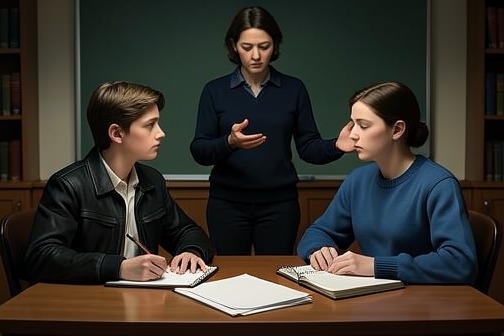
[Shelby and Jungkook’s forced art partnership](entity:event-recall-event-shelby-and-jungkook-s-f-7548dc6ee683) is the first extended collaboration imposed on the two students, and its importance lies in the change it makes visible: despite their antagonism, they can work toward a common result without one of them provoking or derailing the other. What begins as an academic obligation becomes an early rehearsal for trust, mutual recognition, and the later creative bond between them.
## Assignment and Immediate Resistance
The partnership is created during an art-history class at [Central Washington University](entity:location-recall-location-f3f99ea15cd4). The teacher announces that the students must form pairs for an assignment on ancient Greek art and specifies that each student will work with the person seated beside them. Shelby and [Jungkook](entity:character-recall-character-jungkook-40c36baa104a) look at one another as though they have no choice, because they do not. [Cassiopée Smith](entity:character-recall-character-cassiop-e-smith-7af6a7136600) and [Dorcas Peters](entity:character-recall-character-dorcas-peters-cc0824b30f37) immediately notice their closed expressions, reading the assignment as an unwelcome pairing rather than a promising artistic alliance.
Jungkook asks whether they should meet in his room or Shelby’s to complete the work. Shelby rejects both options and chooses the [Central Washington University Library](entity:location-recall-location-6af4138fcfc9) instead, then leaves quickly for her next class. Jungkook watches her go with a playful, mocking smile because he had expected her to impose a neutral location. The exchange establishes the project’s initial imbalance: Jungkook treats the arrangement with amusement, while Shelby tries to control the circumstances tightly enough to prevent unnecessary intimacy or conflict.
## The Victory of Samothrace
At 15:25, in the Central Washington University Library, Shelby searches through books on ancient Greek art. She reaches for a volume that catches her interest but cannot take it from the shelf; Jungkook’s hand retrieves it and passes it to her. She avoids his eyes, then sits at a table and opens the book without wasting time on conversation. She dislikes group work and would prefer to complete the assignment alone, but the imposed partnership leaves her no alternative.
Shelby finds inspiration in the sculpture of the Victory of Samothrace. When Jungkook asks what she is looking at, she quietly tells him that the sculpture inspires her. He takes the book and examines the image attentively, recognizing that she has selected a strong subject. Rather than insisting on a broader search, he agrees that they can base the project on that work. His quick acceptance contrasts with Shelby’s expectation that he might resist or complicate her choice, while the sculpture supplies a shared object on which their attention can settle.
The library setting also disciplines their interaction. Shelby repeatedly insists on quiet, and Jungkook must moderate his voice and behavior around the books and other students. The partnership therefore develops through practical actions rather than declarations: finding the source material, choosing an artwork, sitting opposite one another, and converting separate observations into a workable plan.
## Working Methods and Creative Negotiation
Once they move to Jungkook’s room, Shelby studies the space before beginning. The room is orderly apart from a few clothes, and she notices his matte-black Fender guitar and audiovisual equipment. These objects reveal an artistic identity extending beyond boxing and suggest that his creative work is not confined to the assignment. Jungkook proposes that they make sketches separately and decide later how to proceed. Shelby agrees with a nod, sits on the floor rather than on the bed or the small armchair, and takes out her sketchbook and pencil.
Their first stage is deliberately parallel. Each draws independently, reducing the chance that disagreement will become interference. Shelby stains her shirt and goes to the bathroom to clean it. Jungkook hands her another shirt while keeping his gaze on the floor, and she puts it on, noticing the scent associated with him. The moment remains awkward, but his gesture is practical and considerate rather than confrontational; the project is already creating small forms of cooperation outside the drawing itself.
They produce several sketches and gradually discover that their differences do not prevent concentration. For the first time, they work without arguing or disrupting one another. Shelby remains dissatisfied with aspects of her own drafts, while Jungkook studies his drawings with a perfectionist attention that makes him notice a defect even in a preliminary sketch. He sees that Shelby is visibly nervous and burdened by her emotions, yet he does not press her to explain herself. Instead, he examines the work she offers him and acknowledges that the drawings are beautiful, although he limits his spoken response to calling them “Not bad.”
Shelby, in turn, compliments Jungkook’s sketches. Her praise surprises him, and he answers with a smile and an inclination of his head rather than a defensive joke. He then selects one drawing from each of them, deciding that the two can be combined. Shelby agrees immediately and suggests that they begin at once, although her eagerness also reflects a wish to finish and leave. Jungkook teases her about being in such a hurry, but he accepts her silence as confirmation and takes out an A2 sheet.
The final drawing is therefore neither wholly Shelby’s nor wholly Jungkook’s. Shelby begins reproducing the sculpture in pencil, and Jungkook follows her while taking care not to disturb her. They keep working for minutes that become hours, turning separate drafts into a composite image. The process gives form to a new value: the assignment begins as an unwanted restriction, but the act of making together shifts it toward competence, recognition, and limited mutual ease.
## Consequences and Narrative Significance
The project does not erase their differences, and Shelby still wants distance while Jungkook retains his teasing manner. Its achievement is more precise and more modest. They learn that proximity does not necessarily produce a quarrel, that each can evaluate the other’s work without surrendering personal standards, and that their artistic abilities are compatible enough to create something neither could have produced in exactly the same way alone.
The partnership also places their contrasting forms of labor side by side. Jungkook is preparing for an underground fight at [Ares Garden](entity:location-recall-location-ares-garden-5a1d38541469) while participating in the university assignment, moving between a dangerous illicit economy and an academic exercise in historical art. Shelby carries a sketchbook, chooses the sculpture, and controls the practical conditions of collaboration, while Jungkook contributes visual judgment, technical persistence, and the willingness to merge their drafts. The project thus connects bodily risk, artistic skill, and institutional education without treating them as separate worlds.
Its later significance is retrospective. Jungkook’s artistic life continues through tattooing, audiovisual equipment, and professional work, while Shelby and Jungkook eventually develop a shared photographic project. Their forced classroom pairing is the earliest clear instance in which their relationship can be organized around making rather than conflict. Even before affection or open trust becomes possible, the Victory of Samothrace project gives them a language of joint attention: two people who initially want to avoid one another discover, stroke by stroke, that cooperation can be less painful than resistance.
Event 10
Jungkook et Shelby échangent leur premier baiser

[Jungkook et Shelby échangent leur premier baiser](entity:event-recall-event-jungkook-et-shelby-chan-168a78a2e544) marks the decisive shift in the relationship between [Jungkook](entity:character-recall-character-jungkook-40c36baa104a) and Shelby: attraction, previously expressed through tension and reluctant care, becomes an embodied experience neither can dismiss. At 20:40 in [Ellensburg Forest](entity:location-recall-location-ellensburg-c91d43040afb), the two students kiss on a ponton after drinking, discovering a form of intimacy that briefly suspends their defenses before forcing both to confront their fear of what the gesture means.
## Setting and Immediate Circumstances
[Forêt d'Ellensburg](entity:location-recall-location-for-t-d-ellensburg-30a43ddd7b59) is presented as a space removed from the ordinary pressures of university life. The scene takes place at night, and the ponton becomes the setting for a private encounter in which the two are isolated together. Alcohol lowers their restraint, but it does not create the attraction from nothing. Their sustained eye contact has already become a temptation, and Jungkook acts without waiting any longer. The kiss therefore grows from accumulated tension as much as from the immediate circumstances of the evening.
The return journey also contains a concrete sign of their temporary dependence on one another. Shelby’s phone has run out of battery, so Jungkook alone uses the flash on his phone to find the vehicle. The practical detail contrasts with the emotional disorientation that follows: he can illuminate the path back, but neither of them knows how to interpret the intimacy they have just shared.
## The Kiss
Jungkook presses his lips to Shelby’s and begins gently before making the kiss more intense. Shelby responds by closing her eyes and placing her hands around his neck, while Jungkook holds her hips and then draws her closer with his arms behind her back. Their bodies communicate before either character can formulate an explanation. The scene emphasizes reciprocal movement rather than one-sided pursuit: both participate, both deepen the contact, and both remain physically engaged.
The kiss lasts several minutes. Their tongues move against each other, their teeth catch at each other’s lower lips, and their breathing becomes uneven. Shelby caresses Jungkook’s cheeks, while he keeps her close. For Shelby, the embrace brings an unprecedented sense of well-being in another person’s arms. For Jungkook, it is his first kiss accompanied by a feeling he does not recognize, a desire stronger and more complicated than anything he has known. Pleasure and discomfort coexist, making the encounter emotionally unstable even while it is physically mutual.
When they finally separate, they continue looking directly at each other in silence. Jungkook leans forward once more for a brief kiss, and they rest forehead to forehead with their eyes closed. This smaller repetition does not undo the shock of the first exchange; it confirms that the intimacy was not merely an accidental contact. Shelby eventually says that they should return, and Jungkook agrees. The decision to leave ends the scene without providing either of them with a verbal definition of what has occurred.
## Withdrawal and Psychological Consequences
After leaving the ponton, the pair return to the vehicle and then to the student dormitory. During the drive, both replay the kiss and quickly experience regret. Their questions concern not only the kiss itself but the chain of circumstances that led to it: the location, the drinking, and their failure to maintain the distance they had previously preserved. The emotional value of the scene shifts from exhilaration to uncertainty, not because the intimacy was rejected in the moment, but because its implications become unavoidable afterward.
At the dormitory, their behavior turns evasive. They look at each other with curiosity and confusion, each seeming to wait for an explanation that neither can provide. Jungkook moistens his lips; Shelby presses hers together. He leaves first without another look, and Shelby follows moments later. In their separate rooms, the ordinary acts of changing clothes and lying in bed become a retreat from the event. The alcohol gradually wears off, leaving the memory more difficult to evade rather than less significant.
Jungkook’s reaction is especially revealing because he equates kissing with love while refusing to believe in love itself. His parents’ marriage has convinced him that love is a foolish concept that gives people false hope, and he regards serious relationships as hypocritical. The first kiss therefore threatens an entire defensive worldview. It is not simply that he has kissed Shelby; he has done so in a way that suggests emotional attachment, directly contradicting the principles he uses to keep intimacy at a distance.
## Relation to Their Pattern of Care and Fear
The kiss gains additional significance from the earlier moments in which each character encounters the other’s vulnerability. During Shelby’s panic attack in an art classroom, she leaves abruptly in pain and distress, covers her ears, and refuses touch when [Cassiopée](entity:character-recall-character-cassiop-e-2eb1ec801364) reaches her. Later, at [Knock Out](entity:location-recall-location-knock-out-459a67e1995b), Jungkook finds Shelby trembling and crying in the showers. He turns off the water, crouches before her, and remains beside her because he does not know what else to do. His care is quiet and nonintrusive: he waits for her to calm rather than forcing an action upon her.
A similar pattern appears when Shelby is overwhelmed by the severity of her injuries. In the bathroom, she looks at herself in the mirror, breaks down, and slides to the floor in tears. Jungkook approaches, crouches, and places his right hand on her knees as she searches for comfort. These scenes establish physical contact as something that can either threaten or soothe, depending on whether it is imposed or permitted. Against that background, the first kiss is important not merely because it is romantic, but because it is a moment in which closeness is mutually enacted rather than demanded.
The contrast becomes stark during Shelby’s later panic attack at [Madison](entity:character-recall-character-madison-53d0d83590ae)’s presence. Madison recognizes that Shelby believes she is about to be harmed and goes to find Jungkook. He runs to Shelby, draws her against him, and calms her through familiar closeness until her breathing returns to normal. The response echoes his earlier willingness to remain near her without knowing how to solve her distress. The first kiss belongs to the same developing history of bodily recognition, but it transforms protective proximity into reciprocal desire.
## Narrative Significance
As a romance beat, the first kiss functions as a midpoint transformation: Jungkook and Shelby move from resistance and guarded attachment into a relationship that can no longer be described as mere antagonism or accidental concern. Yet the scene deliberately refuses an uncomplicated romantic resolution. The kiss creates intimacy and immediately produces retreat, exposing a loop in which desire draws them together while trauma, distrust, and Jungkook’s rejection of love drive them apart.
The event also joins bodily affect to psychological conflict. Before the characters name any emotion, their eyes, hands, lips, breathing, and distance register the change between them. The scene’s intensity is therefore carried through physical sensation, while its aftermath is carried through silence, regret, and avoidance. The ponton offers a brief suspension of ordinary defenses, but the return to the university restores the unresolved social and emotional world they had temporarily escaped.
Its lasting importance lies in the contradiction it leaves behind. Both experience the kiss as unusually powerful; both then behave as though ignoring it might restore the earlier order. That failed retreat gives the moment its structural force. The first kiss does not settle Jungkook and Shelby’s relationship. It makes the relationship impossible to misread, and it begins the longer process through which attraction, fear, care, and the possibility of love will repeatedly collide.
Event 11
Jungkook et Shelby se réconcilient par un second baiser

[Jungkook et Shelby se réconcilient par un second baiser](entity:event-recall-event-jungkook-et-shelby-se-r-3c79d26cfb8a) is the turning point at which [Jungkook](entity:character-recall-character-jungkook-40c36baa104a) and Shelby move from denial and guarded distance toward an openly reciprocal bond. The scene does not erase either character’s trauma, but it changes the meaning of their first kiss: what Shelby calls a mistake becomes, through Jungkook’s deliberate return to her and her willing response, the beginning of a relationship neither can dismiss as accidental.
## Causes and Emotional Background
The reconciliation follows a pattern of fear, restraint, and tentative care. Shelby’s trauma has made physical contact difficult: during a panic episode, she recoils from [Cassiopée](entity:character-recall-character-cassiop-e-2eb1ec801364)’s hands and refuses to be touched, while Jungkook later remains beside her in the showers at [Ares Garden](entity:location-recall-location-ares-garden-5a1d38541469) until she calms, unsure how to help but unwilling to abandon her. When she breaks down after seeing the injuries he has sustained, he approaches carefully, places a hand on her knees, and acknowledges that he should never have taken her there. These moments establish that contact between them carries both danger and the possibility of safety.
Their relationship also develops through disclosure rather than sudden trust. Shelby tells Jungkook that she has received psychological care in [Los Angeles](entity:location-recall-location-los-angeles-11eff639bdf5) and now continues treatment with another psychologist. She describes the consequences of her unnamed traumatic event, including self-harm, an eating disorder, and cannabis use. Jungkook responds with recognition rather than disbelief, telling her that he believes her. That reassurance becomes especially important because his understanding of her defensiveness is tied to the realization that both of them carry persistent demons.
## The Conversation Under the Tree
The second-kiss scene begins under a tree on campus, away from the passing students. Jungkook asks Shelby to speak with him about the kiss. He admits that he has never kissed anyone before and does not know what came over him that night. Before he can complete the explanation, Shelby interrupts him and refuses the premise that he must justify himself. She declares that the kiss was an error and that it will not happen again.
Her statement is an attempt to restore control through finality. By naming the kiss a mistake, Shelby can place it outside the developing relationship and avoid the uncertainty created by desire, trust, and vulnerability. Jungkook’s difficulty is different: he has begun to recognize that his action revealed something he cannot explain away. The conversation therefore stages a conflict between Shelby’s protective withdrawal and Jungkook’s need to act on an emotion he is only beginning to understand.
## The Second Kiss and Its Immediate Effect
Shelby rises and starts to leave before Jungkook can answer. He follows, gently catches her left forearm, turns her toward him, and holds her against him before kissing her tenderly. The action reverses the direction of the scene: Shelby had declared an ending, but Jungkook responds with a new, conscious choice rather than an explanation that might leave the first kiss isolated and ambiguous.
The kiss is marked by tears and vulnerability. Jungkook is described as more exposed than ever, while Shelby answers without hesitation, placing her hands on the back of his neck and caressing him. He holds her waist, and the exchange grows increasingly desperate, as though both are seeking relief from the burdens that have kept them apart. Their physical gestures create a reciprocal structure: Jungkook initiates, but Shelby actively responds; his vulnerability is met by her tenderness rather than by retreat.
When they part, their breathing is ragged and they share a slight smile. The value shift is clear: the scene moves from rejection and emotional closure to mutual acknowledgment and fragile hope. The reconciliation is not presented as a cure for either person’s suffering. Instead, it gives their suffering a shared context in which comfort, consent, and emotional risk become possible.
## Consequences and Continuing Pattern
The moment is interrupted when Shelby’s phone rings. [Sunmi](entity:character-recall-character-sunmi-46eb799eb5da) informs her that their psychological session must be postponed until seven that evening. The interruption places the kiss beside, rather than in opposition to, formal psychological support. Jungkook’s affection does not replace treatment; the narrative keeps both forms of care in view.
That distinction matters because later crises continue to test the connection established here. When [Madison](entity:character-recall-character-madison-53d0d83590ae) finds Shelby experiencing a panic attack and Shelby fears that Madison will hurt her, Madison seeks Jungkook rather than forcing contact. Jungkook runs to Shelby, holds her when she recognizes his scent, caresses her back, and speaks softly until her breathing returns to normal. The pattern first visible in the second kiss develops into a broader practice of responsive care: Shelby’s boundaries and fear are not solved by romantic feeling, but Jungkook’s presence can become associated with safety when he responds patiently.
Jungkook’s commitment also becomes explicit when he confronts [Connor](entity:character-recall-character-connor-49e9ac9fb7e5). He explains that Shelby told him what happened in Los Angeles, insists that he would never commit such a horror against her, and says that he cares for her despite not understanding love. He presents Shelby as someone who is teaching him to become a better version of himself and promises to help her overcome her fears. Connor recognizes that Shelby’s confidence in Jungkook is evidence of a trust she has not easily given elsewhere.
## Narrative Significance
The second kiss functions as the romance’s midpoint transformation: attraction becomes a mutual relationship, while the characters’ defenses remain active rather than conveniently disappearing. Its significance lies in the contrast between verbal refusal and embodied answer. Shelby says the connection must end; Jungkook does not argue abstractly, but offers another kiss, and Shelby’s unhesitating response revises her own declaration.
The scene also foreshadows the book’s larger understanding of recovery. Shelby and Jungkook later advance both separately and together, leaving their demons behind through a difficult process that is neither immediate nor perfect. The second kiss therefore represents not a final resolution but a first shared movement toward renewal. It turns intimacy into an agreement to remain present, to proceed at a human pace, and to learn how to love without pretending that the past has ceased to matter.
Event 12
Le combat sous cocaïne de Jungkook

[Le combat sous cocaïne de Jungkook](entity:event-recall-event-le-combat-sous-coca-ne-7e0db8dbcab7) is the decisive relapse in which [Jungkook Jeon](entity:character-recall-character-jungkook-jeon-fc9d9ff5a3bc)’s unresolved trauma, rage, and dependence on underground violence erupt into a near-fatal assault at [Ares Garden](entity:location-recall-location-ares-garden-5a1d38541469). The incident changes the meaning of his apparent control: the fighter who has made aggression into a discipline becomes, under cocaine, a danger to his opponent, the spectators, [Shelby Anderson Barnum](entity:character-recall-character-shelby-anderson-bar-2e17bb137697), and himself. It also marks the point at which the boxing world stops treating his violence as a usable talent and begins treating it as a breach requiring exclusion and accountability.
## Causes and Background
The fight follows an emotional crisis rather than an ordinary sporting decision. [Jungkook](entity:character-recall-character-jungkook-40c36baa104a) leaves the university library abruptly and returns to Ares Garden in [Ellensburg](entity:location-recall-location-ellensburg-f2b1300b3b7f), a place he had not expected to revisit so soon. The setting carries the weight of his earlier life in underground boxing, where physical punishment, secrecy, and destructive forms of belonging have reinforced one another. His return therefore represents a retreat into an old coping mechanism at the exact moment when his attachment to Shelby has begun to unsettle him.
The relapse is also connected to a much older history of violence. As a child in a house in [Seoul](entity:location-recall-location-9736e5d4feee), Jungkook was restrained by [Ye-jun](entity:character-recall-character-ye-jun-e26530f9fe6e) Jeon while their parents fought downstairs; at eight years old, he was already trying to intervene in violence that exceeded his power to stop. Later, [Sunmi Eun](entity:character-recall-character-sunmi-eun-c82ef680ac18) remembers that Jungkook first appeared at her home with a badly injured face and falsely claimed that he had fought at school. She eventually learned that [Dong-hyun](entity:character-recall-character-dong-hyun-f4e8bf200fa5) Jeon had beaten him, and that Jungkook fled his family home at sixteen to seek refuge with her. His later involvement with substances and dangerous fighting is thus presented not as an isolated lapse but as part of a repeated passage from helplessness into self-endangering force.
The immediate emotional pressure is intensified by Shelby’s presence in Jungkook’s life. [Namjoon Kim](entity:character-recall-character-namjoon-kim-0444585766b6) has already recognized that the two troubled young people have formed a close, volatile bond, each searching for a way toward the other while remaining unable to escape personal darkness. Jungkook’s later claim that he took cocaine in order to drive Shelby from his mind turns the drug use into a cruel act of emotional displacement: intimacy becomes the trigger, and aggression becomes his attempted defense against it.
## What Happens at Ares Garden
The incident takes place at 00:10 on Saturday, 23 November, at Ares Garden. Jungkook strikes his opponent repeatedly with his right fist, breaking one of the man’s teeth. His eyes appear filled with an unfamiliar, almost glassy rage, while [Namjoon](entity:character-recall-character-namjoon-4109d4fa2b00) and [Chen Wu](entity:character-recall-character-chen-wu-8a530e94a8d8) watch with growing alarm. Namjoon searches Jungkook’s belongings for his phone and calls Shelby because the violence has exceeded the limits of a fight and appears to be connected to cocaine use.
Namjoon tells Shelby that he believes Jungkook has taken drugs and is beating his opponent to death. Shelby immediately leaves her room, puts on her shoes, and rushes toward Ares Garden with her skateboard. She falls on the way but continues into the establishment, using the secret passage from the bar to reach the underground venue. The frantic journey makes her response concrete: despite their uncertain relationship, she treats Jungkook’s collapse as an emergency rather than as a spectacle.
Inside, Shelby sees Jungkook above an opponent who is already completely inert. Jungkook is drooling as anger and hallucinations overwhelm him, while the crowd encourages him to continue until the unconscious man dies. The scene reverses the supposed order of the boxing ring. A place governed by rules becomes a collective pressure toward murder, and the audience’s approval confirms how easily entertainment, money, and violence have fused. Shelby’s cry of Jungkook’s name finally reaches him.
When some spectators turn on Shelby and tell her to leave, Jungkook abruptly shifts his violence toward protecting her. He grabs a man who is about to touch her, head-butts him, and pushes him to the floor. The gesture does not undo the danger he has created, but it reveals the contradiction at the center of the incident: Jungkook is capable of defending Shelby even while his intoxication makes him the source of a wider threat.
## The Confrontation with Shelby
After leaving the ring, Jungkook confronts Shelby in a state of intoxicated cruelty. He mocks her tears and rejects the possibility that their kiss meant they were together. He then admits that he took cocaine because he wanted her out of his head, claiming that she occupied too much of his thoughts and ordering her to leave him alone. His words transform private confusion into deliberate humiliation.
Shelby asks why he kissed her if he feels nothing. Jungkook answers that he does not know and tells her that she is foolish to think she matters to him. The exchange gives the relapse its most intimate consequence: the cocaine-fueled assault is not confined to the ring. Jungkook uses the same language of domination and contempt against the person whose presence has made his emotional defenses unstable.
Shelby responds physically and verbally. She slaps Jungkook, shoves him against the wall, grabs his black hair, and rejects the idea that she is one of his disposable sexual partners. She calls him self-absorbed and pitiful, tells him that she never wants to see him again, and refuses to let him define her place in his life. Her reaction is an act of dignity and boundary-setting within a scene otherwise structured by Jungkook’s aggression.
Outside, Shelby breaks down in Namjoon’s arms and explains what happened while he listens and comforts her. Jungkook, left alone upstairs, also collapses into tears. He cannot believe that he has treated Shelby this way after only a few days in which she was the person with whom he felt most at ease. The emotional aftermath therefore exposes a value reversal: the drug was intended to suppress attachment, yet it proves how deeply attachment has already taken hold.
## Consequences and Discipline
[Chen](entity:character-recall-character-chen-1d684f527331) confronts Jungkook after he cleans the cocaine from the changing area and showers. He bans Jungkook from setting foot in Ares Garden and warns him that other clubs will be informed. Chen makes clear that underground boxing still has rules: fighters cannot compete while drunk or using cocaine, and they cannot attack spectators who provide the money that sustains the venue. Jungkook acknowledges the ban and says that he will not return.
Chen’s response separates mentorship from indulgence. He has previously been connected to Jungkook through boxing, but he refuses to protect the fighter’s place when Jungkook’s conduct threatens the opponent, the audience, and the institution itself. The ban is both punishment and containment. It interrupts the environment in which Jungkook has been rewarded for escalating pain and prevents the relapse from being normalized as merely another spectacular performance.
Chen adds a further condition: Jungkook must apologize to Shelby, and Chen intends to ensure that he does so. This demand links public accountability to private repair. Jungkook’s offense has damaged the rules of Ares Garden and Shelby’s sense of safety, so neither the venue nor the relationship can be restored through silent regret. His tears and remorse matter, but the event insists that remorse must be followed by action.
The incident also alarms Namjoon, who says that Jungkook has completely lost control and refuses help despite needing it badly. Namjoon later visits [Sunmi](entity:character-recall-character-sunmi-46eb799eb5da), who immediately notices that something is wrong and learns that Jungkook has caused trouble again. The crisis thus moves through Jungkook’s social network: Chen responds through institutional discipline, Namjoon through protective concern, and Sunmi through the history of refuge and psychological care that already binds her to Jungkook.
## Narrative Significance
The fight condenses the book’s recurring contrast between violence and care. Jungkook’s childhood shows violence being learned inside the family, while his life at Ares Garden turns that learned response into a public identity. Against it, the surrounding narrative places forms of intervention that do not rely on domination: Namjoon calls Shelby rather than entering the ring blindly; Shelby interrupts the crowd’s demand for death; Chen imposes a boundary; and Sunmi remains the adult figure who recognizes the depth behind Jungkook’s behavior.
The same contrast appears in the treatment of Shelby. During her own panic and self-harm crises, [Cassiopée Smith](entity:character-recall-character-cassiop-e-smith-7af6a7136600) and Jungkook learn to approach her carefully, while Sunmi uses gentle contact and guided breathing to help her regain stability. Later, when [Madison Jefferson](entity:character-recall-character-madison-jefferson-657bf438d528) finds Shelby in a panic attack, she seeks Jungkook, who calms Shelby through presence and reassurance. These scenes do not erase the damage caused by the Ares Garden incident, but they sharpen its significance: care is shown as a practiced alternative to coercion, while Jungkook’s relapse demonstrates the consequences of returning to force when emotional pain becomes intolerable.
The event also changes the trajectory of Jungkook and Shelby’s relationship. Their bond is not presented as a simple cure for trauma; Jungkook’s relapse temporarily converts intimacy into rejection and fear. Yet the crisis makes his attachment impossible to deny. His attempt to destroy the feeling only produces a more devastating confession of its power, while Shelby’s refusal to accept humiliation establishes that any future closeness must involve respect, consent, and responsibility.
Jungkook’s exclusion from Ares Garden is therefore more than a plot punishment. It is the collapse of a former identity built around endurance, secrecy, and violent mastery. The event leaves him unable to pretend that underground boxing and cocaine are harmless extensions of his personality. It forces the story toward apology, recovery, and the possibility of a gentler form of strength, while preserving the fact that such change must begin after real harm has occurred.
Event 13
Les excuses de Jungkook chez les Barnum
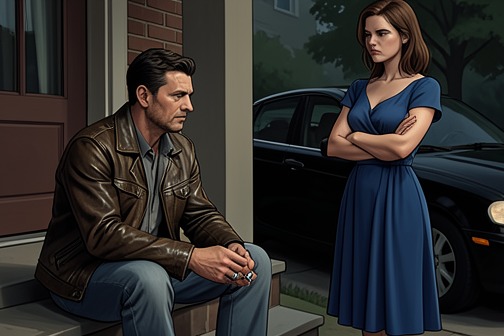
[Jungkook](entity:character-recall-character-jungkook-40c36baa104a)’s apology at the Barnum house is a turning point in his relationship with Shelby. After wounding her with cruel words and behavior intensified by alcohol, cocaine, confusion, and fear of intimacy, he arrives at the Barnum family home in [Ellensburg](entity:location-recall-location-ellensburg-f2b1300b3b7f) intending to take responsibility. The meeting becomes more than a request for forgiveness: it is the first sustained explanation of the violence that formed him, while Shelby’s guarded response establishes that understanding must not be mistaken for absolution.
## Setting and Immediate Circumstances
[Maison des Barnum](entity:location-recall-location-maison-des-barnum-4c213a28561f), Ellensburg, provides the encounter with a domestic setting that contrasts sharply with Jungkook’s usual spaces of danger, secrecy, and physical conflict. After walking through the town with [Loki](entity:character-recall-character-loki-c3c7344a882c), Shelby notices Jungkook’s black [1968 Ford Mustang GT](entity:object-recall-object-1968-ford-mustang-gt-f290e2b6da82) parked outside. He is sitting on the porch steps, playing with his rings, an image of nervous waiting rather than confident intrusion. His presence forces the private damage between them into the space associated with Shelby’s family and safety.
Shelby initially meets him with hostility. She asks what he is still doing there and tells him to leave after he says he has come to apologize. Jungkook does not defend his right to be heard; he asks her to listen. Only after she allows him inside does the conversation move to the living room, where he sits on the sofa while she keeps her distance against the wall. The physical arrangement makes the emotional condition visible: he seeks access to the relationship, while she retains control over proximity.
## Responsibility and the Disclosure of Trauma
Jungkook begins by admitting that he behaved like a contemptible person and that Shelby suffered because of him without justification. He explains that their kisses unsettled everything around him, that he failed to control himself, and that he bought and used cocaine. Shelby rejects the idea that intoxication can function as an excuse. She already knows what he did, and she makes clear that his explanation will not undo the harm or soften the cruelty of his words.
The decisive disclosure follows when Jungkook speaks about his father. He says that [Dong-hyun](entity:character-recall-character-dong-hyun-f4e8bf200fa5) was no example of affection or fatherhood and that his childhood contained violence, with his mother representing the only small amount of love available when she was not unconscious from the beatings inflicted by her husband. Alcohol was a constant part of that household, and Jungkook and his brother lived in fear of their father. Yet the child Jungkook also confronted him when he saw his mother threatened. This history clarifies both his terror of intimacy and his learned tendency to meet danger through aggression, without turning that history into a pardon for his conduct.
The remembered violence is concrete rather than abstract. In one childhood incident, Dong-hyun throws a glass against the wall; a shard strikes Jungkook’s face, after which his father grabs him by the collar and repeatedly slaps him. Fear and rage become inseparable in the boy’s experience. The later apology therefore carries the burden of moral injury: Jungkook is not only someone who has been harmed, but someone who recognizes that he has carried the logic of that harm into his treatment of Shelby.
## Shelby’s Boundaries and the First Repair
Shelby understands that Jungkook is genuinely lost and sincere, but sincerity does not cancel her pain. She sits beside him only after hearing his account, takes his tattooed hands, and strokes their backs. The gesture offers comfort without surrendering judgment. Her central request is that he give her time. It is the essential condition of the scene: she does not promise forgiveness, define them as a couple, or accept responsibility for repairing him. She asks for space, and Jungkook nods in understanding while holding back tears.
His restraint is significant because he has long treated tears as something forbidden, associated with the father who destroyed him. At the moment when he could pressure Shelby for immediate reassurance, he instead prepares to leave and thanks her for listening. Shelby still cannot let him go without any further care. She stops him by the forearm and asks him to stay for food, observing that his stomach has betrayed him. The invitation is practical rather than romantic, but its ordinariness creates a form of safety that grand declarations cannot provide.
In the kitchen, Shelby serves him a reheated pan of potatoes with mushrooms and chorizo. Jungkook removes his jacket, sits, and eats quietly while she remains beside him. He acknowledges that she is an excellent cook. The meal does not resolve the conflict, and Shelby still does not forgive him, but it transforms the encounter from a failed demand for absolution into a shared, bounded act of care. The domestic detail matters because repair begins here through consent, listening, food, and tolerable proximity rather than through force.
## Consequences for Their Relationship
The apology changes what Shelby and Jungkook can know about one another. Before this meeting, his behavior appears to be a mixture of arrogance, cruelty, and instability. Afterward, she sees the connection between his substance use, fear of affection, inherited model of masculinity, and unresolved childhood trauma. Jungkook, in turn, is forced to hear that his pain does not make Shelby’s pain less real. Her refusal to accept excuses prevents empathy from becoming a one-sided absolution.
The encounter also anticipates Jungkook’s later attempts to protect Shelby without controlling her. He tells [Connor Barnum](entity:character-recall-character-connor-barnum-d9322612abb3) that Shelby has disclosed what happened to her in [Los Angeles](entity:location-recall-location-los-angeles-11eff639bdf5) and that he wants to help her overcome her fears, while acknowledging that he does not fully understand love. When Shelby experiences a panic attack and refuses [Madison](entity:character-recall-character-madison-53d0d83590ae)’s touch, Madison seeks Jungkook, who runs to Shelby, holds her only once she recognizes him, and calms her through steady physical reassurance. These later responses echo the lesson of the Barnum-house apology: care must answer vulnerability rather than overpower it.
The same pattern appears when Shelby’s trauma is triggered by unwanted contact. Earlier, [Cassiopée](entity:character-recall-character-cassiop-e-2eb1ec801364) approaches her during a panic attack but remains calm after Shelby recoils and refuses to be touched; Jungkook likewise stays beside a distressed Shelby in the [Ares Garden](entity:location-recall-location-ares-garden-5a1d38541469) changing area without pretending to know an instant cure. The apology is therefore not an isolated speech. It marks a shift toward learning how to remain present when another person is frightened, without demanding that fear disappear for his convenience.
## Narrative Significance
As a scene of private accountability, Jungkook’s apology offers a counterpoint to the story’s more public forms of justice. Years later, Jungkook confronts [Robert Jefferson](entity:character-recall-character-robert-jefferson-e99ac62ade18) over the accusations made by Shelby and Madison, insisting that money cannot protect a man forever and that the women he traumatized deserve relief. Robert is ultimately convicted of multiple sexual assaults and rapes and sentenced to twenty-five years in prison. That courtroom resolution is institutional and punitive; the Barnum-house encounter is intimate, incomplete, and conditional.
The contrast is crucial. Jungkook’s apology does not claim to repair Shelby’s trauma, and Shelby’s meal does not declare the relationship healed. Instead, the scene establishes a smaller but durable model of accountability: naming the harm, identifying its roots, accepting that explanation is not justification, respecting the injured person’s pace, and demonstrating care through conduct. Its value shift runs from estrangement toward cautious possibility, not from injury to instant forgiveness. Jungkook leaves with a clearer obligation, while Shelby retains the authority to decide what happens next.
Event 14
L'agression de Jungkook et son hospitalisation
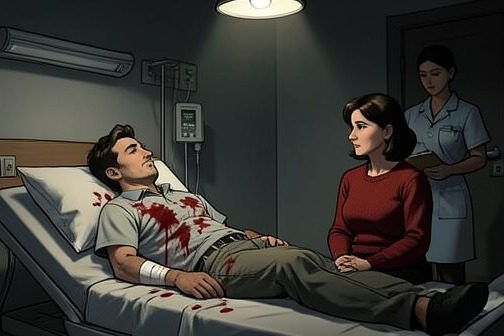
[L'agression de Jungkook et son hospitalisation](entity:event-recall-event-l-agression-de-jungkook-a1aa3b2ed148) is a decisive turning point in the bond between [Jungkook](entity:character-recall-character-jungkook-40c36baa104a) and Shelby. After being attacked near a bar by the same man who had tried to strike Shelby at [Ares Garden](entity:location-recall-location-ares-garden-5a1d38541469), Jungkook arrives at Shelby’s home injured and barely able to ask for help. She drives him to [Blossom Hospital](entity:location-recall-location-blossom-hospital-743188bc7552), remains with him while the crowded emergency department delays his treatment, and later keeps watch at his bedside. The assault exposes the violence surrounding Jungkook’s life, but it also reverses their earlier roles: the guarded fighter becomes the vulnerable patient, while Shelby responds with practical care despite her own fear and uncertainty.
## Causes and Immediate Context
The attack is directly connected to the violent encounter at Ares Garden. Jungkook later explains to Shelby that the man who had wanted to hit her there was the person who injured him while Jungkook was near a bar. The disclosure gives the hospitalization a retaliatory and protective context: Jungkook’s injury is not an isolated misfortune but another consequence of the violent network surrounding underground boxing and of his decision to intervene in a conflict involving Shelby.
Jungkook does not go straight to a hospital. He tells Shelby that her home was closer, a practical explanation that also reveals the fragile trust already forming between them. By choosing her door as the place where he will seek assistance, he brings the hidden injuries of his life into her domestic space. The contrast is stark: Shelby is alone with [Loki](entity:character-recall-character-loki-c3c7344a882c), watching Spider-Man, when the dog begins barking at the entrance and she recognizes Jungkook through the peephole.
## The Journey to Blossom Hospital
Jungkook collapses at Shelby’s feet after she opens the door. She initially thinks he may be joking, but his condition becomes unmistakable when he struggles to say that he needs to be taken to hospital. Shelby helps him stand, supports him to the car, settles him in the passenger seat, and returns briefly to switch off the television and tell Loki to remain calm before locking the house.
She then drives Jungkook’s vehicle to Blossom Hospital in [Ellensburg](entity:location-recall-location-ellensburg-f2b1300b3b7f). Inside, the building is crowded, so Shelby instructs him to sit while she goes to the reception desk and asks for help. Jungkook complies, but the delay becomes increasingly alarming: he grimaces while holding his left side, and the minutes stretch into an hour before a doctor finally takes him for observation. Shelby’s role is therefore not limited to transportation. She acts as advocate, attendant, and witness while his pain remains visible and medical attention is slow to arrive.
## Waiting, Discovery, and Care
Shelby waits for an hour and a half in the hospital reception area, unable to learn what has happened to Jungkook. Her thoughts move through a series of unanswered concerns about who hurt him, what trouble he entered, and why someone would cause him such harm. The waiting room contains families facing sharply different medical futures, from an anticipated birth to devastating news, as well as children with illnesses expected to pass. This ordinary institutional setting places Jungkook’s violence-related injuries beside the broader, quieter traffic of suffering and recovery.
When Shelby is finally directed to room 320, she enters quietly so as not to disturb the sleeping student and sits in a chair while keeping watch. Her attention is drawn to the tattoos on Jungkook’s left arm: a Japanese dragon with cherry blossoms and clouds on the biceps, a protective-looking tiger on the forearm, a small smiling Buddha, a sly daruma, and two circling koi. She also notices three identical black strokes whose meaning she does not understand. The tattoos make his body appear layered with symbols, but the red lines near them disclose something more immediate: he has tried to avoid knife blows. Shelby realizes that the marks are evidence of an assault rather than decorative traces.
Jungkook wakes and tells Shelby to put on his sweatshirt when he notices her coldness. The gesture is small but intimate, allowing him to offer care even while lying injured. He apologizes for troubling her and tells her that she may leave if she wishes. Shelby reassures him instead. Her refusal to abandon him establishes the emotional significance of the hospital night: care is offered without being demanded, and staying becomes an act of choice rather than obligation.
## Trauma, Safety, and Reciprocal Protection
The event belongs to a wider pattern in which both Jungkook and Shelby carry injuries that exceed what they can easily explain. Shelby’s panic in an art classroom, her refusal of unexpected touch when [Cassiopée](entity:character-recall-character-cassiop-e-2eb1ec801364) tries to approach her, and the later discovery of her self-harm show how bodily contact and sudden danger can reactivate trauma. [Dorcas](entity:character-recall-character-dorcas-551d5ed1ad82)’s discovery of Shelby’s severe left-forearm burn similarly turns hidden suffering into a scene requiring immediate care. These episodes echo Jungkook’s hospitalization: in each case, the injured person is initially overwhelmed, while another person must decide whether to approach, wait, or intervene.
The narrative distinguishes helpful presence from coercive contact. Cassiopée remains calm after Shelby recoils from her touch; Jungkook waits beside Shelby in the Ares Garden changing room while she cries; and, when Shelby later suffers an anxiety attack, [Madison](entity:character-recall-character-madison-53d0d83590ae) recognizes what is happening and fetches Jungkook rather than forcing physical comfort on her. Against this background, Shelby’s care for Jungkook becomes part of a developing trauma-informed pattern. She does not interrogate him at the hospital or compel him to explain more than he can. She observes, obtains help, waits, and lets him decide whether she should remain.
Jungkook’s injury also changes the balance between the two lost and wounded young people. [Namjoon](entity:character-recall-character-namjoon-4109d4fa2b00) senses that a close link has formed between them and that their relationship will be tumultuous because each is searching for the self while also trying to reach the other. The hospitalization gives that connection a concrete form. Jungkook, who is associated with frightening darkness and violence, arrives unable to manage the consequences of violence alone; Shelby, who is herself vulnerable to panic and self-harm, becomes the person who gets him safely to medical care.
## Consequences and Narrative Significance
The immediate consequence is Jungkook’s admission to Blossom Hospital for observation, with Shelby remaining at his side rather than returning to her evening alone with Loki and the television. More importantly, the night converts concern into responsibility. Shelby learns that Jungkook’s body bears the visible aftermath of the underground world, while Jungkook experiences her as someone who will act when he is unable to protect himself.
The event also prepares a recurring reversal in their relationship. Jungkook later runs to Shelby when Madison reports that she is having a panic attack, draws her close, and calms her until her breathing returns to normal. That later response mirrors Shelby’s earlier rescue of him: each recognizes the other’s crisis, rejects indifference, and becomes an anchor without erasing the wound. In this sense, the hospital night is not merely an injury episode. It is an early demonstration that their bond can be organized around presence, consent, practical help, and mutual protection rather than around the violence that first brings them together.
Its final significance lies in what it reveals beneath Jungkook’s intimidating exterior. [Sunmi](entity:character-recall-character-sunmi-46eb799eb5da) sees in him the same frightening darkness she detects in Shelby’s traumatized emptiness, yet the hospitalization presents that darkness through dependence rather than menace. The wounded fighter needs a door to open, a car to carry him, a receptionist to alert, and a companion willing to wait. Shelby’s decision to stay makes the hidden structure of their relationship visible: both are damaged, neither is easily approached, and still each gradually becomes capable of making the other safer.
Event 15
La crise d'angoisse de Jungkook

[La crise d'angoisse de Jungkook](entity:event-recall-event-la-crise-d-angoisse-de-2c3b187c445e) is the decisive episode in which [Jungkook](entity:character-recall-character-jungkook-40c36baa104a)'s apparently controlled anger gives way to the bodily force of childhood trauma. After training at [Knock Out](entity:location-recall-location-knock-out-459a67e1995b) in [Ellensburg](entity:location-recall-location-ellensburg-f2b1300b3b7f), he is overcome by memories connected to his father, suffers a severe panic attack, collapses alone under the streetlights, and is later found by Shelby and [Namjoon](entity:character-recall-character-namjoon-4109d4fa2b00). The event turns private suffering into a visible crisis and deepens the emotional bond among the three characters.
## Causes and Traumatic Background
The attack follows a period in which Jungkook has begun to feel guilt and curiosity about Shelby's suffering. Although he normally presents himself as hard, aggressive, and resistant to vulnerability, he has started to treat her with unexpected gentleness and to wonder what happened to her. His attempt to silence the demons associated with these thoughts instead leaves him exposed to memories of his biological father. The episode therefore links compassion toward Shelby with the return of Jungkook's own unresolved history: caring for another wounded person brings his buried wound back into the present.
That history is rooted in domestic violence. Years earlier, in a house in Gangnam, [Seoul](entity:location-recall-location-9736e5d4feee), eight-year-old Jungkook tried to intervene while his parents argued downstairs. [Ye-jun](entity:character-recall-character-ye-jun-e26530f9fe6e) held him back because he feared that the child would place himself in danger, but Jungkook broke free as the shouting grew louder and protested that he was tired of his parents fighting. Later, [Sunmi](entity:character-recall-character-sunmi-46eb799eb5da) recalled that Jungkook had once returned to her with a badly injured face after his father struck him, while Jungkook claimed that he had fought at school. Sunmi believed him until he fled home at sixteen and sought refuge with her; his father showed no concern and did not look for him. These memories establish the attack not as an isolated medical episode but as the delayed physical return of a childhood condition in which fear, anger, and helplessness had no safe outlet.
## What Happens at Knock Out
The immediate setting is Knock Out in Ellensburg, where Jungkook trains at 19:30. Exhausted and sweating, he removes his gloves and bandages before lying full-length on the floor. Unlike the atmosphere at [Ares Garden](entity:location-recall-location-ares-garden-5a1d38541469), the gym has not required him to strike anyone, and the quiet after training produces an unfamiliar calm. His anger has temporarily fallen silent, though the calm does not amount to recovery. The contrast matters: a controlled physical environment gives him momentary relief, but it also leaves room for the thoughts he usually suppresses.
Guilt gradually settles over him, followed by the question of what happened to Shelby. He does not force her to speak, and his choice to remain benevolent conflicts with the violent identity he has cultivated. When his thoughts turn toward his father, the emotional pressure becomes bodily. Tears run down his face; he falls to the ground and twists in pain. His chest hurts intensely, his breathing locks, nausea and trembling appear, and his heart rate accelerates. He eventually manages to sit up, but he remains alone at night beneath the streetlights. The attack strips away the distinction between Jungkook's physical strength and his psychological vulnerability: the body that withstands underground boxing cannot simply overpower memory.
The collapse is discovered by chance. At a red light, Shelby notices a figure lying on the ground and recognizes Jungkook. Before Namjoon can react, she unlocks the vehicle door, runs to him, shakes him, checks his pulse, and taps his cheek while asking him to wake. After about a minute, Jungkook regains consciousness in fear and rises so abruptly that he nearly strikes Shelby with his head. Instead of attacking, he pulls her into an embrace, buries his face against her neck, and cries. He says he is sorry and repeats the apology again and again, while Shelby strokes his back and Namjoon approaches carefully.
## Care, [Consent](entity:concept-recall-concept-consent-de2391c15f7f), and Immediate Aftermath
The rescue reverses the usual pattern of Jungkook's relationships with danger. Shelby, who has herself experienced panic, self-harm, and distress at unwanted touch, does not overpower him; she checks whether he is alive and offers physical comfort only as the situation develops. In other episodes, Shelby recoils when [Cassiopée](entity:character-recall-character-cassiop-e-2eb1ec801364) touches her during a panic attack, and Jungkook waits beside her in the Ares Garden changing room rather than knowing how to force her calm. He also places a hand on her knees when she is crying after seeing her injuries, offering contact as comfort rather than control. These parallel moments make the rescue reciprocal: both characters recognize that panic requires patience, presence, and an approach that does not turn care into another form of coercion.
When Jungkook cannot release Shelby, she moves aside only after he is able to turn toward Namjoon. He then throws himself at his best friend, who helps him stand and proposes returning to the student dormitory. Shelby sits beside Jungkook in the back seat. He lies down with his head on her left thigh, and Namjoon silently gestures that she should place her hand in Jungkook's dark hair. The gesture calms him quickly; he closes his eyes and falls asleep again. The car thus becomes a temporary protective space in which Namjoon coordinates support, Shelby provides soothing contact, and Jungkook accepts dependence instead of hiding his distress.
## Relationships and Consequences
The crisis changes how Shelby and Jungkook are seen by one another. Before it, Jungkook's emerging kindness toward Shelby appears almost incompatible with his usual self-image, and his concern is mixed with frustration and curiosity. After the collapse, Shelby witnesses the frightened child beneath the boxer and the anger. Her touch is no longer merely an attempt to calm a stranger or an injured companion; it becomes part of a shared language of survival. Jungkook's repeated apology also reveals that his suffering is entangled with shame, even though the attack is caused by memories of violence done to him rather than by a failure of will.
Namjoon's role is equally important. He has long understood that Jungkook's behavior is dangerous and has complained that Jungkook refuses help despite needing it. After the collapse, Namjoon does not lecture him or demand an explanation. He helps him stand, takes him toward the dormitory, and supports the quiet arrangement that allows Shelby to comfort him. The event converts Namjoon's concern from frustrated observation into direct intervention, while Sunmi's earlier account supplies the family history that makes the crisis legible: Jungkook's violent exterior was formed alongside abandonment, concealment, and the absence of protection from his father.
## Narrative Significance
As a recalled-trauma event, the episode uses repetition rather than a single explanatory confession. Jungkook has learned to redirect pain into boxing, anger, substance use, and resistance to help, yet the narrative repeatedly returns to bodies that cannot continue carrying what speech has not resolved: Shelby's racing heart and accelerated breathing, her self-inflicted cuts, the burn from her Zippo lighter, and Jungkook's locked chest, trembling, nausea, and loss of consciousness. The repeated imagery makes panic a language of the body, while the characters' responses determine whether that language ends in isolation or connection.
The value shift is stark. At Knock Out, physical discipline briefly turns anger into calm; the next movement carries Jungkook from calm into terror and helplessness. On the street, life itself becomes uncertain, but the discovery by Shelby and Namjoon changes the outcome from solitary collapse to collective care. Jungkook's sleep in the back seat does not erase his trauma, and the episode does not present an instant cure. Its significance lies instead in what becomes possible after the crisis: the wound is witnessed, the violent persona is interrupted, and Jungkook experiences support without having to earn it through strength or concealment.
Event 16
Les violences de Dong-hyun contre le jeune Jungkook
[Les violences de Dong-hyun contre le jeune Jungkook](entity:event-recall-event-les-violences-de-dong-h-f608b8d3952a) is the decisive childhood event behind [Jungkook](entity:character-recall-character-jungkook-40c36baa104a)’s later relationship with fear, anger, physical contact, and violence. In a duplex in [Seattle](entity:location-recall-location-seattle-ec620f372076), the adult Jungkook’s sleeping body relives an earlier assault in a flashback set years before, when [Dong-hyun](entity:character-recall-character-dong-hyun-f4e8bf200fa5)’s authority turns the family home into a place of surveillance and terror. The memory clarifies why Jungkook reacts so intensely to threats, why tenderness can appear both dangerous and necessary, and why his eventual attempts at protection remain entangled with the violence he learned at home.
## Setting and Family Context
Dans la maison familiale, Jungkook is eight years old and already understands that the adults’ arguments are dangerous. During one earlier confrontation in the kitchen, [Ye-jun](entity:character-recall-character-ye-jun-e26530f9fe6e) forcibly holds his younger brother back because Jungkook is trying to intervene in the dispute between their parents. Jungkook’s anger and grief are directed not only at Dong-hyun but at the helplessness of remaining hidden while [Min-ha](entity:character-recall-character-min-ha-03a1d6da02cc) is threatened. When Ye-jun’s grip weakens, Jungkook breaks free and leaves the bedroom despite his brother’s whispered warning.
The scene establishes a family structure in which Dong-hyun controls movement, speech, and even the conditions under which the children may witness violence. Jungkook refuses to stay in his room and tells his father to leave Min-ha alone. His resistance is courageous but exposes him to the full force of Dong-hyun’s authority. The event therefore begins as an attempt to protect his mother and becomes an experience of punishment, bodily injury, and enforced submission.
## The Assault
Dong-hyun responds with a sinister laugh, finishes his drink, and throws the glass across the room. A fragment strikes Jungkook in the face. Before the child can react, Dong-hyun grabs him by the collar and repeatedly slaps him, leaving injuries that may remain visible for days or weeks. The physical blows are accompanied by humiliation and verbal degradation: Dong-hyun demands to know when his son will learn to stay in his place. Violence is presented as a method of restoring hierarchy, not as a loss of control separate from family life.
The abuse continues later that evening. Dong-hyun orders Jungkook upstairs, seizes him by the throat, and pins him against a wall while demanding obedience. Jungkook’s small hands press against his father’s wrist as he struggles to breathe. Dong-hyun sends him to his room until the adult visitor, Hamilton, has left, making clear that the child’s isolation is part of the punishment. Jungkook complies only because he is physically overpowered, and he retreats in tears after regaining his breath.
At the end of dinner, Min-ha follows Dong-hyun upstairs and tries to prevent another attack. Dong-hyun violently pushes her aside, enters Jungkook’s room, slaps the child, removes his belt, turns him onto his stomach, and tears his shirt. The belt strikes his back for minutes that feel endless. Jungkook cannot move, holds back his screams, and watches grief give way to a darker anger because he has no power to stop what is happening. The assault is therefore both physical torture and a lesson in enforced helplessness.
Min-ha repeatedly attempts to intervene, but Dong-hyun ignores her and later threatens her as well. After the beating, he wipes blood from the belt, throws it onto the floor, grabs Min-ha by the hair, and orders her never again to move while he is “correcting” their son. She submits out of fear. When Dong-hyun leaves, Min-ha rushes to Jungkook, finds blood across his back, and begins to cry while he remains silent and allows her to tend to him. Her care offers immediate physical attention but cannot undo the household power that made the attack possible.
## Witnesses and Immediate Consequences
Ye-jun hears the younger boy’s suffering from his own room and covers his ears. After the violence ends, he enters Jungkook’s bedroom, but Jungkook refuses to meet his gaze. When Ye-jun begins to speak, Jungkook cuts him off and calls him a coward. The accusation reveals the child’s belief that Ye-jun failed to protect him, while Ye-jun’s earlier attempt to restrain him had itself been motivated by fear that he would be harmed. The event consequently damages the brothers’ bond as well as Jungkook’s relationship with his father.
The flashback ends with Jungkook’s adult body still trapped in the memory. Shelby wakes him from an agitated sleep after he has cried, clenched his fists, and struggled in the grip of a nightmare. The childhood assault is thus not safely contained in the past; it returns as a bodily event that must be interrupted by another person. The narrative links remembered violence to present symptoms rather than treating recollection as mere exposition.
## Recurrence in Jungkook’s Adult Life
The effects of Dong-hyun’s abuse are visible in Jungkook’s broader history. [Sunmi](entity:character-recall-character-sunmi-46eb799eb5da) recalls that he once came to her home with a badly injured face and claimed that he had fought at school, while blaming [Namjoon](entity:character-recall-character-namjoon-4109d4fa2b00) for getting him out of trouble. She believed the explanation until Jungkook ran away at sixteen and sought refuge with her. Dong-hyun did not look for him, and Sunmi welcomed him without hesitation. Jungkook’s flight marks the first major break from the family system, but it does not end the psychological hold of the violence.
As a teenager, Jungkook touches substances that Sunmi believes a sixteen-year-old should never have encountered. In adulthood, he describes his inner demons as having occupied his thoughts since childhood and connects his return to the [Ares Garden](entity:location-recall-location-ares-garden-5a1d38541469) ring with a trance-like desire to make the destructive impulse feel real. He later admits that alcohol and drugs intensify the confusion in his mind. His underground fighting and substance use are not presented as simple rebellion; they repeat the bodily logic of the home he escaped, where pain, dominance, and survival became inseparable.
The same history complicates Jungkook’s treatment of Shelby. When Shelby experiences panic, he sometimes remains beside her without touching her, as in the Ares Garden locker room, where he turns off the running water and waits while she cries. In another crisis, [Madison](entity:character-recall-character-madison-53d0d83590ae) reports Shelby’s panic and Jungkook runs to her, holds her, and calms her through familiar physical reassurance. Yet the story also shows the danger of contact when consent is absent: Shelby recoils from [Cassiopée](entity:character-recall-character-cassiop-e-2eb1ec801364)’s unexpected hands, and Jungkook learns that protection must not become another form of control. His own history gives this distinction particular force.
## Narrative Significance and Later Reorientation
The event explains why Jungkook’s anger can become immediate and disproportionate, but it does not absolve him of responsibility for later harm. After hurting Shelby with cruel words during a cocaine relapse, he acknowledges that his behavior was unjustified and attempts to apologize. Later, he tells Shelby that learning to love was partly an effort to drive away the demons that had occupied his mind since childhood. His admission places the childhood beating inside a longer moral struggle: he was made powerless by violence, learned violence as a response to danger, and must still decide whether to reproduce or resist that inheritance.
The flashback also gives meaning to Jungkook’s eventual confrontation with [Robert Jefferson](entity:character-recall-character-robert-jefferson-e99ac62ade18). He threatens Jefferson with exposure and imprisonment so that Shelby and the other women Jefferson traumatized can be relieved of knowing him as a free man. This later action echoes the child’s attempt to defend Min-ha, but its form is different: Jungkook now seeks testimony, accountability, and confinement rather than merely striking back inside a sealed family home. The contrast does not erase his violent impulses, yet it shows a developing capacity to redirect protective anger toward public recognition of wrongdoing.
In the wider arc, Dong-hyun’s abuse becomes the origin point of a cycle that Jungkook gradually tries to interrupt. His childhood self believes that defiance is the only available protection, while his adult self must learn that safety can also be created through patience, explicit trust, therapeutic support, and non-coercive touch. The event’s lasting significance lies in that tension. It is the wound that explains Jungkook’s darkness, but the narrative refuses to make darkness his final identity.
Event 17
Jungkook et Shelby décident d'apprendre à aimer

[Jungkook Jeon](entity:character-recall-character-jungkook-jeon-fc9d9ff5a3bc) and [Shelby Anderson Barnum](entity:character-recall-character-shelby-anderson-bar-2e17bb137697) decide to learn how to love together during a quiet visit to [Ellensburg Forest](entity:location-recall-location-ellensburg-c91d43040afb), turning an ambiguous attraction into a deliberate relational commitment. The scene is decisive because neither character claims to possess a ready-made capacity for intimacy: instead, they acknowledge uncertainty and choose to develop it jointly, step by step, while the emotional wounds surrounding them remain present.
## Setting and Immediate Circumstances
At 10:55, Jungkook Jeon drives Shelby Anderson Barnum in [Jungkook](entity:character-recall-character-jungkook-40c36baa104a)'s black [1968 Ford Mustang GT](entity:object-recall-object-1968-ford-mustang-gt-f290e2b6da82) to Ellensburg Forest. The outing is prepared as a temporary refuge from pressure. While Shelby slept, Jungkook secretly used the university dormitory kitchen to prepare food, packed it into a cooler, and brought a picnic blanket for their walk to the lake. Their shared listening to The Clash's "[Should I Stay or Should I Go](entity:expression-recall-expression-should-i-stay-or-s-4273d7059e1c)" establishes a mood of playful complicity, but the song's title also echoes the uncertainty governing their connection.
The forest is not an accidental backdrop. It is a familiar place where they can step away from other people and breathe, yet it does not erase what they carry into it. Their closeness is accompanied by physical unease and emotional hesitation: when they sit facing one another, their knees touch and both experience an immediate bodily charge. The scene therefore moves from ordinary companionship toward a conversation in which attraction must be given meaning rather than simply acted upon.
## The Conversation About [Love](entity:expression-recall-expression-love-8b9254c84bfa)
Shelby asks whether she is truly the first person Jungkook has kissed. Jungkook answers that she is the only one. He explains that, for him, kissing someone is evidence of love, a belief that gives the earlier kiss a seriousness Shelby wants clarified. When Shelby begins to infer that he loves her, Jungkook interrupts her and states, "Non, je ne t'aime pas," before adding, "Mais, je veux apprendre." In English, the force of the exchange is that he does not offer a conventional declaration. He refuses to claim a feeling he cannot honestly name, while still admitting an intention to discover whether and how love can exist between them.
That distinction changes the value of the scene. The relationship is neither confirmed as a settled romance nor dismissed as meaningless desire. Jungkook's admission turns uncertainty into an object of shared work. His words are performative in effect: by saying that he wants to learn, he presents a future-oriented commitment, even though the commitment remains limited by his inability to promise immediate love.
## The Mutual Pact
Jungkook then asks Shelby, "Apprends-moi à aimer." Shelby responds, "On va apprendre à aimer tous les deux," making the arrangement mutual rather than placing her in the role of instructor and him in the role of passive student. The difference matters. Jungkook asks for help, but Shelby refuses an unequal model in which she alone possesses emotional knowledge. Their agreement recognizes that both are entering uncertain territory and that love will have to be learned through reciprocal participation.
Jungkook kisses Shelby again while holding her close. The second kiss gives physical form to the verbal pact, but he soon breaks the contact because he fears rushing or overwhelming her, recalling the danger of moving too quickly. Shelby adds, "Étape par étape," and the phrase becomes the scene's governing principle. Their intimacy is not defined by sudden certainty; it is organized around pacing, restraint, and attention to the other person's limits.
## Trauma, Safety, and Relational Practice
The promise gains weight from the characters' histories. Shelby's panic attacks can involve overwhelming bodily sensations, accelerated breathing, tears, darkness, and a refusal of touch. When [Cassiopée Smith](entity:character-recall-character-cassiop-e-smith-7af6a7136600) tries to approach her during one crisis, Shelby recoils after being touched and remains curled up, unable to tolerate contact. Later, when Shelby is distressed at the [Shadow Shop](entity:location-recall-location-shadow-shop-32a63ec38f6f), Jungkook does not immediately force a solution; he turns off the running water, crouches nearby, and waits while she cries until she can calm herself. At another point, he places a hand on her knees while she is crying in the bathroom, and the contact becomes comforting because she is seeking reassurance rather than being compelled to receive it.
The forest pact can therefore be read as a practical response to the instability surrounding intimacy. Their agreement does not eliminate fear, but it names a method for approaching closeness without treating desire as permission to ignore distress. This becomes visible again when [Madison Jefferson](entity:character-recall-character-madison-jefferson-657bf438d528) finds Shelby in an anxiety attack and reports it to Jungkook. He runs to Shelby, holds her, and comforts her until her breathing returns to normal; the response works because it follows recognition and Shelby's own movement toward him, rather than imposing touch against her resistance.
Jungkook's own history makes the promise equally complicated. As a child in a house in [Seoul](entity:location-recall-location-9736e5d4feee), he was held back by [Ye-jun](entity:character-recall-character-ye-jun-e26530f9fe6e) Jeon while their parents' argument grew louder downstairs; at eight years old, he wanted to intervene but was restrained to keep him from entering danger. [Sunmi Eun](entity:character-recall-character-sunmi-eun-c82ef680ac18) later remembers that Jungkook once returned home with a badly injured face after his father had beaten him, then concealed the abuse by claiming he had fought at school. At sixteen, he fled his home and took refuge with [Sunmi](entity:character-recall-character-sunmi-46eb799eb5da), who welcomed him and became a lasting source of protection. His past includes exposure to violence and destructive behavior that Sunmi recognizes as far beyond what a sixteen-year-old should have encountered.
## Consequences and Significance
The pact marks a value shift from guarded attraction to chosen cooperation. Jungkook does not suddenly become healed, and Shelby does not suddenly become free of anxiety, depression, or trauma. Instead, the scene establishes a shared discipline through which each can remain present without pretending to be whole. Their physical closeness is repeatedly interrupted by caution, pain, and uncertainty, yet those interruptions become part of the relationship's ethical structure rather than proof that the relationship must end.
The consequences extend beyond the lake. [Dorcas Peters](entity:character-recall-character-dorcas-peters-cc0824b30f37) later tells Jungkook that he has helped make Shelby happier and more open toward other people, although Jungkook modestly attributes the change chiefly to Shelby's psychologist and her treatment. His embarrassment reveals that he is already affected by the idea of contributing to another person's recovery, even while resisting the notion that he is its central cause. The event thus links romantic development with social and emotional change: learning to love is presented not as possession or rescue, but as a repeated practice of honesty, patience, mutual care, and renewed trust.
Event 18
Shelby révèle son viol à Jungkook
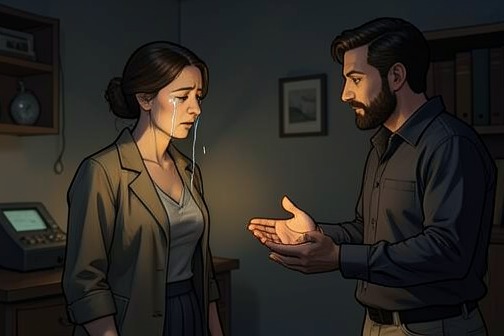
[Shelby révèle son viol à Jungkook](entity:event-recall-event-shelby-r-v-le-son-viol-ba8aa13a4f2e) is the decisive disclosure through which Shelby names the trauma that has governed her body, her fear, and her relationships without previously being fully understood by him. The revelation occurs after [Jungkook](entity:character-recall-character-jungkook-40c36baa104a) fails to notice that her body has tensed during an increasingly passionate encounter, but stops as soon as she asks him to. What begins as a moment of threatened repetition becomes a moment of consent, listening, and witness: Shelby speaks, Jungkook believes her, and their intimacy is redefined by knowledge rather than assumption.
## Trigger and Immediate Context
The disclosure follows a kiss that becomes physically overwhelming for Shelby. Jungkook’s lips move from hers to her neck, and he continues kissing and touching her while she struggles not to shout at him. When she finally manages to ask him to stop, he immediately moves away. Her eyes are filled with tears, she apologizes, and she leaves his embrace; Jungkook responds with concern rather than anger, recognizing that her distress matters even before he understands its cause.
His response creates the immediate conditions for her confession. He apologizes, assures her that the reaction is not his fault, and asks whether she wants to talk. Shelby hesitates, weighing whether to speak and fearing his judgment, but then recounts what happened two years earlier. The narrative marks this passage as a flashback, separating the present conversation from the earlier assault while showing how the past remains active inside the present body. Her ability to continue despite fear makes the telling itself an act of agency rather than a passive recollection.
## What the Disclosure Reveals
Shelby’s account gives a cause to behaviors that have previously appeared as distance, defensiveness, or resistance to physical contact. Jungkook realizes why she avoids touch whenever she can and why she remains so guarded. The assault is not treated as an isolated fact detached from daily life; it is shown through its continuing effects on her body and conduct. Her panic attacks, her recoil from unwanted contact, and her difficulty remaining unguarded during intimacy become legible as consequences of an unspoken wound.
The disclosure also changes Jungkook’s understanding of Shelby’s character. He recognizes that her anger and sadness are not arbitrary hostility but burdens carried under pressure. The revelation connects her suffering to his own sense that both of them live with persistent demons, though their histories are not identical. Instead of claiming that he can erase her trauma, he understands that he has encountered a part of her life that demands patience, belief, and restraint.
The scene’s importance is intensified by the earlier pattern of involuntary bodily fear. During a panic attack, [Cassiopée](entity:character-recall-character-cassiop-e-2eb1ec801364) approaches Shelby and touches her shoulders; Shelby cries out in pain and recoils, remaining curled up and refusing contact even after the immediate danger has passed. Later, Jungkook finds her trembling and crying in the [Ares Garden](entity:location-recall-location-ares-garden-5a1d38541469) showers and does not know how to help, so he turns off the water and stays beside her until she calms. These episodes establish that Shelby’s body reacts before language can explain what is happening. The confession finally gives words to an experience that had already been speaking through breath, tears, withdrawal, and terror.
## Jungkook’s Response and the Change in Their Relationship
Jungkook’s answer is deliberately simple: he tells Shelby that he believes her. The statement has an immediate effect. Tears of relief run down her face, an expression of hope appears, and he gently wipes her cheeks. He offers tissues, sits facing her, takes her hands tenderly, and later comforts her by stroking her hair. These gestures matter because they do not seize control of her body or demand further explanation. After the earlier moment in which he stops when she asks, his response to the disclosure establishes a different model of closeness: contact is offered as reassurance rather than imposed as possession.
The scene therefore shifts the value of intimacy from danger toward conditional safety. Shelby remains distressed, but she is no longer alone with the burden or forced to defend the reality of what happened. Jungkook’s belief does not solve the trauma, yet it removes one anticipated threat—the fear that the person hearing her will judge or disbelieve her. His quiet care becomes a form of witnessing, while her decision to tell him permits him to respond to the actual source of her fear rather than to its outward symptoms.
The disclosure also complicates Jungkook’s own history of aggression and emotional confusion. He has been shaped by a father who struck him with a glass fragment and slapped him, then taught him that a man must never cry. That lesson links masculinity with silence, endurance, and violence. In the present scene, however, Jungkook does not demand that Shelby suppress her tears, and he does not answer her vulnerability with anger. His sympathy begins to reject the inherited rule that suffering must remain hidden and that power is proved through control of another person.
## Trauma, [Consent](entity:concept-recall-concept-consent-de2391c15f7f), and Mutual Recognition
The revelation becomes part of a broader redefinition of consent between Shelby and Jungkook. Their physical closeness cannot be separated from her history of sexual violence, so desire must be interrupted when fear appears and resumed only through clear willingness. The scene makes this principle concrete: Jungkook continues until Shelby asks him to stop, then withdraws and listens. Later, Shelby explicitly identifies [Kayla](entity:character-recall-character-kayla-33460f2ea995)’s non-consensual kiss toward Jungkook as sexual assault, showing that the language of consent applies to his experience as well as hers.
This recognition creates an unexpected symmetry without erasing the difference between their traumas. Shelby discloses that she was raped; Jungkook later explains that Kayla kissed him without his consent, leaving him unable to move or speak even though she did not otherwise touch him. Shelby insists that the absence of physical struggle does not cancel the violation. Their shared understanding develops through naming what happened, rather than through treating either person as merely damaged or using one trauma to compete with the other.
The couple’s later promise to learn how to love together is thus grounded in the limits exposed by this confession. Jungkook admits that he had hoped learning to love would drive away the demons that had occupied his thoughts since childhood, but that the pull of Ares Garden and his old vices remained powerful. He also explains his former relationship with Kayla and says that he rejected her when she returned. Shelby wants to hear the truth, and his account becomes part of the same movement toward disclosure that began when she told him about the rape. Their relationship develops not through effortless healing, but through difficult explanations, accountability, and the repeated negotiation of trust.
## Recurring Consequences and Narrative Significance
Shelby’s trauma continues to surface after the confession. At a later gathering, memories of pain and water overwhelm her; she collapses, covers her ears, cries, and tells [Madison](entity:character-recall-character-madison-53d0d83590ae) not to touch her because she believes she may be harmed. Madison recognizes the panic attack and leaves to find Jungkook. When he arrives, Shelby recognizes his scent, embraces him, and presses her face into his shoulder while he strokes her back and speaks softly until her breathing returns to normal. The episode demonstrates both the persistence of the wound and the practical consequence of the earlier disclosure: Jungkook now understands that comforting her requires attention to her fear of touch and reliance on her own recognition and acceptance of contact.
The confession also gives moral weight to later confrontations with [Robert Jefferson](entity:character-recall-character-robert-jefferson-e99ac62ade18). Jungkook directly challenges Robert’s denial, invokes Shelby’s account and Madison’s testimony, and states that men who have traumatized women should eventually face imprisonment. His anger does not replace Shelby’s voice, but the knowledge she entrusted to him helps transform her private suffering into a basis for demanding accountability. The event therefore connects personal intimacy with public truth: being believed by one person becomes part of a larger struggle against denial, impunity, and the protection of powerful abusers.
As a narrative event, Shelby révèle son viol à Jungkook is the point at which withheld history becomes shared knowledge. It explains repeated bodily reactions, alters the meaning of earlier conflicts, tests whether Jungkook can respond without domination, and moves their relationship from attraction toward ethically negotiated intimacy. The disclosure does not promise that the past will disappear. Its decisive significance lies elsewhere: Shelby speaks on her own terms, Jungkook listens and believes her, and the story treats that act of witnessing as the beginning of a more truthful form of love.
Event 19
L'arrestation de Chen et la prise de contrôle de l'Ares Garden
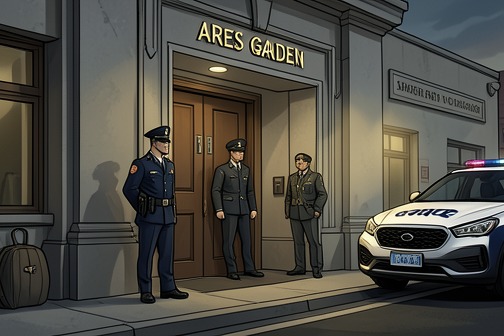
[L'arrestation de Chen et la prise de contrôle de l'Ares Garden](entity:event-recall-event-l-arrestation-de-chen-e-89f675363fdd) is the decisive institutional rupture in the story's underground boxing world: [Chen Wu](entity:character-recall-character-chen-wu-8a530e94a8d8) is arrested, the [Ares Garden](entity:location-recall-location-ares-garden-5a1d38541469) is removed from his control, and [Bruce Wilson](entity:character-recall-character-bruce-wilson-17c288308948) reveals that the raid serves his plan to seize the venue and transform it into a private club. The event therefore converts a dangerous but familiar space of affiliation into an instrument of Wilson's authority, while forcing [Jungkook Jeon](entity:character-recall-character-jungkook-jeon-fc9d9ff5a3bc) to choose a violent intervention that saves [Chen](entity:character-recall-character-chen-1d684f527331) from prison but cannot restore his position.
## Causes and Background
The event takes place at the Ares Garden in [Ellensburg](entity:location-recall-location-ellensburg-f2b1300b3b7f) on Wednesday, December 4, beginning at 10:00. Chen arrives expecting an ordinary day, but a police car is already parked outside the establishment. Two officers are waiting at the entrance, including Jacob, a familiar and loyal customer. Their presence immediately changes the meaning of the bar: what had been a functioning venue becomes a site of inspection, exposure, and imminent state action.
The officers identify Chen as the owner and confront him with the allegation that he organizes illegal boxing matches. Chen does not submit passively to their authority. He demands to see a warrant and insists that the officers answer his question, but they produce the warrant and order him to open the doors for an inspection. The exchange establishes the conflict between Chen's defensive control of the premises and the officers' legal power to enter them.
The raid also has a concealed political and economic motive. After Chen's arrest, [Jungkook](entity:character-recall-character-jungkook-40c36baa104a) reaches the Ares Garden and sees Bruce Wilson, leader of the [Wilson family](entity:organization-recall-organization-wilson-7cc2169cc733), waiting there. Wilson openly confirms that he reported Chen because he intends to take over the venue. His proposed replacement is not simply another boxing establishment: he describes a second club that will be private and reserved for his most faithful clients. The illegal ring is thus revealed as contested property within Ellensburg's criminal hierarchy, not merely as a background location for fights.
## Arrest and Exposure of the Ares Garden
Chen opens the bar, and the officers conduct their inspection. They find the boxing ring, a fact that directly substantiates the allegation against him. One officer prepares the handcuffs while Chen, confronted with the consequences of the place he has built and managed, can do little beyond obey. The arrest is formally delivered at 10:10 on December 4, with the officer reading him his right to remain silent, the warning that his statements may be used in court, and his right to legal counsel, including appointed counsel if he cannot afford one.
Chen answers the warning by shaking his head rather than speaking. He is taken outside and placed in the police car, looking back at the Ares Garden with bitterness. The sight of Bruce Wilson's Rolls-Royce intensifies that bitterness and confirms Chen's suspicion that the arrest is connected to a larger scheme. The sequence moves from accusation to material proof, then from material proof to an implied seizure of power: the ring is discovered, Chen is removed, and Wilson is positioned to inherit the space.
Chen's arrest also marks the destruction of his legal and practical authority. Although he will later be released on bail, the authorities make clear that he will no longer be allowed to manage the Ares Garden. He is given the remainder of the day and evening to announce the change inside the establishment and say goodbye. The venue survives as a physical site, but Chen's relationship to it ends; the arrest is therefore both a criminal proceeding and a forced dispossession.
## Jungkook's Violent Countermove
Jungkook learns that Chen has been arrested and immediately drives to the Ares Garden with [Namjoon Kim](entity:character-recall-character-namjoon-kim-0444585766b6) and [Shelby Anderson Barnum](entity:character-recall-character-shelby-anderson-bar-2e17bb137697). He exits the car in a fury when he sees Wilson, seizes his shoulder, and accuses him of denouncing Chen in order to take over the Ares Garden. Wilson does not deny it. Instead, he treats the seizure as an accomplishment and says that Chen will comply because he will have no choice.
The confrontation becomes a physical struggle when Wilson challenges Jungkook to demonstrate what he can do. Jungkook strikes first, and Wilson initially gains the advantage, knocking him to the ground and beating him until Jungkook spits blood. The balance then reverses. Jungkook rises, pins Wilson down, and attacks him with such intensity that he wants to hear Wilson's bones crack and his pain become audible. The scene externalizes Jungkook's recurring anger and violent impulses: the fight is not a regulated contest inside the ring but a personal punishment driven by hatred.
Shelby is frightened by the transformation. She sees the rage in Jungkook's face and rushes forward to seize his right arm, interrupting the assault before it becomes even more destructive. Her intervention changes the immediate value of the scene from vengeance to restraint. Jungkook notices the sadness in her eyes, gradually calms his breathing, and looks back at Wilson, who is bloodied, disfigured, and nearly unconscious. Shelby does not erase the violence, but her presence prevents it from becoming an unbounded execution.
## Coercion, Bail, and the Transfer of Power
Jungkook uses the advantage he has gained to force Wilson to reverse the legal consequences of the raid. He orders Wilson to withdraw his complaint and bribe the police so that Chen can be released. Wilson promises, and Jungkook insists that they go together so he can verify that the promise is kept. When a police officer hesitates, Wilson offers to pay Chen's substantial bail. The arrangement is therefore not a restoration of justice: the same powerful man who engineered the takeover uses money and a coerced promise to undo the immediate detention.
Chen is brought out of custody and is visibly surprised to find Wilson and Jungkook together, both marked by the blood of their fight. Wilson signs the papers and a release stating that he revokes his complaint, then escapes with Jungkook and Shelby. Chen avoids prison, but the victory remains sharply limited. He is free because Wilson has paid the bail and withdrawn the complaint, not because the Ares Garden has been returned to him.
Chen understands the cost immediately. He tells Jungkook that he will no longer be permitted to run the Ares Garden. Jungkook answers sarcastically that helping him was a pleasure, but the exchange carries more than mockery: Jungkook has preserved Chen's freedom through force while failing to preserve Chen's livelihood and place in the underground network. Chen must announce his departure, say goodbye to everyone at the establishment, and search for entirely legal work.
## Consequences and Narrative Significance
The event permanently alters the relationships among Chen, Jungkook, Wilson, and the Ares Garden. Chen loses the venue that defined his authority and mentorship, Wilson gains the opportunity to reshape it for private clients, and Jungkook becomes responsible for an intervention whose success is inseparable from brutality. Chen nevertheless embraces Jungkook and thanks him for keeping him out of prison. Before they part, Chen warns Jungkook to take care of himself and Shelby, and Jungkook promises that he will.
That promise gives the event a second consequence beyond the business transfer. Chen reminds Jungkook that his power over others cannot be separated from his responsibility toward Shelby. Earlier, [Sunmi Eun](entity:character-recall-character-sunmi-eun-c82ef680ac18) had recognized the darkness surrounding Jungkook and remembered the violence he suffered from his father before fleeing to her home at sixteen; [Namjoon](entity:character-recall-character-namjoon-4109d4fa2b00) had likewise described Jungkook's destructive relapse with alarm. Against that history, the Ares Garden confrontation repeats the violent model Jungkook learned in childhood even as it produces a protective result for Chen. The scene's moral tension lies precisely there: Jungkook acts out of loyalty, but loyalty is expressed through intimidation, bloodshed, and coercion.
The event also belongs to the wider movement of care surrounding Shelby and Jungkook. Shelby's panic attacks, self-harm, and fear of unwanted touch make physical contact ethically charged: [Cassiopée Smith](entity:character-recall-character-cassiop-e-smith-7af6a7136600) approaches her carefully after a panic attack, Jungkook remains beside her in the Ares Garden showers without forcing contact, and he later offers physical reassurance when she collapses in fear. In contrast, his assault on Wilson begins with aggressive contact and escalates into domination. Shelby's intervention creates a visible boundary between protection and violence, suggesting that Jungkook's recovery depends not only on whom he defends but on how he acts while defending them.
Finally, the Ares Garden's seizure prepares the venue for a later transformation. Its underground boxing culture is not simply extinguished; it is reorganized under Wilson's private control, while Chen is pushed toward legal employment and Jungkook is left to confront the costs of the violent world that shaped him. The arrest, the forced release, and Chen's farewell together form a value reversal: Chen moves from authority to dispossession, Wilson from suspecting rival to controlling proprietor, and Jungkook from helpless witness to violent rescuer whose victory cannot undo the system that made the conflict possible.
Event 20
La soirée d'ivresse de Shelby à la Maison Upsilon

[Shelby Anderson Barnum](entity:character-recall-character-shelby-anderson-bar-2e17bb137697)’s drunken evening at [House Upsilon](entity:location-recall-location-upsilon-cfc90739ae14) is more than a party episode: it is a scene in which social fear, bodily vulnerability, and emerging intimacy collide. On the night set at House Upsilon in [Ellensburg](entity:location-recall-location-ellensburg-f2b1300b3b7f), Shelby tries to force herself into the social world, drinks beyond her limits, and becomes physically and emotionally exposed. The decisive turn comes when [Jungkook Jeon](entity:character-recall-character-jungkook-jeon-fc9d9ff5a3bc) rejects the opportunity created by her intoxication and chooses her safety, privacy, and pace instead. The evening therefore transforms apparent chaos into a concrete test of consent and care.
## Causes and Social Setting
At 22:35, Shelby is seated on a sofa at House Upsilon, surrounded by people and overwhelmed by a crowd she had already feared. Her anxiety seems to tighten around her throat, while the music appears to grow louder even though its volume remains constant. She retreats upstairs and locks herself in a bathroom, questioning why she accepted the invitation and recognizing that she had agreed largely because [Cassiopée Smith](entity:character-recall-character-cassiop-e-smith-7af6a7136600) had pressed her to come. Facing the mirror, Shelby tries to command herself through the fear and convinces herself that she can overcome both her social anxiety and her fear of crowds.
The bathroom becomes a temporary chamber of self-mobilization. Shelby tells herself, “You can do it!” and attempts to silence the inner demons that accompany her panic. Her effort is not a simple victory: the fear withdraws only briefly, and the party remains waiting beyond the door. When she opens it, she encounters [Jungkook](entity:character-recall-character-jungkook-40c36baa104a), who is visibly concerned. His presence creates an alternative to the crowd’s pressure, because he does not demand that she perform confidence or immediately return to the party. Instead, he recognizes that her participation has a cost.
Jungkook accompanies Shelby downstairs, and when he senses her tense beside him, he takes her hand and strokes its back. With only one armchair available, he sits and draws her onto his lap, holding her against him and rubbing her back until she relaxes. The gesture attracts curious looks because it conflicts with his established pattern of treating women as temporary sexual partners rather than as people he openly shelters in public. The scene marks a change in his conduct: physical closeness is used to regulate fear, not to claim possession.
## The Drinking and Loss of Control
The fragile calm breaks when [Cassiopée](entity:character-recall-character-cassiop-e-2eb1ec801364) takes Shelby’s hands and gives her a fluorescent red shot glass. She identifies the drink as cherry-flavored vodka and presents it as something that will help Shelby relax. Shelby laughs, drinks it, and grimaces as the sweet acidity passes down her throat. Cassiopée then returns with a tray of multicolored fluorescent shots, and Jungkook’s concern sharpens as he watches Shelby being encouraged to consume more alcohol. [Namjoon Kim](entity:character-recall-character-namjoon-kim-0444585766b6) stops Jungkook from intervening immediately, reassuring him that Shelby should be allowed to have fun and that a bedroom is available if she needs to rest.
The party’s apparent liberation thus carries an unstable cost. Shelby’s body becomes the medium through which the social ritual operates: alcohol is offered as a shortcut past fear, and temporary participation is purchased through increasing impairment. The episode’s comic surface—drinking, dancing, and the attention of friends—gradually gives way to a loss of agency. Shelby seems happier beside Cassiopée, but her improved mood is chemically produced and cannot protect her from the physical consequences of drinking.
Jungkook and [Namjoon](entity:character-recall-character-namjoon-4109d4fa2b00) drink whisky in the kitchen while Jungkook continues watching Shelby. Later, Namjoon points out that Shelby is close to collapsing because she has done little except drink. Jungkook empties his whisky glass and goes to her. Shelby smiles when she sees him and nearly throws herself at him; he catches her just in time. Her intoxication turns flirtation into a dangerous ambiguity when she presses her lips along his neck and he carries her upstairs to Namjoon’s bedroom.
## [Consent](entity:concept-recall-concept-consent-de2391c15f7f) and the Refusal of Exploitation
In the bedroom, Shelby grabs Jungkook by the collar and kisses him. He allows the unexpected kiss to continue briefly, experiencing its intensity, but her hands soon move from his shoulders toward his belt. At that point, he breaks the kiss and stops her with his right hand. Shelby complains and asks why he has stopped, but Jungkook explains that he does not want her to do something she will regret in the morning. He admits that resisting her is difficult, yet insists that they must move at her pace and that they cannot have sex while she is not herself.
This refusal is the evening’s central ethical reversal. Shelby’s intoxication gives the scene the outward shape of sexual opportunity, but Jungkook treats it as evidence that meaningful consent is unavailable. His desire remains present, and the narrative does not erase it; what changes is the action he chooses to take. Rather than interpreting Shelby’s advances as permission, he distinguishes desire from capacity and places her future judgment above his immediate gratification.
When Shelby continues to sulk, Jungkook firmly tells her that she needs to sleep. Soon afterward, she runs to the bathroom and vomits the alcohol she consumed throughout the evening. Jungkook follows her, gently strokes her back, and goes to the kitchen for water and something to eat. He returns to find her rinsing her mouth, then sits with her on the bed while she drinks an entire glass of water and eats several cookies. The sequence replaces erotic escalation with practical care: hydration, food, supervision, and rest become the actions through which intimacy is expressed.
## Privacy, Shelter, and Aftercare
Once Shelby has rinsed her mouth, the bedroom becomes a controlled refuge from the party. She empties the glass of water Jungkook gives her and eats several cookies, relieved to have something in her stomach. He then removes his shoes and shirt and offers her the black shirt as sleepwear. When she rises to change, he turns toward the window rather than watching her undress, preserving her privacy even though the attraction between them is unmistakable. The gesture makes care practical and specific: he does not merely tell her to rest, but helps create the conditions in which rest is possible.
After Shelby changes, Jungkook removes his jeans and joins her beneath the covers. He places an arm around her waist and rests his face against her neck, asking whether she is comfortable. The physical closeness is intimate but no longer advances toward sex. Its meaning has shifted from pursuit to reassurance, allowing the evening to end in shared shelter rather than exploitation. The party’s noise, alcohol, and public scrutiny are left outside the room; inside, the two are defined by restraint and mutual bodily awareness.
## Trauma and the Pattern of Protective Response
The importance of the evening is intensified by the broader pattern surrounding Shelby’s panic. Earlier, during an art class, bodily pain, a racing and constricted heart, accelerating breath, and tears caused her to flee the room. Cassiopée Smith followed her into an isolated place, but when Shelby recoiled from a hand placed on her shoulders and cried out in pain, Cassiopée remained calm, identified herself, and tried to approach without forcing contact. Shelby could not ask for solitude, yet her distress made clear that touch had become threatening rather than comforting.
A similar vulnerability appears at the underground boxing venue, where Jungkook found Shelby trembling and crying in the showers. He turned off the water, crouched in front of her, and, uncertain how to help, simply remained beside her until she calmed. Later, when Shelby’s injuries became visible in a bathroom mirror, she collapsed against the wall in tears; Jungkook crouched beside her and placed his right hand on her knees as she sought comfort. These responses establish that his conduct at House Upsilon is not an isolated courtesy. Across different crises, he learns to wait, observe, limit his touch, and offer support without converting her vulnerability into control.
The same protective pattern reappears when [Madison Jefferson](entity:character-recall-character-madison-jefferson-657bf438d528) witnesses Shelby suffer a panic attack in a restroom. Painful images connected with water return to Shelby, she covers her ears, and she pleads not to be touched because she believes [Madison](entity:character-recall-character-madison-53d0d83590ae) may hurt her. Madison recognizes the crisis and goes to find Jungkook instead of forcing contact. He runs to Shelby, draws her against him, and strokes her back while speaking softly until her breathing returns to normal. In this context, the House Upsilon bedroom scene becomes part of a larger movement from involuntary exposure toward responsive care: safety depends not on silencing Shelby’s fear, but on recognizing its limits and responding without coercion.
## Relationships, Recovery, and Narrative Significance
The evening also clarifies the developing relationship between Shelby and Jungkook. Cassiopée’s encouragement brings Shelby into the party, and Namjoon Kim’s intervention briefly normalizes drinking, but Jungkook is the person who remains attentive to the difference between apparent enjoyment and actual wellbeing. He notices when Shelby is becoming unable to stand, catches her when she nearly falls, stops the sexual encounter, assists her after she vomits, protects her while she changes, and stays beside her in bed. Each action converts romantic attraction into responsibility.
Cassiopée’s role is deliberately ambivalent. She wants Shelby to relax and treats the fluorescent cherry-vodka shot as a social remedy, yet her repeated encouragement helps drive Shelby toward dangerous intoxication. The scene does not reduce her to an antagonist; she is part of the friendship and celebration that Shelby wants to access. Nevertheless, the episode exposes the limits of treating alcohol as a cure for social fear. Shelby’s temporary openness is followed by physical collapse, while Jungkook’s quieter presence provides the more durable form of support.
The event’s value shift is therefore precise. Shelby begins isolated within a crowd, retreats in panic, and briefly re-enters the party through alcohol and physical reassurance. She then loses control of her body, but the night does not culminate in sexual harm. Jungkook’s refusal interrupts the expected progression from drunken flirtation to intercourse and replaces it with consent, food, water, privacy, and sleep. The resulting intimacy is not less charged because sex is postponed; it is more consequential because Jungkook demonstrates that desire can coexist with restraint. The evening becomes an early, concrete expression of the couple’s later rule that closeness must proceed at Shelby’s pace and with her clear consent.
Event 21
Connor découvre la relation entre Shelby et Jungkook
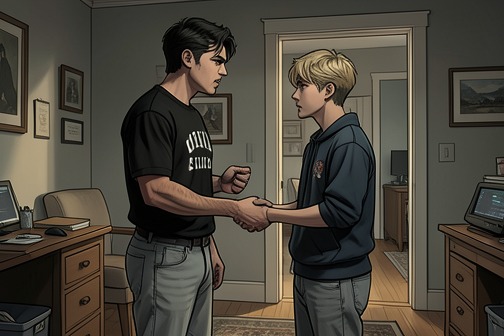
[Connor](entity:character-recall-character-connor-49e9ac9fb7e5) discovers the relationship between Shelby and [Jungkook](entity:character-recall-character-jungkook-40c36baa104a) when he arrives at the Barnum home and finds them together in Shelby’s room. What begins as a confrontation over secrecy, intimacy, and paternal protection becomes a decisive test of whether Jungkook can be trusted with Shelby’s vulnerability. Connor’s anger initially makes him an obstacle to the couple, but Jungkook’s disclosure about Shelby’s trauma and his promise to help her recover change the emotional direction of the scene. By the end, Connor accepts that protecting Shelby also means respecting her judgment, and he asks Jungkook to care for her rather than forbidding the relationship outright.
## Causes and Background
The confrontation grows out of Connor’s protective fear and his lack of knowledge about what Shelby and Jungkook have become to each other. At the Barnum family meal, he demands to know what Jungkook is doing with his daughter and refuses to let Jungkook answer for himself. His concern is not presented as a response to a proven offense; it is an anxious conviction that Jungkook may exploit Shelby or cause her further harm. Connor therefore treats proximity itself as a threat and reveals that he has already ordered Jungkook to stop pursuing her, a command Shelby did not know had been given.
Shelby rejects that attempt to control her relationships. She identifies Jungkook as a friend and challenges Connor’s assumption that he has the right to decide who may remain in her life. When Connor cannot provide a concrete explanation for his hostility, her anger exposes the difference between protection and possession: his fear is emotionally genuine, but it does not give him authority over her choices. The immediate consequence is Shelby’s decision to leave the house, with Jungkook following her. In the car, his hand resting on her thigh helps her calm down, creating a quiet counterpoint to the conflict Connor has just provoked.
## Discovery at the [Barnum Home](entity:location-recall-location-barnum-3554f857071e)
Connor’s discovery becomes explicit when he enters Shelby’s room after being alerted by the household guardian. He finds Shelby dressed in a way that suggests private intimacy and sees Jungkook behind her after the young man has put on a shirt. Connor’s alarm turns the private room into a public confrontation. His reaction is immediate and furious, while Shelby answers with equal anger rather than shame or submission.
The scene does not simply expose that Shelby and Jungkook are physically intimate; it forces the relationship into the presence of the person whose approval and protection have shaped Shelby’s home life. The couple’s private trust is interrupted by Connor’s authority, and Jungkook must respond without allowing the confrontation to become another act of violence. When he gently places his hands on Shelby’s shoulders and steps between her and Connor, the gesture positions him as her ally while also preventing her anger from escalating the dispute.
## Jungkook’s Disclosure and the Shift in Conflict
Jungkook changes the confrontation by revealing that Shelby told him what happened to her in [Los Angeles](entity:location-recall-location-los-angeles-11eff639bdf5). He insists that he would never commit the same horror against her and acknowledges that he knows little about love but cares for Shelby in a way he cannot fully explain. He also admits that he was not kind to her at the beginning, yet says that she is teaching him to become a better version of himself and that he wants to help her overcome her fears.
This disclosure gives Connor information he did not expect. Shelby had trusted Jungkook with something she had apparently shared only with her psychologist, and that trust becomes evidence that Connor cannot dismiss. Jungkook’s statement is important not because it proves that he is harmless, but because it places responsibility on him: he names Shelby’s trauma, recognizes his own earlier cruelty, and defines his role as one of support rather than entitlement. The value at stake shifts from Connor’s control over Shelby to Shelby’s ability to choose a person who knows her pain and accepts the obligation of treating it carefully.
Connor’s anger subsides as he recognizes that his protectiveness has become intrusive. [Lydia](entity:character-recall-character-lydia-3e7a560b729c)’s earlier advice, that Shelby must be allowed to live her own life, returns to him and helps him reconsider his position. He trusts Shelby, whom he loves more than anything, and accepts that her confidence in Jungkook cannot be ignored. The scene therefore resolves through recognition rather than victory: Connor does not receive every reassurance he might want, but he understands that opposing the relationship would mean denying Shelby’s agency.
## Reconciliation and Conditional Acceptance
After Connor’s change of heart, he embraces Shelby, kisses her forehead, and apologizes. Shelby returns the embrace and cries, allowing the confrontation to end not in estrangement but in a renewed father-daughter bond. Their mutual declaration of love confirms that the dispute has not destroyed their relationship; instead, it exposes how fear had distorted Connor’s care.
Connor then turns to Jungkook and asks him to take care of Shelby and never hurt her. Jungkook promises to do so, and Connor invites him to use his first name. That invitation is a small but meaningful reduction of distance: Jungkook is no longer treated only as a suspicious outsider who must obey a father’s command. He is admitted, conditionally, into a relationship of adult responsibility. Connor’s acceptance is not blind approval. It is a negotiated trust founded on Jungkook’s conduct, Shelby’s confidence, and the continuing demand that he protect her without causing further harm.
## Significance in the Larger Relationship Arc
The event matters because it converts Jungkook and Shelby’s relationship from a private, unstable attachment into one acknowledged by Shelby’s family. Earlier patterns of trauma make the change especially significant. Shelby’s panic can be triggered by unwanted touch, yet Jungkook learns to remain beside her without forcing contact in the university boxing-gym changing room; when she breaks down, he waits for her to calm rather than demanding an immediate explanation. Later, when her injuries become visible, his hand on her knees offers comfort as she seeks it, while his regret over bringing her into danger shows that care is becoming an active discipline rather than a vague feeling.
The relationship also carries the danger of Jungkook’s anger, substance use, and tendency to damage what frightens him. After their first kisses, he admits that he bought and used cocaine, then treated Shelby cruelly while unable to control the confusion caused by intimacy. His later account of returning to the [Ares Garden](entity:location-recall-location-ares-garden-5a1d38541469) describes the pull of an old vice and his regret when he sees the evidence of Shelby’s tears. These surrounding developments explain why Connor’s demand is so severe and why Jungkook’s promise cannot be treated as decorative romance. Acceptance comes only after Jungkook names the damage he has caused and commits himself to Shelby’s safety.
The encounter also foreshadows the couple’s later pattern of trauma-informed mutual care. When Shelby suffers another panic attack after [Madison](entity:character-recall-character-madison-53d0d83590ae) triggers memories of pain and water, Madison seeks Jungkook, who runs to Shelby, holds her when she reaches for him, and calms her until her breathing returns to normal. In a separate confrontation with [Robert Jefferson](entity:character-recall-character-robert-jefferson-e99ac62ade18), Jungkook invokes Shelby and Madison’s testimony while seeking justice for women traumatized by him. Across these episodes, the acceptance Connor grants at the Barnum home becomes part of a broader transformation: Jungkook is gradually defined not by the violence surrounding him, but by whether he can use his strength to remain present, respect trust, and help rather than dominate.
Event 22
La relation entre Shelby et Jungkook devient intime
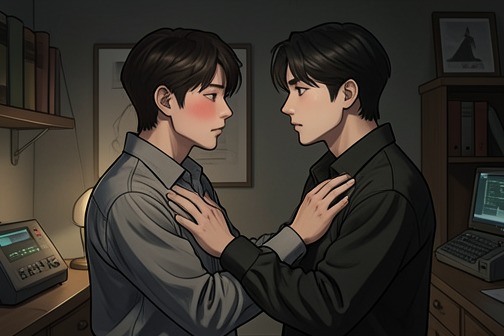
[Shelby Anderson Barnum](entity:character-recall-character-shelby-anderson-bar-2e17bb137697) and [Jungkook Jeon](entity:character-recall-character-jungkook-jeon-fc9d9ff5a3bc)’s relationship becomes sexual through a series of deliberate choices and pauses rather than a sudden overcoming of fear. For Shelby, intimacy means approaching sensations that can recall danger; for [Jungkook](entity:character-recall-character-jungkook-40c36baa104a), caring for her means making room for her to stop. Their first intercourse is therefore significant not as a cure for trauma, but as an experience in which desire, discomfort, explicit permission, and tenderness remain present together.
## From desire to a negotiated beginning
Jungkook makes his desire clear while also acknowledging the possibility of hurting or rushing Shelby. She reassures him that she trusts him, but the scene does not treat that reassurance as blanket permission. When they move into more intimate touch, he asks whether he may touch her, and she agrees. He caresses her gradually, moving across her arms, chest, stomach, hips, and thighs. At the point where the contact reaches a more vulnerable boundary, he looks to Shelby rather than assuming that her earlier agreement covers what comes next.
Shelby is hesitant. She wants to explore sex as something potentially reassuring and pleasurable, and she wants not to remain governed by fear, but the narrative makes clear that her trust in Jungkook is not complete. She signals agreement with a nod, and he begins to touch her more intimately. When unpleasant sensations arrive, she abruptly takes his hand away, tears in her eyes. Jungkook stops. He tells her to take her time, then asks again if she is sure when she says she wants to continue. The exchange makes consent responsive and revisable: her initial yes does not cancel her ability to interrupt, and her wish to proceed is checked again after the interruption.
## Attention as part of consent
When Shelby chooses to continue, Jungkook asks her to keep looking at him and focus on him. She does so, gradually concentrating on his presence until pleasure begins to replace the distressing sensations. Their eye contact is not presented as proof that fear has vanished; it is the means by which Shelby tries to remain connected to the immediate encounter. Her decision, her attention, and her physical responses carry the scene forward, while Jungkook’s attentiveness keeps the next step contingent on how she is doing.
At 18:02 in a later scene, their closeness has taken another step. Jungkook interrupts Shelby’s reading to draw her against him and tells her he wants to kiss her; she encourages him to do so. As their kissing grows more passionate, he explicitly assures her that he will do nothing without her permission. Shelby is reassured and initiates further contact herself, asking him to touch her. The scene gives her agency not only in accepting his advances but in beginning them. Jungkook responds carefully, allowing her to guide what happens and waiting as she takes off the shirt he lent her and places his hand on her stomach.
## Their first intercourse
Jungkook’s attention remains practical as well as affectionate. Before intercourse, he retrieves a condom and asks whether this is what Shelby wants. She confirms that it is. He checks again as they prepare, asking her to look at him and focus on him; once more, she confirms her choice. He enters her slowly, watching her face and eyes to see whether she is all right. When she experiences both pain and a sensation resembling pleasure, tears run down her cheeks. Jungkook stops and wipes them away. Shelby says she needs to adjust, and they wait. Only after she nods does he resume, carefully.
The encounter changes gradually rather than cleanly. At first Shelby’s discomfort and fear are still present; then, as Jungkook proceeds gently and attends to her responses, the unpleasant sensations recede and pleasure grows. Their physical closeness becomes more passionate, but the scene retains the earlier pattern of checking and attention. Jungkook’s care is not a substitute for Shelby’s consent: he asks, pauses, waits for her signal, and watches her expression. Her tears do not automatically mean she wants to stop, just as her wish to continue does not require him to disregard them. They make sense of the moment together, one confirmation at a time.
Afterward, they look at one another, exhausted and smiling. Jungkook removes the condom and throws it away before lying beside her; Shelby nestles against him, their legs entwined. She feels well and at ease, though a small ache remains. The contrast matters: intimacy brings relief and pleasure, but it does not erase the body’s capacity for pain. Jungkook kisses her forehead and strokes her skin as the calm of the moment settles over them.
## Aftercare and the limits of a breakthrough
Their care for one another continues beyond the sexual encounter. Jungkook takes Shelby into the shower, where she asks to sit. He follows her request, holds her with her back against his chest, and washes her gently. When he asks how she feels, she says she is serene and asks about him in return. The exchange gives the scene an aftermath built around mutual attention rather than treating intercourse as its own conclusion: Shelby names her state, Jungkook asks about it, and the pair remain together while they recover.
Elsewhere in the narrative, Shelby’s panic and trauma are shown through acute bodily distress and a clear refusal of unwanted touch. Jungkook has also stayed beside her when she was crying and unsure what she needed, without forcing her to accept contact. Against that recurring context, their sexual relationship develops through the same attention to choice. A further morning gesture—Jungkook intertwining their fingers and caressing her back as Shelby settles against his chest—extends tenderness into ordinary closeness. These moments do not establish that Shelby is healed or never afraid again. Their significance is narrower and more substantial: the relationship makes room for her to set the pace, change her mind, and seek closeness on her own terms, while Jungkook learns to express desire without turning it into pressure.
Event 23
Jungkook affronte Dong-hyun à Ellensburg

[Jungkook](entity:character-recall-character-jungkook-40c36baa104a)’s confrontation with [Dong-hyun](entity:character-recall-character-dong-hyun-f4e8bf200fa5) in [Ellensburg](entity:location-recall-location-ellensburg-f2b1300b3b7f) turns a chance encounter into a reversal of the violence that shaped his childhood. When Dong-hyun speaks contemptuously about [Min-ha](entity:character-recall-character-min-ha-03a1d6da02cc), Jungkook attacks him in public, breaks his nose, and has to be pulled away by onlookers. The scene gives Jungkook a moment of physical power over the father who once terrorized him, but its resort to repeated blows also makes the reversal troubling: he escapes Dong-hyun’s immediate control without escaping the violence that has bound them.
## Causes and background
The encounter interrupts a rare stretch of closeness and calm. After spending much of the previous week with Shelby, Jungkook leaves the campus to walk through town. He is smiling as he thinks about their growing attachment, which is still not quite love but has become a strong connection and a source of reassurance for Shelby. That mood vanishes when he recognizes Dong-hyun, a figure he associates with the fear and rage of his childhood.
Jungkook approaches his father aggressively and demands to know why he is in Ellensburg. Dong-hyun says he is there for work and adds that Jungkook’s brother is managing the company in his absence, disparaging Jungkook in the process. The belittling remark reinforces Jungkook’s sense that his father has not changed. His anger is joined by concern for Min-ha: he asks how she is and whether she remains under Dong-hyun’s control, suggesting that he fears she may still be trapped with him.
The question carries the history of Dong-hyun’s abuse. As a child, Jungkook tried to intervene when his father was shouting at Min-ha and told him to leave her alone. Dong-hyun laughed, smashed a drinking glass against the wall, and struck Jungkook after a shard cut his face. He then held the boy by the collar and slapped him repeatedly. In Ellensburg, the adult Jungkook stands before the same man, but now the old helplessness is mixed with the capacity to strike back.
## What happens
Dong-hyun answers that Min-ha left several months after what he calls Jungkook’s spoiled adolescent crisis. He follows the claim with a degrading insult about her and a sexualized assertion that she had relied on men to support herself. The news that she left answers part of Jungkook’s question, but comes from Dong-hyun during a hostile exchange; the scene does not independently verify the circumstances of her departure. What is unmistakable is the contempt with which Dong-hyun speaks about her.
Jungkook responds without waiting. He grabs Dong-hyun by the tie and punches him in the face, breaking his nose. He keeps hitting him, eventually straddling him, until passersby and shopkeepers manage to pull him away. Jungkook allows them to separate the two men. He recognizes that, if left to himself in that moment, he might kill his father without remorse. The interruption therefore checks an assault that has gone beyond a single retaliatory blow, even as Jungkook’s fury remains unresolved.
He spits out an insult and orders Dong-hyun never to speak about Min-ha that way again. With tears filling his eyes, Jungkook looks at the man who traumatized his childhood. Dong-hyun is holding his bleeding nose and appears frightened. For once, he is the vulnerable and powerless one, while Jungkook stands over him. Jungkook then grabs his father by the shirt, draws him close, and warns him that he may stay in Ellensburg but must be careful not to cross Jungkook’s path.
## Consequences and significance
Jungkook releases Dong-hyun and walks away as his father and the onlookers watch in shock. The encounter does not produce a reconciliation or a resolution of their family history. Instead, it ends with distance enforced by a threat: Dong-hyun remains in the town if he chooses, but Jungkook has made clear that their next meeting may not end the same way.
The scene’s reversal is concrete rather than complete. Dong-hyun, who once used physical force to silence a frightened child, now faces the fear and helplessness of being attacked by his grown son. Jungkook’s defense of Min-ha also reveals how strongly the old abuse continues to shape his reactions. He is no longer the boy unable to protect her, yet he acts through the very violence that once marked his father’s power. His departure interrupts the beating, but does not make the confrontation an uncomplicated victory: it leaves both the changed balance between father and son and Jungkook’s dangerous rage in view.
Event 24
La bagarre de Jungkook et Dong-hyun devant The Oak
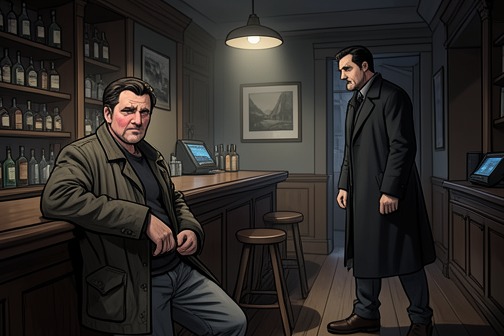
The fight between [Jungkook](entity:character-recall-character-jungkook-40c36baa104a) and [Dong-hyun](entity:character-recall-character-dong-hyun-f4e8bf200fa5) outside [The Oak](entity:location-recall-location-the-oak-327eb7478197) turns a chance encounter into a violent reversal of their long-standing relationship: Jungkook, drunk and enraged, briefly makes his abusive father experience the helplessness he once imposed on his son. The reversal is neither clean nor lasting. A bystander summons the police, Jungkook is detained, and Dong-hyun initially seeks to have him prosecuted. The immediate crisis ends only after Shelby challenges Dong-hyun at the hospital and he declines to proceed with the complaint.
## Causes and Background
At 9:22 p.m. in [Ellensburg](entity:location-recall-location-ellensburg-f2b1300b3b7f), Jungkook is at The Oak, where he has already finished six glasses of whiskey and rapidly drinks a seventh. The bartender watches him with concern, recognizing in the student’s expression the possibility that his grief and anger may turn into a fight. He advises Jungkook that alcohol will not solve his problems and urges him to go home and rest. Jungkook accepts the advice, pays his bill, puts on his jacket, and leaves.
Outside, he sees a car he knows and immediately regrets having come out: Dong-hyun is there. The town’s small size makes their encounters difficult to avoid, but the meeting is more than a passing inconvenience for Jungkook. His father’s presence brings anger and adrenaline to the surface. Dong-hyun enters the bar, deliberately brushes Jungkook with his shoulder, and mocks him for smelling of alcohol, comparing him unfavorably with his father. The taunt turns an encounter into a confrontation.
The scene draws force from the family history behind it. In a childhood memory, eight-year-old Jungkook tries to intervene when his parents are fighting and tells his father to leave his mother alone. Dong-hyun responds by throwing a glass; a shard cuts Jungkook’s face, and he grabs the boy by his shirt and slaps him repeatedly. Later, [Sunmi](entity:character-recall-character-sunmi-46eb799eb5da) recalls that Jungkook once came to her home with a battered face, claimed he had fought at school, and eventually fled his father’s home at sixteen to take refuge with her. The violence outside The Oak thus repeats an old family pattern even as Jungkook attempts to reverse who holds power.
## The Fight Outside The Oak
When Dong-hyun’s mocking continues, Jungkook grabs his expensive jacket. Dong-hyun shoves him to the ground and laughs. The laugh recalls the sound that frightened Jungkook when he was younger, but this time Jungkook is no longer only a child trying to withstand it. Dong-hyun approaches, seizes him by the collar, and punches him repeatedly in the face. Jungkook struggles to stop him, but his intoxication leaves him physically impaired; Dong-hyun continues until blood appears.
Jungkook’s response is a sudden reversal. He pushes Dong-hyun down, straddles him, and grips his throat. The act gives Jungkook the chance to make his father feel vulnerable and afraid, a feeling he has long wanted to force upon him. He pins Dong-hyun against his luxury car and hits him, taking pleasure in the power the confrontation seems to give him. The narration connects this rush to the adrenaline Jungkook pursues and to the inner demons that appear as witnesses to his revenge. Yet the violence does not stay within the limits of retaliation: despite Dong-hyun’s screams and demands to be released, Jungkook keeps striking him and tightening his hold.
The bartender, who had earlier advised Jungkook to leave, sees the fight through a window. He rushes outside and tries to pull Jungkook away, but cannot stop him and ends up on the ground, winded. He calls 911. The intervention shifts the struggle from a private family confrontation into a police matter, and Jungkook later tells [Namjoon](entity:character-recall-character-namjoon-4109d4fa2b00) by phone that he is being held in custody and that his father is in Ellensburg.
## Detention and the Hospital
Jungkook’s friends are not told how much bail will cost when Shelby asks, and the group is instructed to sit beside him. After minutes stretch into hours, a police officer says they must go to the hospital to find out whether Dong-hyun will file a complaint against his assailant. Jungkook objects to hearing his father described that way, but Namjoon tells him to stay quiet rather than worsen his situation.
At [Blossom Hospital](entity:location-recall-location-blossom-hospital-743188bc7552) at 11:30 p.m., Dong-hyun, wearing a neck brace and displaying a badly bruised face, says he will press charges. Jungkook remains handcuffed and reacts with disbelief and anger; Namjoon restrains him before he can reach his father. Dong-hyun claims that Jungkook has disfigured him. Jungkook answers by invoking the harm Dong-hyun inflicted on his mother and on him. The police pin Jungkook against a wall as the argument threatens to escalate again.
Shelby, who has been silent and whose silence has worried both students during the journey, interrupts calmly. She challenges Dong-hyun’s demand for justice by naming the violence he inflicted on his wife and son, and tells him that wealth does not make him a man of value. She advises him not to file against Jungkook. Dong-hyun calls her words a threat, but she presents them as advice and warns that she is not the person who will come back to finish what she started. Her confident manner conceals fear about what Dong-hyun may do next. Jungkook, however, is absorbed by her intervention.
Dong-hyun eventually tells them to leave. When a police officer asks again about the complaint, he answers by shaking his head. The three students leave the hospital for the station, relieved that he will not pursue it. In the ride back, Shelby turns toward the passing landscape and remains quiet. Jungkook cannot read her expression and wonders why she defended him despite avoiding contact with him; Namjoon offers him reassurance.
## Consequences and Significance
The outcome is an uneasy reprieve, not a resolution of the father-son conflict. Jungkook has made Dong-hyun afraid, but only through the same physical coercion that shaped Jungkook’s childhood. His intoxication helps leave him unable to defend himself at first, then lowers the restraint that might have prevented the attack from becoming so severe. The scene therefore makes revenge feel powerful to Jungkook while showing its cost: the bartender is knocked down, police become involved, and Jungkook ends the night in custody rather than having escaped the family violence that provoked him.
The hospital confrontation shifts the event’s final emphasis from Jungkook’s blows to Shelby’s challenge. She does not erase the assault or its consequences; she exposes the imbalance in Dong-hyun’s appeal to justice by setting his complaint against his earlier abuse of his wife and son. His silent decision not to proceed releases the immediate pressure on Jungkook, while Shelby’s intervention makes visible a change in their relationship: despite her distance from him, she chooses to speak in his defense. The episode leaves the larger conflict unresolved, but changes who is able to speak and whose account of the family’s violence is heard.
Event 25
La vente de l’Ares Garden
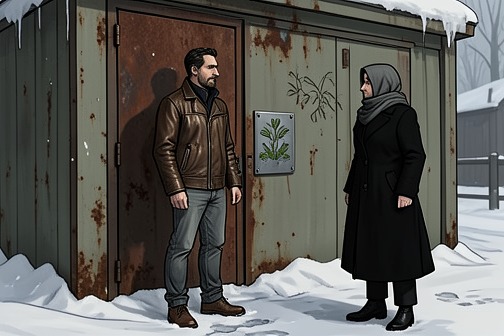
[La vente de l’Ares Garden](entity:event-recall-event-la-vente-de-l-ares-gard-06a357a7d4a5) marks the collapse of the place that had organized [Jungkook Jeon](entity:character-recall-character-jungkook-jeon-fc9d9ff5a3bc)’s darkest identity and his relationship with [Chen Wu](entity:character-recall-character-chen-wu-8a530e94a8d8). When [Jungkook](entity:character-recall-character-jungkook-40c36baa104a) and [Shelby Anderson Barnum](entity:character-recall-character-shelby-anderson-bar-2e17bb137697) encounter [Chen](entity:character-recall-character-chen-1d684f527331) outside the venue, Chen reveals that he has signed the papers transferring ownership. The news turns a familiar space of illegal combat into a site of loss: Chen is surrendering the business because he can no longer manage it, while Jungkook is forced to confront the disappearance of the arena in which he had become its emblematic fighter.
## Causes and Background
The [Ares Garden](entity:location-recall-location-ares-garden-5a1d38541469) is not merely a boxing venue. It is known for illegal fights, and Jungkook has become its public face, entering the ring first and fighting until an opponent is unconscious. The venue’s atmosphere is tied to the darkness in which he feels able to release the violent part of himself. Yet even within that brutality, Jungkook retains one limit: although a fight to the death might be conceivable in such a world, he does not want another person’s death on his conscience. [Namjoon Kim](entity:character-recall-character-namjoon-kim-0444585766b6) understands this boundary and supports him before his matches, making the arena part of a relationship of loyalty as well as a system of violence.
Chen’s decision arises from his inability to continue managing the business. He tells Jungkook that the buyer is a friend who will take care of everything with his daughter, presenting the transfer as an orderly handover rather than an abrupt destruction of the venue. That reassurance does not soften the impact. For Jungkook, the sale confirms that the space he treated as permanent was always vulnerable to forces beyond his control.
## What Happens
The event takes place after Jungkook and Shelby pass near the Ares Garden during their work together. They cross the road cautiously and approach Chen, who immediately embraces both younger people. After greeting them, he explains that he has just signed the sale documents. Jungkook reacts with disbelief and asks why Chen would sell the venue. Chen answers that he can no longer run the business and adds that the purchaser is someone he trusts.
The announcement produces an immediate physical and emotional change in Jungkook. The former underground boxer does not openly display his pain at first, but the news constricts him and breaks his heart because the Ares Garden has occupied most of his time. The venue’s loss is therefore experienced as the loss of a personal territory, a professional identity, and a relationship with his mentor. His grip on Shelby’s hand weakens until he releases it completely, a small gesture that makes his distress visible to her.
Jungkook leaves before saying goodbye to Chen. He walks quickly with one objective: to discharge the emotion that he cannot express in conversation. Shelby tries to follow him, but her smaller size prevents her from catching up. She falls again, aggravating the pain in her left leg, then rises with difficulty and continues after him toward the university student dormitory. The scene converts the sale from a piece of business news into an immediate crisis between Jungkook’s uncontained anger and Shelby’s determination to remain near him.
## Consequences and Aftermath
The sale removes the institutional setting that had given Jungkook’s violence a routine, an audience, and a place of belonging. At the Ares Garden, he could enter the ring, receive the crowd’s acclaim, accept dollar bills, and transform inner darkness into a recognizable role. Once Chen sells it, that role loses its established stage. Jungkook’s first response is not acceptance but flight and the desire to find another outlet for his aggression.
The event also changes the balance between Chen and Jungkook. Chen remains a mentor figure, but he can no longer preserve the environment through which that mentorship operated. Jungkook’s refusal even to offer a farewell shows that the sale feels like abandonment or dislocation, regardless of Chen’s practical reasons and his assurance that a trusted buyer will assume responsibility. The venue’s transfer thus fractures an attachment without necessarily turning the two men into enemies.
Shelby’s presence gives the aftermath a different direction. She has already recognized the darkness surrounding Jungkook, just as [Sunmi Eun](entity:character-recall-character-sunmi-eun-c82ef680ac18) perceives a comparable emptiness in Shelby during therapy. Their connection is described as a bond between two lost people who search for themselves while trying to find each other. In that context, Shelby’s pursuit after Jungkook falls and hurts herself again is more than physical accompaniment: it places their fragile attachment beside the collapse of his older world. Her effort to reach him suggests that the relationship may become the new, unstable space in which he must confront what the Ares Garden once allowed him to avoid.
## Narrative Significance
The sale is a value shift from belonging to dispossession. Before Chen’s announcement, the Ares Garden functions as Jungkook’s domain, however dangerous its rules and methods may be. After the announcement, the same place becomes evidence that his identity has been built on something temporary. The scene gains force from the contrast between Chen’s calm explanation of a signed transaction and Jungkook’s nearly wordless devastation. A legal transfer produces an emotional rupture that no contract can contain.
Its placement within the wider story also connects several networks of care and damage. Jungkook’s underground world is linked to Chen’s authority and [Namjoon](entity:character-recall-character-namjoon-4109d4fa2b00)’s friendship; Shelby’s response links it to trauma, therapy, and mutual protection. Elsewhere, Shelby’s psychological treatment addresses self-harm, an eating disorder, and cannabis use, while her friends intervene when they see the physical consequences of her pain. The sale belongs to the same larger pattern: healing cannot depend on a single person or a single place, especially when that place has normalized violence.
The event therefore prepares Jungkook for a transition away from the Ares Garden’s closed circuit of darkness, spectatorship, and bodily punishment. It does not make him gentle immediately. Instead, it exposes the cost of the world that had made his brutality legible and leaves him momentarily without its structure. The later image of Jungkook and Shelby sharing a home in [Los Angeles](entity:location-recall-location-los-angeles-11eff639bdf5) gives that rupture a distant counterpoint: the fighter’s former territory is replaced, however imperfectly, by a private life organized around attachment rather than combat.
Event 26
La réouverture de l’Ares Garden
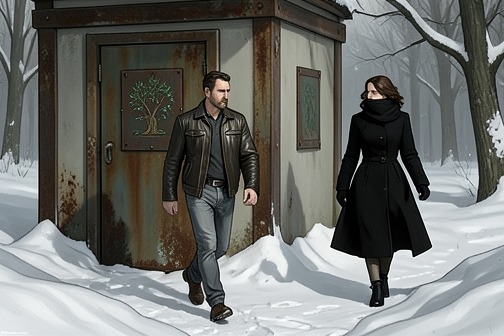
The reopening of [Ares Garden](entity:location-recall-location-ares-garden-5a1d38541469) is a decisive turning point in [Jungkook Jeon](entity:character-recall-character-jungkook-jeon-fc9d9ff5a3bc)’s trajectory: after the venue’s closure and [Chen Wu](entity:character-recall-character-chen-wu-8a530e94a8d8)’s loss of control, its new owners invite [Jungkook](entity:character-recall-character-jungkook-40c36baa104a) back to the ring. The event promises renewed purpose, but it also reactivates the violent underground world that has repeatedly endangered him and those close to him.
## Causes and Background
The announcement occurs after Jungkook has left a session with [Sunmi Eun](entity:character-recall-character-sunmi-eun-c82ef680ac18), who has supported his gradual movement away from rage and the impulse to use violence as emotional release. Walking through snow, he passes the closed Ares Garden and encounters [Evie Jenkins](entity:character-recall-character-evie-jenkins-24a47d51500b), whose pink hair and scarred face immediately connect her to [Shelby Anderson Barnum](entity:character-recall-character-shelby-anderson-bar-2e17bb137697)’s earlier conflict. [Evie](entity:character-recall-character-evie-fa6b246e6974) tells him that her father has bought the establishment from [Chen](entity:character-recall-character-chen-1d684f527331), a longtime friend of the family. The transfer therefore changes not only ownership but also the institutional future of the boxing venue.
Evie explains that the business will continue, although its public presentation will change drastically. The renewed Ares Garden is intended to compete with [The Obsidian](entity:location-recall-location-the-obsidian-9be4a3c83eb9), which she describes as a luxury enterprise built on deception and exploitation. Her plan is to draw away The Obsidian’s customers by offering an alternative spectacle. The reopening is thus framed as both a commercial challenge to [Bruce Wilson](entity:character-recall-character-bruce-wilson-17c288308948) and a continuation of the venue’s underground identity under a new outward image.
## What Happens
[Spencer Jenkins](entity:character-recall-character-spencer-jenkins-6c9fec36ab98) approaches Jungkook and introduces himself as Evie’s father. He says that Chen has praised Jungkook’s abilities and asks whether Evie has told him that Ares Garden will reopen the following week. The specific appointment is set for Wednesday, 15 January, at 10 p.m., giving the announcement a concrete deadline rather than leaving the return as a vague possibility.
Jungkook’s response reveals the event’s immediate emotional force. When he looks toward the establishment, his expression fills with anticipation, and Spencer notices that eagerness. Spencer tells him that he is first on the list and that everyone is waiting for the champion’s return. Jungkook accepts without hesitation, saying that he will be pleased to return to the ring. Spencer then gives him a card containing his contact details, formalizing the invitation and establishing the new owner as Jungkook’s future employer.
## Participants and Stakes
Jungkook is the central returning figure, but the event is structured around a broader transfer of power. Chen remains important as the former manager who recommended him, while Spencer Jenkins assumes control of the establishment and presents himself as the person capable of restoring its business. Evie serves as the messenger of the new direction and as a reminder that the reopening is tied to a family enterprise rather than to Chen’s previous authority.
The stakes are double. On the public level, Ares Garden is entering competition with The Obsidian, making the reopening a challenge to Bruce Wilson’s influence and customer base. On the personal level, Jungkook is being offered a return to the place where he established himself as champion. The invitation appeals to his identity and history, yet it also threatens to pull him back toward the aggression, injury, and violent impulses from which he has begun trying to recover.
## Consequences and Aftermath
The immediate consequence is Jungkook’s commitment to appear at the reopening and resume fighting. The closed venue becomes a promise of renewed action, and Spencer’s confidence in the “champion” restores Jungkook’s sense of belonging within that world. The event also gives the plot a new center of gravity: Ares Garden is no longer merely the site of Jungkook’s past combats but a reorganized institution with a new owner, a new commercial strategy, and an explicit rivalry with The Obsidian.
The reopening also creates a sharp contrast between Jungkook’s therapeutic progress and the attraction of the ring. Shortly before the encounter, he has described Shelby’s presence as helping him forget his anger and his desire to lash out, while he tries to help her feel loved. His immediate excitement at returning to Ares Garden shows that recovery has not erased the pull of combat. The event therefore does not resolve his struggle; it places his emerging tenderness beside the old identity of the celebrated fighter and leaves the consequences of that choice open.
## Narrative Significance
As a narrative event, the reopening functions as a threshold. Jungkook is offered a route back into a familiar world just as his relationships and emotional life have begun to provide another kind of direction. The invitation carries the structure of a return to an old arena, but it is not a simple restoration: the venue has changed hands, its public cover is being redesigned, and its purpose is now entangled with competition against The Obsidian.
The value shift is from closure and uncertainty to opportunity and danger. Ares Garden’s doors are still shut when Jungkook first sees it, yet the promised reopening makes the abandoned-looking place vivid again. His anticipation supplies the event’s final charge: the champion is expected to return, and he agrees to do so. That agreement advances the plot while exposing the unresolved contradiction at the heart of Jungkook’s recovery—he wants a gentler life, but the world that once gave shape to his anger is ready to welcome him back.
Event 27
Le projet photographique de Shelby et Jungkook

[Le projet photographique de Shelby et Jungkook](entity:event-recall-event-le-projet-photographiqu-700c659505ea) is both an academic collaboration and a decisive stage in their emotional rapprochement. What begins as a proposal to use [Jungkook](entity:character-recall-character-jungkook-40c36baa104a) as a model becomes a reciprocal practice in which they photograph, draw, pose for, and encourage one another. The camera records attraction, but it also creates a structure in which vulnerability can be approached through choice, play, and trust.
## Origin and Purpose
The project is proposed by Shelby after she asks whether Jungkook can serve as her model for a photography assignment. Her request is deliberately direct, and Jungkook responds that he had already intended to work with her and wanted her to be his model. The exchange establishes the project as mutual rather than one-sided: Shelby does not merely observe Jungkook, and Jungkook does not merely become the subject of her gaze. Each agrees to place the other before the lens.
That reciprocal arrangement carries emotional significance because their closeness has developed amid Shelby’s anxiety and Jungkook’s own guardedness. Their earlier encounters include moments in which Shelby panics and refuses unwanted contact, while Jungkook learns to remain beside her without forcing an immediate solution. Against that background, the photographic project gives intimacy a safer, more controlled form. The participants can decide where to stand, how to pose, when to touch, and when to stop; the resulting images emerge from collaboration rather than capture.
## The First Sessions
Jungkook begins by photographing Shelby in their shared domestic space. He positions her in the upstairs corridor facing a window, with one hand resting on the frame and her head turned slightly to the right. When he moves closer for portraits, he notices her embarrassment and takes one of her hands to help her relax. His reassurance treats her discomfort as something to be accommodated rather than ignored, and the session combines technical direction with personal tenderness.
The work then moves between photography and drawing. Jungkook gives Shelby a blank page from a notebook and a pencil, asking her to draw whatever she wishes while he photographs her. The arrangement reverses the usual hierarchy of a portrait session: she is not reduced to a passive body, because her drawing gives her an activity, a decision, and a way to occupy the moment. At the same time, his attention unsettles her; she recognizes that his gaze is charged with desire rather than professional detachment. The project therefore holds two currents together, artistic concentration and physical attraction, without dissolving either into the other.
When the session ends, Jungkook shows Shelby the photographs. She is left speechless by the quality of his work before telling him that the images are beautiful. Her response confirms his ability as a photographer and also changes the emotional balance between them: she is no longer only someone being looked at, but someone capable of recognizing and affirming his skill.
## Reciprocity, Trust, and Play
The project becomes more intimate when Jungkook asks Shelby whether she trusts him before proposing a new photograph. She answers yes. He sets up the camera on a tripod, positions himself behind her, and places his hands over her stomach while maintaining eye contact. They smile at one another with a softness she has not previously associated with their guarded relationship. The image is built from simultaneous exposure: the camera preserves their closeness while their attention remains fixed on each other.
The session develops into play. Shelby puts on music, including “[Con Calma](entity:expression-recall-expression-con-calma-0249acf44ee4),” and the two students move with the rhythm while the camera records them in a relaxed, unguarded atmosphere. They adjust the camera, raise the tripod, switch it to burst mode, and draw each other into the frame. The technical apparatus becomes less an observing instrument than a participant in their shared improvisation. Its timed images preserve gestures that are spontaneous, affectionate, and not fully controlled by either subject.
Jungkook’s comment that Shelby looks magnificent when she smiles becomes another turning point. She responds by kissing him, jumping to reach him, and wrapping her arms around his face while he holds her against him. The photographic setting does not merely document their attraction; it helps bring a previously contained feeling into action. Their physical closeness remains connected to the session’s playful structure, making the project a place where desire can be expressed through mutual participation rather than intimidation.
## The [Camera](entity:object-recall-object-1b1cc44c8212) as Shared Witness
The reciprocal nature of the project is especially clear on the morning when Jungkook photographs Shelby while she is asleep. He wakes before her, takes his camera from his backpack, climbs onto the bed quietly, and captures several images while she lies on her back with her face turned to the right. When Shelby opens her eyes and realizes what he has done, she laughs in embarrassed disbelief. The moment could have become an intrusion, but Jungkook immediately shows her the photographs, and she hides against him while he comforts her.
He assures her that he is not lying to her and will not lie about the photographs. The statement gives the images an ethical dimension: the value of the camera depends on honesty and on Shelby being allowed to see what has been made of her image. She responds by kissing him, then takes her own camera and photographs him in return. She captures his hands, his profile, the light on his face beside the window, and the small beauty mark beneath his lower lip. The gaze is no longer controlled by Jungkook alone; Shelby directs it, selects details, and preserves the parts of him that draw her attention.
Their exchange also reveals how photography changes perception. Through the lens, Shelby becomes absorbed by Jungkook’s beauty, while Jungkook’s broad smile appears to her as something unfamiliar and radiant. The camera makes private details visible without stripping them of intimacy. It turns a face, a hand, a posture, and a fleeting expression into evidence of a gentler self that ordinary guarded behavior might conceal.
## Artistic and Narrative Significance
The project’s significance lies in the way it joins creative labor to emotional repair. It gives Shelby a setting in which she can move from being overwhelmed by another person’s presence to choosing how she will be seen. It gives Jungkook a role different from that of the fighter preparing for underground combat at [Ares Garden](entity:location-recall-location-ares-garden-5a1d38541469), the tattoo apprentice developing a professional identity, or the angry young man tempted to answer injury with violence. In the photographic sessions, attention, patience, and technical skill replace force as the means of connection.
The project also establishes a contrast between images made through mutual trust and images later used coercively. [Kayla](entity:character-recall-character-kayla-33460f2ea995)’s phone video is presented to Shelby as a weapon intended to shock and humiliate her, while the photographs made by Shelby and Jungkook are repeatedly shown, exchanged, and answered by the person depicted. One medium exposes a body without meaningful consent; the other becomes a negotiated record of closeness. This contrast makes the project central to the book’s treatment of images, privacy, and control.
By the end of the documented sessions, photography has become more than coursework. It is a shared vocabulary through which Shelby and Jungkook test trust, acknowledge desire, and practice seeing one another without the defensive masks that dominate their wider lives. The project’s eventual importance rests not only on the images it produces, but on the relationship that becomes possible while those images are being made.
Event 28
Le projet photo est sélectionné pour une exposition universitaire

The selection of Shelby and [Jungkook](entity:character-recall-character-jungkook-40c36baa104a)’s photography project for a university exhibition is a decisive turning point in their forced artistic partnership. Madame Clark’s praise confirms that their work has achieved more than technical success: its scenes, clothing, facial expressions, and carefully created intimacy communicate a beauty she can immediately recognize. Yet the invitation also exposes the emotional cost of being seen. For Shelby, public display threatens to make both the project and the private self it contains visible to the students of [Central Washington University](entity:location-recall-location-f3f99ea15cd4); the opportunity therefore becomes a test of whether artistic recognition can coexist with safety and personal control.
## The Project Receives Institutional Recognition
Madame Clark summons Shelby and Jungkook to the amphitheater after reviewing the book they submitted. Her response is unequivocal: she calls the project fantastic and singles out the combination of different scenes, clothing choices, and expressions. More significantly, she says that the photographs convey the beauty the two students wanted to transmit and praises the notion of intimacy they established. The project is thus recognized as a coherent artistic statement rather than a routine assignment or an accidental record of two classmates working together.
The teacher’s assessment gives the photographs an external legitimacy that Shelby and Jungkook cannot provide for themselves. Their smiles show that the praise matters to both of them, while Jungkook’s gentle caress of Shelby’s hand turns the professional compliment into a moment of mutual reassurance. The project has been made through collaboration, but Madame Clark’s response confirms that its emotional and visual unity is legible to an observer outside their relationship.
## The Invitation and Its Stakes
Madame Clark then reveals that a photography exhibition will take place at the end of the year and asks whether Shelby and Jungkook would like to participate. The invitation changes the meaning of the project. Until this point, the photographs can remain within the limited space of coursework and the relationship between the two collaborators. Exhibition would place them before a wider academic audience, making their artistic choices and the intimacy between the subjects publicly available for interpretation.
Shelby’s immediate attention shifts to Jungkook, whose reaction is equally cautious. He looks to her without forcing an answer, silently asking whether she is willing to move forward. Her hesitation is not caused by indifference to the project’s quality. Instead, she worries that exhibiting Jungkook before the students of Central Washington University would expose her as well. The photographs have created a shared image, so public recognition cannot be divided neatly between the two artists: his visibility would carry hers with it.
The event therefore places artistic opportunity against personal vulnerability. Shelby understands that the exhibition could affirm their work, but she also recognizes that it could remove the protective distance between private experience and public judgment. The question is not simply whether the project deserves to be shown. It is whether Shelby can tolerate being looked at through a work that expresses intimacy, and whether that decision can remain hers rather than becoming an obligation created by praise.
## [Consent](entity:concept-recall-concept-consent-de2391c15f7f) Becomes Part of the Collaboration
Madame Clark explicitly tells them that they do not have to answer immediately and gives them time to think. Her refusal to demand an instant decision preserves their agency at the precise moment when institutional approval might otherwise create pressure. The exhibition is offered as an opportunity, not treated as the automatic next step after success. That distinction is especially important because Shelby’s anxiety is already beginning to intensify.
When they leave the amphitheater, Shelby falls into heavy silence and cannot quiet her thoughts about the exhibition. Jungkook notices her distress and stands in front of her, gently taking her shoulders. He tells her that they are not obligated to participate and that they will not do it if she does not want to. His response makes her consent the condition of the project’s public continuation. Rather than interpreting the invitation as a prize that must be accepted, he recognizes that exposure carries a separate cost for her.
Jungkook then proposes a deliberately ordinary alternative: they can go to his room, watch a film or a series, and relax. The suggestion redirects their immediate goal from achievement to safety. In this exchange, the project’s most consequential success is not merely its selection; it is the way the selection reveals a more careful form of partnership, one in which public recognition does not override the more vulnerable collaborator’s boundaries.
## Place in Their Relationship and the Plot
The invitation arrives within a broader pattern in which art repeatedly brings Shelby and Jungkook closer while also confronting them with the danger of being known. Their project is built around intimacy, and Madame Clark’s praise identifies that intimacy as its central artistic strength. At the same time, Shelby’s response shows that intimacy can feel radically different when controlled by the people inside it than when presented to an audience outside it.
The scene develops their relationship through restraint rather than a dramatic declaration. Jungkook does not decide for Shelby, dismiss her fear, or use the teacher’s approval to persuade her. He waits, reads her silence, and offers reassurance. The project consequently becomes evidence of both artistic compatibility and relational change: their collaboration can produce a shared work, but its public future must be negotiated through trust. The exhibition remains an invitation rather than a completed event, yet that uncertainty is itself meaningful. The decisive movement is from recognition to choice, with Shelby’s freedom to refuse preserved at the center.
Event 29
La fête de Noël chez les Barnum

[La fête de Noël chez les Barnum](entity:event-recall-event-la-f-te-de-no-l-chez-le-59947d96badd) is the [Christmas Eve](entity:time-recall-time-69a98a02911e) celebration [Shelby Anderson Barnum](entity:character-recall-character-shelby-anderson-bar-2e17bb137697) arranges at the Barnum family home in [Ellensburg](entity:location-recall-location-ellensburg-f2b1300b3b7f). Planned at short notice but carried by genuine enthusiasm, the gathering creates a temporary community around food, music, presents, and mutual attention. It also becomes a revealing contrast between ordinary festivity and the characters' continuing psychological wounds: the evening allows affection to become visible, but it does not erase the fear and vulnerability that accompany Shelby Anderson Barnum and [Jungkook Jeon](entity:character-recall-character-jungkook-jeon-fc9d9ff5a3bc).
## Planning and Participants
On Monday, December 23, Shelby Anderson Barnum creates a group called “[Christmas](entity:time-recall-time-0cffe7da2c4d) 🎅🏻🎄” and adds Jungkook Jeon, [Dorcas Peters](entity:character-recall-character-dorcas-peters-cc0824b30f37), [Cassiopée Smith](entity:character-recall-character-cassiop-e-smith-7af6a7136600), and [Namjoon Kim](entity:character-recall-character-namjoon-kim-0444585766b6). She proposes that everyone celebrate Christmas Eve together the following day, apologizing for the late notice. When the group responds with enthusiasm, Shelby Anderson Barnum supplies the address and sets the meeting time for 7:30 p.m.; her playful insistence that her “authority” should have been obvious turns the invitation into a small act of social leadership. The event is therefore not an accidental visit but an occasion Shelby Anderson Barnum actively makes possible.
The gathering brings together friends whose lives have often been marked by isolation, conflict, exhaustion, or emotional crisis. Namjoon Kim plans to make bibimbap with his mother, while Dorcas Peters and Cassiopée Smith contribute food of their own. Jungkook Jeon arrives as part of the group, and [Loki](entity:character-recall-character-loki-c3c7344a882c) is present beside Shelby Anderson Barnum during the evening. The resulting circle is intimate rather than public: a chosen social space in which friendship can be practiced through preparation, shared meals, teasing, and gifts.
## The Christmas Eve Gathering
On Tuesday, December 24, “[Last Christmas](entity:expression-recall-expression-last-christmas-7bd3227cbe17)” by Wham! plays in the living room. Jungkook Jeon is outside smoking when he turns and sees Shelby Anderson Barnum dancing and singing with Loki beside her. He smiles, extinguishes his cigarette, returns inside, and watches her from the doorway. Shelby Anderson Barnum notices him when she turns toward him, and their brief exchange about her energy establishes the evening's emotional register: playful, observant, and charged by an intimacy that no longer needs to announce itself loudly.
The practical work of hospitality follows. The guests take their food into the kitchen and put it into the refrigerator. Dorcas Peters has brought gingerbread-man-shaped biscuits and a chocolate cake; Cassiopée Smith has brought wine; champagne is also kept chilled. Jungkook Jeon carries the small savory pastries, while Shelby Anderson Barnum organizes the kitchen. Once everything is arranged, the group sits down to appetizers with a Christmas playlist, transforming separate contributions into a communal meal.
Conversation keeps the gathering connected to the participants' wider lives. Dorcas Peters asks about the photography project, and Cassiopée Smith explains that her part is nearly finished. Later, Cassiopée Smith praises Shelby Anderson Barnum's cooking, while Shelby Anderson Barnum returns the compliment by mentioning Namjoon Kim's bibimbap and Dorcas Peters's dessert. The exchange is more than table conversation: it gives each person a visible contribution and makes competence, generosity, and recognition part of the celebration.
## Gifts and Intimacy
The gift exchange deepens the event's movement from group fellowship toward individualized affection. Shelby Anderson Barnum and Jungkook Jeon distribute presents beside the Christmas tree. Namjoon Kim receives a collector's edition of Emily Bronte's Wuthering Heights, a book he had wanted to buy during the holidays. Dorcas Peters receives a watercolor painting set, and her immediate embrace of Shelby Anderson Barnum shows how directly the present reaches her. Dorcas Peters and Cassiopée Smith give Shelby Anderson Barnum a new skateboard decorated through a Santa Cruz Skateboards and MARVEL collaboration: the black-and-green design features the antihero Venom and recalls an enthusiasm she had already held in high school.
Shelby Anderson Barnum's gift to Cassiopée Smith is a candle kit, which Cassiopée Smith receives with happiness and already imagines placing in her home. These objects make friendship tangible. They are not generic tokens but carefully chosen signs of remembered preferences: a desired book, a creative tool, a familiar skateboard design, and candles with an anticipated place in domestic life.
Jungkook Jeon and Shelby Anderson Barnum reserve the most intimate exchange for each other. Jungkook Jeon gives Shelby Anderson Barnum a notebook whose cover he has drawn with a pale green luna moth among cherry blossoms. The image joins two delicate forms in a design made specifically for her, and Shelby Anderson Barnum responds by kissing his left cheek. She gives Jungkook Jeon a framed drawing of Lilium lancifolium that she had made herself. His smile and passionate kiss show that the drawing matters not merely as an artwork but as evidence of her attention. He thanks her by calling her “mon ange,” a term of tenderness that turns the exchange into a visible confirmation of their bond.
## Refuge, Memory, and Trauma
After midnight, still at the Barnum family home, Shelby Anderson Barnum and Jungkook Jeon remain together and quietly joke about Namjoon Kim's gift. She nestles against Jungkook Jeon with her face against his neck, and the party's noise gives way to a private moment of closeness. The shift from dancing, cooking, and group conversation to murmured amusement and physical shelter shows how the celebration contains several scales of intimacy without abandoning its communal foundation.
The event's warmth must nevertheless be read against the broader pattern of trauma in which these characters live. Shelby Anderson Barnum's panic attacks repeatedly make touch dangerous when it arrives without permission. In an earlier crisis, Cassiopée Smith follows her after she flees a classroom, but Shelby Anderson Barnum recoils when Cassiopée Smith places hands on her shoulders and remains curled up, refusing contact. Jungkook Jeon responds differently in the locker-room aftermath of another episode: he finds Shelby Anderson Barnum trembling beneath the running water, turns it off, crouches in front of her, and simply stays beside her until she calms. When she later breaks down after seeing the severity of her injuries, Jungkook Jeon approaches, crouches, and places his right hand on her knees while she seeks comfort. These episodes clarify why the Christmas gathering's gentleness matters: care is not assumed to be harmless, but learned through attention to Shelby Anderson Barnum's boundaries.
The same vulnerability resurfaces after the celebration in a later encounter with [Madison Jefferson](entity:character-recall-character-madison-jefferson-657bf438d528). Shelby Anderson Barnum experiences suffocation, painful images involving water, and a sudden collapse; when Madison Jefferson tries to help, Shelby Anderson Barnum pushes her away and asks not to be touched. Madison Jefferson recognizes the panic attack, leaves to find Jungkook Jeon, and tells him what has happened. Jungkook Jeon immediately runs to Shelby Anderson Barnum, sits down, draws her against him, and waits while she recognizes his scent and clings to his neck. His caresses and quiet reassurance allow her breathing to return to normal. Read beside the Christmas Eve scenes, this response gives the party a larger consequence: the shared celebration belongs to a developing pattern in which Jungkook Jeon becomes a source of safety not through force, but through rapid recognition, presence, and responsive contact.
## Narrative Significance
La fête de Noël chez les Barnum temporarily shifts the characters' emotional value from separation toward belonging and from guardedness toward mutual investment. The change is enacted through concrete rituals: an invitation, a shared address and time, food carried into a kitchen, music in a living room, gifts opened beneath a tree, and embraces that distinguish different forms of trust. Even the teasing language around authority, cooking, and the nickname “little elf” lets affection appear without requiring solemn declarations.
At the same time, the gathering does not present happiness as a cure. Jungkook Jeon's attentive gaze is described as containing both emerging love and fear: fear of failing, of not being good enough, and of destroying the person he loves. The party therefore functions as a threshold rather than a final resolution. It offers the characters a rehearsed version of ordinary life—one in which they can cook, exchange presents, laugh, and remain close—while the surrounding plot continues to test whether that ordinary life can survive the return of their demons. Its deepest significance lies in that tension: Christmas becomes a temporary shelter whose value is measured precisely by the wounds it cannot make disappear.
Event 30
Shelby se bat avec Lexie
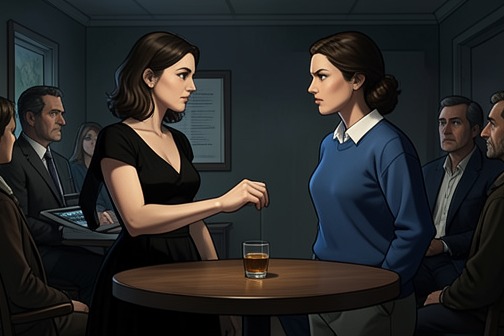
[Shelby se bat avec Lexie](entity:event-recall-event-shelby-se-bat-avec-lexi-4b97f309c4c0) is a decisive confrontation at a student party, where an antagonistic encounter becomes physical after [Lexie](entity:character-recall-character-lexie-0d89d800125f) insults and attacks Shelby. Shelby’s response breaks Lexie’s nose, but the scene’s significance extends beyond the injury: it marks Shelby’s refusal to be reduced to a passive object of judgment, while forcing [Jungkook](entity:character-recall-character-jungkook-40c36baa104a) and their friends to witness how quickly intimacy, jealousy, and violence can collide.
## Causes and Provocation
The conflict begins after Shelby, tired from dancing, leaves the floor and goes to the kitchen, where she takes a mojito prepared by one of the students living in the house. Lexie approaches her and immediately frames the conversation around Shelby’s attachment to Jungkook, asking whether she has become infatuated with him. Shelby answers without offering much explanation and attempts to leave, but Lexie grabs her arm and turns her back toward her before spitting an insult at her.
Shelby identifies herself simply as [Shelby Anderson](entity:character-recall-character-shelby-anderson-63fef761ad52) and tries to return to her friends. The exchange nevertheless carries a larger rivalry. Lexie is presented as someone with a previous sexual relationship with Jungkook, whereas Shelby is now the person he is publicly dating. Lexie’s hostility therefore targets not only Shelby’s presence but also the change in Jungkook’s loyalties. When Lexie pushes Shelby, sending her back against a wall and causing her to groan in pain, the confrontation crosses from humiliation into physical aggression.
## The Public Escalation
A passing student goes to find Jungkook, and he arrives with [Namjoon](entity:character-recall-character-namjoon-4109d4fa2b00), [Dorcas](entity:character-recall-character-dorcas-551d5ed1ad82), and [Cassiopée](entity:character-recall-character-cassiop-e-2eb1ec801364) close behind. Jungkook has been drinking whisky, but he drops the glass when he learns what is happening. Lexie describes Shelby in sexually degrading terms, reducing her relationship with Jungkook to something she can mock and claim authority over. Jungkook closes his fists and visibly struggles not to slap Lexie; Namjoon restrains his left wrist, preventing him from answering the insult with immediate violence.
Jungkook tells Lexie not to speak to Shelby that way, but Shelby interrupts before he can become her physical defender. Her intervention is important because she refuses to let the conflict be narrated solely through Jungkook’s anger. She says that she can defend herself and rejects Lexie’s characterization of the relationship. Shelby distinguishes sex from affection, asserting that Jungkook makes her feel loved rather than merely using her. She also turns Lexie’s accusation back against her by observing that Jungkook is no longer sleeping with Lexie for a reason.
Lexie responds by slapping Shelby across the face. The blow draws the attention of everyone present, creating the impression that even the music has stopped. Shelby then punches Lexie before Jungkook can act. Lexie falls to the floor with blood running from her nose, and the immediate balance of power reverses: the woman who had pushed, insulted, and struck Shelby becomes the visibly injured and humiliated participant.
## Shelby’s Counterattack and Immediate Aftermath
Lexie announces that Shelby has broken her nose and repeats the accusation loudly enough for the surrounding students to hear. Shelby does not apologize or retreat. Instead, she warns Lexie that the damage could have been worse, making clear that the punch is not presented as an accidental flinch but as a deliberate boundary after repeated provocation and assault.
Before the situation can deteriorate further, Jungkook lifts Shelby and carries her upstairs away from the crowd. The gesture removes her from the center of the party, although it also shows how quickly his protective instinct can become physical control. Downstairs, the student party resumes as though nothing has happened. Lexie, frustrated and humiliated, leaves the student house, while Namjoon, Dorcas, and Cassiopée remain astonished by what their friend has done.
Upstairs, Jungkook locks the bathroom door so that no one can disturb them. Shelby sits beside the basin and studies the reddened knuckles caused by the punch. Jungkook takes her hand and kisses it, transforming the injured hand from evidence of violence into an object of care. His response also contains a trace of conflicted identification: he jokes that Shelby seems to read his thoughts because he had wanted to hit Lexie himself. The scene therefore ends not with public triumph but with private concern over whether Shelby is all right.
## Relation to Shelby’s Earlier Vulnerability
The confrontation also gains force from the broader pattern of Shelby’s life. Elsewhere, she is shown carrying anger and sadness without easily allowing others to reach her, while her history includes periods of isolation, anxiety, self-harm, and difficulty trusting people. Against that background, the party fight is not simply a sudden change into aggression. It is a moment in which she refuses to remain motionless while another person seizes her arm, pushes her into a wall, insults her relationship, and strikes her. Her action is still violent, but the scene gives it a different immediate structure from the violence that has previously threatened her: she acts after being confronted and attacked, rather than being silently overpowered.
The distinction is reinforced by the way her friends react. Jungkook, Namjoon, Dorcas, and Cassiopée do not witness a calculated public performance; they arrive after the conflict has already escalated and are left astonished by Shelby’s punch. Their surprise underscores the contrast between Shelby’s guarded, withdrawn presentation and the force she can summon when her dignity is challenged. The event exposes an anger that had been present beneath her reserve without reducing her identity to that anger.
## Jungkook’s Protective Impulse
Jungkook’s role reveals a parallel tension. When he sees Shelby being humiliated, his first impulse is to retaliate physically. He drops his whisky, clenches his fists, and must be restrained by Namjoon before he can slap Lexie. His defense of Shelby is emotionally sincere, but it is also entangled with the violent reflexes that define his own history. The scene places his protective instinct beside his difficulty controlling rage, making care and danger occupy the same gesture.
Shelby’s intervention interrupts that pattern. By insisting that she can defend herself, she prevents Jungkook from becoming the sole actor responsible for restoring her dignity. She does not allow his anger to replace her voice, and she answers Lexie directly before the fight becomes his conflict. Yet his later decision to carry Shelby upstairs shows that he remains unable simply to stand aside. The physicality of that rescue is protective and possessive at once: it removes her from further danger, but it also takes control of where she goes. The locked bathroom then changes the emotional register. Away from the audience, Jungkook kisses her injured hand and asks whether she is well, turning his attention from retaliation to care.
## Value Shift and Narrative Function
The event produces a sharp movement in the values at stake. Shelby enters the kitchen as a participant in an ordinary student celebration, holding a drink and moving through the house after dancing. Lexie’s approach converts that temporary ease into scrutiny, sexual insult, and physical threat. By the end of the public sequence, Shelby has regained control over the exchange, but she is also left with reddened knuckles, while Lexie leaves with a bloody and broken nose. The shift is therefore double-edged: Shelby’s dignity is defended, yet the defense reproduces the party’s atmosphere of bodily risk.
The setting intensifies the irony. The student party resumes almost immediately after the fight, as if the social world can absorb a broken nose and continue dancing. That return to normality contrasts with the astonishment of Shelby’s friends and with Lexie’s humiliation as she leaves the house. The event is publicly spectacular but institutionally unaddressed: there is no formal reckoning in the immediate aftermath, only gossip, departure, and a private conversation upstairs. The scene thus shows how violence can become both a rupture in personal relationships and a disturbance that a group quickly pushes back beneath the surface of celebration.
## Significance in the Relationship Arc
For Shelby and Jungkook, the confrontation makes their relationship visible through conflict. Lexie’s insult reduces their intimacy to sex, while Shelby answers by naming the emotional difference she experiences: Jungkook makes her feel loved. Her reply is not merely a defense against Lexie; it is also a public declaration that the relationship has acquired meaning beyond Jungkook’s earlier sexual history. Lexie’s presence embodies the past arrangement, and Shelby’s response insists that the present cannot be judged by that past alone.
The private ending preserves the scene’s unresolved contradiction. Jungkook is pleased that Shelby acted against someone he already resented, yet he is also concerned about her condition. Shelby’s punch gives her agency, but the image of her examining her own red knuckles prevents the victory from becoming clean or celebratory. His kiss over her hand offers tenderness without erasing the harm that has just occurred. In this balance between retaliation and reassurance, the event becomes a compact expression of the novel’s recurring concern with how damaged people seek safety while carrying violent habits with them.
Event 31
Le harcèlement de Shelby au lycée après sa plainte
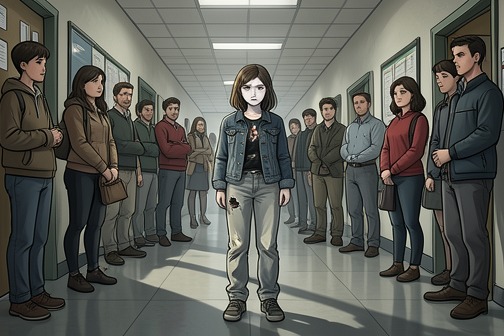
Shelby’s bullying at Theodore Roosevelt High School is the social continuation of the violence exposed by her complaint against [Robert Jefferson](entity:character-recall-character-robert-jefferson-e99ac62ade18). Once she refuses to remain silent, the school community does not protect her; instead, [Madison Jefferson](entity:character-recall-character-madison-jefferson-657bf438d528) and Caitlin transform accusation into public humiliation, making Shelby’s attempt to seek justice appear to be an attack on an influential family. The episode establishes how disbelief, privilege, and peer violence combine to punish a victim after disclosure.
## Causes and Background
The harassment begins after Shelby reports Robert Jefferson, the father of her former best friend Madison Jefferson, despite having first spoken to [Madison](entity:character-recall-character-madison-53d0d83590ae) about what happened. Shelby had kept the experience to herself for three months, but the silence became unbearable, while her father [Connor Barnum](entity:character-recall-character-connor-barnum-d9322612abb3) and [Lydia](entity:character-recall-character-lydia-3e7a560b729c) noticed that something was troubling her. Her decision to complain therefore represents an act of resistance against fear, not an impulsive attempt to damage the Jefferson family.
The social response is shaped by the Jeffersons’ wealth and reputation. Shelby observes that money can make a profoundly cruel man appear sympathetic to anyone willing to believe the family’s public image. Madison does not accept Shelby’s disclosure, and the case leaves Shelby socially marked as the aggressor rather than recognized as the victim. Madison’s rejection is especially destructive because Shelby had trusted her as a best friend; the betrayal turns a private wound into a public campaign of condemnation.
## What Happens at School
The recalled scene takes place at Theodore Roosevelt High School, a setting that has changed meaning for Shelby. The school was once associated with friends, classes, and happiness, but after the complaint it becomes a place from which she wants to escape. She moves through the corridors hunched over with her head lowered, conscious of the mocking and judgmental looks around her, then hides inside a girls’ restroom stall and cries alone.
Madison and Caitlin enter the restroom laughing and immediately speak about Shelby as though she were not a frightened student but a disgraced person. Caitlin calls her a slut and questions how she could accuse Madison’s father and file a complaint against him. Madison concludes that Shelby is crazy. Their language does not investigate the truth of Shelby’s account; it replaces the question of what happened with an attack on Shelby’s character.
A sob reveals Shelby’s presence. Madison and Caitlin turn toward the stall, smiling, and begin striking the door. Madison orders Shelby to open it, shouting at her as if the locked door were an act of defiance rather than a desperate attempt at safety. She then claims that Shelby tried to destroy her family because Robert Jefferson rejected her advances, adding another humiliating accusation to the original disbelief. Shelby remains too frightened to move while the two girls continue pounding on the door before eventually leaving.
## Psychological Consequences
The immediate aftermath is a panic response. Shelby is still overwhelmed by terror after Madison and Caitlin depart; her breathing accelerates, her chest tightens, and sweat gathers on her forehead. The scene therefore links verbal abuse and threatened physical intrusion to the bodily symptoms that recur elsewhere in her life. Her later account identifies the incident as harassment that remained capable of returning through nightmares and panic attacks.
At the Barnum family home, Shelby explains that a nightmare has replayed a memory from high school and caused a new anxiety attack. The disclosure makes clear that the bullying is not confined to the past: the fear resurfaces belatedly, long after the girls have left the restroom. Trauma operates through repetition, bringing the school corridor and locked stall back into the present as an experience of danger.
The episode also deepens Shelby’s withdrawal. She develops a cold exterior to keep other people away, while privately believing that life is unjust and not worth living. At one isolated moment, she imagines jumping from a cliff, yet remains alive because she cannot abandon Connor Barnum, who has supported her. Her refusal to let another death burden her family places the school harassment within a wider history of loss and moral responsibility.
## Relations and Counterforces
Madison’s role is both personal and social. She is not an anonymous bully but the former friend whose family is implicated in Shelby’s complaint. By siding with Robert Jefferson’s reputation, Madison converts intimacy into surveillance and punishment; her knowledge of Shelby makes the insults more precisely wounding. Caitlin reinforces the same narrative, allowing the pair to function as a small but forceful public tribunal inside the restroom.
Shelby’s later relationship with [Dorcas Peters](entity:character-recall-character-dorcas-peters-cc0824b30f37) provides the opposite pattern. When Shelby breaks down while recounting that Madison did not believe her, [Dorcas](entity:character-recall-character-dorcas-551d5ed1ad82) takes her into her arms and gives her room to continue speaking. The contrast is decisive: Madison answers disclosure with scandal and persecution, whereas Dorcas answers it with presence and witness. Shelby’s recovery is likewise supported by [Sunmi Eun](entity:character-recall-character-sunmi-eun-c82ef680ac18), whose therapeutic attention helps her confront the earlier wound rather than remain trapped inside the defensive shell it produced.
[Jungkook Jeon](entity:character-recall-character-jungkook-jeon-fc9d9ff5a3bc) becomes another counterforce to the school’s logic of humiliation. When Shelby tells him that the nightmare came from the harassment, he holds her hands and opens his arms to her. His care does not erase what happened, but it offers a relationship in which fear is met with protection rather than accusation. His later insistence that a non-consensual kiss constitutes sexual assault also helps establish a moral vocabulary that rejects the victim-blaming pattern surrounding Shelby’s complaint.
## Narrative Significance
The bullying event exposes the gap between formal justice and lived consequence. Shelby does file a complaint, and Robert Jefferson faces legal proceedings, yet the social environment surrounding her treats the accusation itself as the offense. The influential family’s reputation shields Robert Jefferson while leaving Shelby to carry the stigma, demonstrating how institutional impunity can reproduce itself through ordinary speech, school gossip, and peer intimidation.
The scene’s structure intensifies that argument by placing the reader inside a confined space. The restroom stall gives Shelby a physical barrier, but the repeated blows against the door show how little privacy can protect her once the accusation has been socially reversed. The unseen threat is followed by direct verbal assault and then by visible bodily panic, moving from anticipation to confrontation to psychological aftermath.
Shelby’s later testimony against Robert Jefferson reverses the meaning imposed on her at school. She rejects the suggestion that she seeks money and explains that opportunistic false accusations make it harder for genuine victims of rape and sexual assault to be believed. Her words connect her private ordeal to a broader system of victim-blaming. The school harassment is therefore not an isolated episode of cruelty: it is the mechanism by which a community attempts to preserve a powerful man’s innocence by making the person who spoke about him socially unlivable.
Event 32
Retour de Jungkook sur le ring de l’Ares Garden

[Retour de Jungkook sur le ring de l’Ares Garden](entity:event-recall-event-retour-de-jungkook-sur-b3388377810d) is the decisive relapse event in [Jungkook](entity:character-recall-character-jungkook-40c36baa104a)’s struggle between destructive habit and emotional recovery. On Wednesday, January 15, he returns to the underground ring because fighting makes him feel alive, admired, and temporarily released from the anger that governs him. Yet the comeback does not restore his former confidence without cost. It exposes how easily the [Ares Garden](entity:location-recall-location-ares-garden-5a1d38541469) can become an arena for his demons, and how sharply that return threatens his developing relationship with Shelby.
## Causes and Background
Jungkook hesitates in his car outside the establishment, but his reluctance is not caused by any loss of attachment to the fights. He still loves the Ares Garden and the illegal matches because they allow him to vent, occupy the ring with a sense of vitality, and feed his pride through the crowd’s applause. His dark, intimidating image gives him the aura of a dangerous fighter, an identity that attracts both fear and fascination. The hesitation instead reveals a conflict between that identity and the possibility of changing his life.
That conflict has become more urgent because Jungkook and Shelby have begun to care for one another while carrying separate forms of trauma. [Sunmi](entity:character-recall-character-sunmi-46eb799eb5da), Shelby’s psychologist, recognizes the frightening darkness in Jungkook’s inner life and connects it with the emptiness she sees in Shelby. Shelby’s panic episodes show how strongly she reacts to threat and unwanted contact; when [Cassiopée](entity:character-recall-character-cassiop-e-2eb1ec801364) approaches her during one attack, Shelby recoils even after recognizing her. Jungkook has also learned, however imperfectly, to remain beside Shelby without forcing comfort on her. In the Ares Garden sequence, this emerging capacity for care is placed directly against his desire to return to violence.
## The Transformed Ares Garden
The return does not take place in the old setting. The venue has become [Aphrodite's Love](entity:location-recall-location-aphrodite-s-love-f0d943b3c67a), a sensual nightclub with red and blue lighting, a large bar, a DJ platform, and an atmosphere designed to draw a crowd. Spencer leads Jungkook through the club to the rebuilt arena, where the ring is higher and much larger than before. Its ropes are red and black, the former stands have disappeared, and VIP levels now surround the fighting space. Spectators watch from below and through two large screens fixed to the wall.
The redesign changes the social meaning of the fights as well as their appearance. People entering the club bear a Corinthian helmet mark on one hand, an admission sign that [Chen](entity:character-recall-character-chen-1d684f527331) had never required. Shelby and [Namjoon](entity:character-recall-character-namjoon-4109d4fa2b00) receive the mark when they follow the conversation about Chen into the venue. The mark turns access into a visible rite of belonging, while the enlarged ring converts Jungkook’s private release into public spectacle. The new Ares Garden therefore preserves the violence of the old underground circuit while giving it a more theatrical, commercial, and controlled form.
## The Fight and Shelby’s Witness
Jungkook is loudly acclaimed when he enters the ring, and he is ready to resume fighting. Chen is present beside Spencer, which surprises Jungkook, but Jungkook can only acknowledge his former mentor from a distance. Chen’s unease leads him to call Namjoon, indirectly setting the chain of discovery in motion. Namjoon arrives with Shelby, who has followed because Jungkook has ignored her since the previous Friday and refuses to explain himself.
Shelby sees Jungkook through one of the arena’s screens and is horrified by what the ring reveals. He strikes his opponent repeatedly without appearing exhausted, while the other fighter approaches unconsciousness and collapse. Jungkook’s expression is full of fury; he is not merely competing but trying to finish the opponent and discharge his rage without restraint. Shelby sees the fighter as almost demonic, as though the arena has opened a passage into the darkness that usually remains beneath his controlled exterior. She clings to Namjoon, whose former instinct would have been to cheer for his friend but who now recognizes that the place makes Jungkook more aggressive than ever.
The scene produces a clear reversal in value. The ring gives Jungkook the feeling of life, power, and admiration, but the same experience makes Shelby feel fear and emotional abandonment. His return, which he experiences as release, appears to her as a renewed surrender to the very demons they had promised to confront. The spectacle thus converts his attempted escape from inner pain into a public threat to intimacy.
## Confrontation and Consequences
After the match, Jungkook finds Shelby waiting in the car with Namjoon. She tells him that she believed they would learn together and move away from their vices so neither would fall back into an oppressive emptiness. His decision to return to the ring, following the unexplained appearance of a blonde woman leaving his room, confirms to her that he is choosing the demons over the moments they shared. She tells him that those moments matter deeply to her, but that she will not remain with him if he insists on returning to that life.
Shelby leaves before Jungkook can answer, joining Namjoon, who condemns his friend with a hostile look. The consequence is not merely an argument but a rupture in the fragile recovery pact between them. Jungkook’s combat identity has been reactivated, while Shelby’s trust has been weakened by his silence, secrecy, and refusal to explain himself. His return therefore advances neither healing nor reconciliation; it makes the cost of relapse visible and forces the relationship to confront whether affection can survive repeated surrender to violence.
## Narrative Significance
The event functions as a threshold in Jungkook’s arc. Earlier scenes establish that he can remain near a distressed Shelby, apologize, and claim that he wants to help her overcome fear. He even describes her as someone who is teaching him to become a better version of himself. The return to the Ares Garden tests whether those declarations can compete with the immediate reinforcement of the crowd, the ring, and his established reputation.
The renovated arena also externalizes the novel’s recurring contrast between darkness and care. Jungkook is not portrayed as simply choosing evil over good; he is drawn to a practice that gives him temporary relief, admiration, and a sense of being alive, even as it intensifies his rage. Shelby’s response shows the relational consequence of that coping mechanism. Her fear is not an abstract judgment of his character but a reaction to witnessing the destructive force he has brought back into their shared future.
For that reason, Retour de Jungkook sur le ring de l’Ares Garden is both a combat event and a relationship crisis. It reconnects Jungkook with Chen and the underground fighting network, introduces the new Corinthian-helmet admission system and transformed arena, and places Shelby directly before the violence he has tried to keep separate from his emerging tenderness. The return does not resolve his conflict; it makes the conflict impossible to hide.
Event 33
Accident de moto et hospitalisation de Jungkook
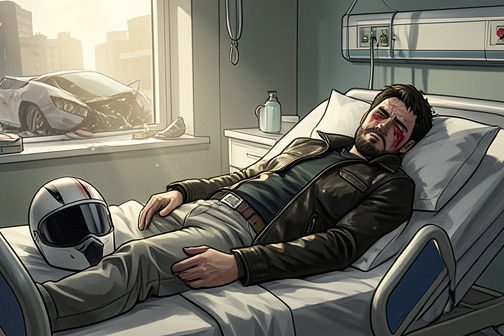
[Accident de moto et hospitalisation de Jungkook](entity:event-recall-event-accident-de-moto-et-hos-fe2e469b4a54) Jeon is the immediate consequence of [Jungkook Jeon](entity:character-recall-character-jungkook-jeon-fc9d9ff5a3bc)’s uncontrolled anger, alcohol use, sleep deprivation, and return to the [Ares Garden](entity:location-recall-location-ares-garden-5a1d38541469) ring. The crash nearly turns his destructive impulses into death, but the hospital instead becomes a place of survival, truth-telling, and renewed responsibility, where [Shelby Anderson Barnum](entity:character-recall-character-shelby-anderson-bar-2e17bb137697)’s fear and [Jungkook](entity:character-recall-character-jungkook-40c36baa104a)’s guilt move their relationship from accusation toward reconciliation.
## Causes and Escalation
The accident follows a confrontation in which Jungkook’s anger becomes physically unmanageable. After breaking his glass, he leaves the nightclub, pays a bartender one hundred dollars, puts on his helmet, and mounts his motorcycle. He enters the traffic at excessive speed, alarming other drivers and provoking horns as he rides beyond the legal limit. The motorcycle is not presented as a neutral means of transport: under the pressure of rage, it becomes the instrument through which Jungkook’s emotional instability is carried into public space.
His body registers the danger before the crash is fully described. Anger contracts his muscles and makes him unpredictable; the surrounding landscape passes too quickly for him to distinguish its details, while streetlights flash across his narrowing field of vision. He narrowly avoids several cars, then his sight blurs and everything turns black. The sequence connects the accident to a chain of self-destructive behavior rather than to an isolated mechanical mishap. Jungkook’s renewed involvement with Ares Garden, his alcohol consumption, and his lack of sleep have already weakened his capacity to control either his emotions or his body.
## The Accident and Hospitalization
Shelby receives the decisive warning while lying awake in the university student dormitory. At 00:36, [Namjoon Kim](entity:character-recall-character-namjoon-kim-0444585766b6) messages her that Jungkook is in the hospital and that he will come to collect her. Shelby immediately puts on the black hooded sweatshirt she borrowed from Jungkook and her Vans, runs through the corridor, and goes outside into the snow. She nearly falls while hurrying toward [Namjoon](entity:character-recall-character-namjoon-4109d4fa2b00)’s four-by-four, then enters the vehicle and fastens her seat belt. Her rapid departure makes the accident’s emotional stakes clear before its medical severity is explained: Jungkook’s condition has pulled her out of private anxiety and into urgent action.
At the hospital, Dr. Evans tells Shelby and Namjoon that [Jeon Jungkook](entity:character-recall-character-jeon-jungkook-866d72571ad4) has been involved in a road accident but has no grave injuries. He has only bruises and scratches, and the doctor considers it fortunate that Jungkook fainted while stopped at a red light. The detail changes the accident from an apparently fatal disappearance into a narrowly avoided catastrophe. Jungkook survives not because his behavior was safe, but because the circumstances of the collapse prevent the motorcycle from continuing at full speed through traffic.
The doctor also identifies the physiological conditions behind the incident. Jungkook had consumed alcohol, and the alcohol aggravated the effects of his sleep deprivation. The hospital therefore gives professional language to what the preceding ride has shown in sensory terms: the blurred vision, the blackness, and the loss of control are connected to exhaustion and intoxication as well as rage. Medical reassurance does not erase the danger; it exposes how many forms of neglect have converged in one body.
## Recognition and Disclosure
After the immediate danger passes, the hospital room becomes a space for Jungkook to explain what had driven him back toward Ares Garden. Shelby knows that he has not been sleeping and confronts him with that knowledge. He responds with the embarrassed expression of someone caught concealing a serious problem, then loses his smile as guilt takes its place. His account reveals that the couple’s promise to learn how to love together has not automatically quieted the demons occupying his thoughts since childhood.
Jungkook explains that learning about Ares Garden placed him in a trance-like state. The vice felt stronger than his intention to change, and returning to the ring gave him a temporary sense of relief. Yet seeing Shelby’s eyes red from dried tears made him regret what he had done. The confession reframes his return to underground boxing as both temptation and repetition: it offers immediate release while reopening the injuries he and Shelby are trying to survive. The accident becomes the bodily consequence of a pattern he has not yet mastered, but the conversation marks his first sustained attempt to name that pattern instead of simply acting it out.
He also tells Shelby the history of [Kayla Brown](entity:character-recall-character-kayla-brown-734aff04292e). He met [Kayla](entity:character-recall-character-kayla-33460f2ea995) during his first year at university, when she was in her third year; their friendship became sexual, and she later left for [Washington, D.C.](entity:location-recall-location-2d4d72a34a07), to work with her father. Jungkook had not seen her again until recently, when she reappeared for reasons he did not understand. He insists that he rejected her. This disclosure gives Shelby information she has wanted but feared hearing, and it places the Kayla conflict within Jungkook’s earlier life rather than treating it as a sudden, unexplained betrayal.
## Reconciliation and Boundaries
Jungkook counters Shelby’s self-blame by taking responsibility for the accident himself. He tells her that nothing is her fault and that he alone put himself into the hospital bed. As he gently lifts her chin and caresses her face, Shelby gradually calms. Their kiss is not merely romantic reassurance; it follows an explicit admission of responsibility and allows physical contact to become comforting rather than threatening. The emotional value of the hospital scene shifts from fear and suspicion toward relief and renewed closeness.
The reconciliation remains conditional. Jungkook declares that he will confront [Spencer Jenkins](entity:character-recall-character-spencer-jenkins-6c9fec36ab98), but Shelby immediately orders him not to use violence. Her response establishes a boundary around the new understanding he has just reached. She can accept his honesty and offer comfort without accepting another retaliatory act. The accident thus produces a concrete consequence in their relationship: love is joined to restraint, and reconciliation requires Jungkook to change the method by which he responds to humiliation, fear, and provocation.
## Trauma, Care, and Significance
The hospital episode resonates with earlier scenes in which physical contact can either intensify terror or provide safety. During Shelby’s panic in an art class, [Cassiopée Smith](entity:character-recall-character-cassiop-e-smith-7af6a7136600) approaches carefully after Shelby recoils from being touched, remaining calm and asking her to look at her. Later, at the Ares Garden vestiaires, Jungkook finds Shelby trembling and crying beneath running water; unsure how to help, he turns off the water and simply stays beside her until she settles. When Shelby collapses in panic during her encounter with [Madison Jefferson](entity:character-recall-character-madison-jefferson-657bf438d528), [Madison](entity:character-recall-character-madison-53d0d83590ae) recognizes the crisis, finds Jungkook, and Jungkook runs to Shelby, calming her through familiar presence and gentle words.
These parallels make the accident’s aftermath part of a wider care pattern rather than a solitary rescue. Jungkook has previously learned to remain near Shelby without forcing contact, while Shelby’s insistence on “Pas de violence” gives care an ethical limit. The crash exposes Jungkook’s vulnerability in a body marked by exhaustion, alcohol, and injury; the hospital conversation then turns that vulnerability into testimony. In narrative terms, the accident is a reversal: the impulses that once carried Jungkook toward the ring and the road are brought to a halt, and the resulting pause makes recognition possible. Survival does not complete his recovery, but it creates the conditions for him and Shelby to continue learning how to love without repeating the violence that has shaped them.
Event 34
Affrontement de Jungkook avec Spencer Jenkins
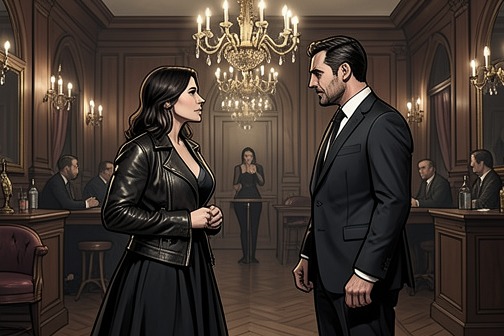
[Jungkook](entity:character-recall-character-jungkook-40c36baa104a)'s confrontation with [Spencer Jenkins](entity:character-recall-character-spencer-jenkins-6c9fec36ab98) at [Aphrodite's Love](entity:location-recall-location-aphrodite-s-love-f0d943b3c67a) marks a decisive transfer of power: the former underground champion enters a space built on luxury and intimidation, but refuses to let its owner define strength for him. Shelby's presence makes the encounter possible and meaningful. She is not merely accompanying him; she represents the healthier, more deliberate person he is trying to become, while Spencer embodies the pride, excess, and narrow masculinity Jungkook has learned to challenge.
## Causes and Setting
Jungkook goes to Aphrodite's Love despite Shelby's clear belief that he should rest. He tells her that he only needs to speak with Jenkins, while she warns that the conversation can wait. His decision places the confrontation in a deliberately charged setting: Aphrodite's Love is associated with spectacle, luxury, and sensual excess, whereas Jungkook arrives carrying the history of [Ares Garden](entity:location-recall-location-ares-garden-5a1d38541469) and its underground fights. The meeting therefore becomes more than a personal exchange. It pits two models of authority against each other—Jenkins's possession of an opulent venue and Jungkook's earned identity as a fighter.
The immediate circumstances also recall the broader pattern of the novel, in which physical and emotional crises expose the need for safer forms of care. When Shelby suffers panic elsewhere in the story, [Cassiopée](entity:character-recall-character-cassiop-e-2eb1ec801364) initially approaches but Shelby recoils from being touched; Jungkook, finding her distressed in the Ares Garden changing rooms, stays beside her without knowing how to help until she calms. After Shelby is hurt, he regrets taking her to the dangerous place and offers physical reassurance without turning her distress into a demand. These scenes establish the emotional context that she brings to Aphrodite's Love: her closeness to Jungkook is both intimate and protective, but his growth depends on respecting vulnerability rather than answering every threat with force.
## Course of the Confrontation
Spencer has an employee bring Jungkook and Shelby upstairs after noticing them together. He receives them with apparent hospitality, and the three sit on a black leather sofa while a server brings three glasses of whisky. Beneath that polished welcome, however, the encounter remains adversarial. Jungkook has not come to accept Spencer's hospitality; he has come to answer the judgment that treats emotional change as weakness.
Jungkook tells Spencer that he is not weak and that Shelby makes him stronger than Spencer realizes. He takes Shelby's hand and draws her onto his lap, publicly connecting his claim to the person who has become central to his transformation. Shelby is uncomfortable under the attention and folds herself against him, while Jungkook gently strokes her thigh to help her endure the scrutiny. The gesture carries two meanings at once: it asserts their relationship before Spencer, and it shows that Jungkook's strength now includes tenderness and attentiveness.
He goes further by explaining that Shelby is teaching him to become healthier and more thoughtful. He rejects the idea that such development makes him less masculine or less formidable, insisting instead that Spencer is wrong to confuse brutality with power. Jungkook also defends the legacy of Ares Garden, maintaining that he remains its champion and that [Chen](entity:character-recall-character-chen-1d684f527331) remains its founder, regardless of how completely Spencer has altered the venue. His accusation is direct: Spencer may offer luxury and sensual pleasure, but the display is only misplaced pride, comparable to the arrogance Jungkook associates with [Bruce Wilson](entity:character-recall-character-bruce-wilson-17c288308948).
The confrontation ends without a physical fight. Jungkook asks Shelby to stand and leaves with her, offering Spencer no further explanation or concession. Outside, he is shaken by his own courage and cannot quite believe that he has said everything without faltering. Shelby threads her fingers through his as they return to Jungkook's black [1968 Ford Mustang GT](entity:object-recall-object-1968-ford-mustang-gt-f290e2b6da82), and the negative tension of the club begins to recede. Her immediate reassurance confirms that the encounter has been won through speech, self-possession, and departure rather than violence.
## Participants and Relationships
Spencer functions as Jungkook's ideological opponent in the scene. He represents a social order that values dominance, pride, and the outward performance of power. Jungkook's objection is not that Spencer lacks wealth or influence; it is that Spencer cannot see beyond his own vanity. The accusation turns the usual hierarchy upside down. The owner of the venue may control the room, the employees, the drinks, and the atmosphere, but Jungkook refuses to grant him authority over the meaning of strength.
Shelby is both witness and participant. Before the meeting, she challenges Jungkook's decision to confront Jenkins while injured or in need of rest, and during the exchange she bears the discomfort of being displayed as part of his argument. Yet the scene does not reduce her to a symbolic possession. Jungkook identifies her influence on his conduct, while her later clasped hand and praise acknowledge his achievement. Their relationship is presented as reciprocal: Shelby encourages restraint, and Jungkook's protection becomes most constructive when it allows her choice and steadiness rather than demanding obedience.
The contrast becomes especially clear against Shelby's panic episodes. In an art class, pain, accelerating breath, and terror drive her from the room; when Cassiopée finds her and places hands on her shoulders, Shelby cries out and recoils from contact. Later, after [Madison](entity:character-recall-character-madison-53d0d83590ae) recognizes another panic attack and summons him, Jungkook runs to Shelby, holds her, and waits while her breathing returns to normal. His response in those moments is not flawless or effortless, but it differs from the coercive masculinity he condemns in Spencer: he stays with her distress instead of using it to establish control. That emotional history gives his statement that Shelby makes him stronger a concrete foundation.
## Consequences and Significance
The confrontation changes the value attached to Jungkook's identity as a champion. Earlier, the title could be read as proof of his ability to endure pain and impose himself physically. Here, he preserves the title while redefining what it means. He does not surrender the history of Ares Garden or deny Chen's place as its founder, but neither does he accept the idea that becoming healthier and more reflective requires abandoning strength. The result is a refusal of both humiliation and self-erasure.
The scene also acts as a public test of Jungkook and Shelby's relationship. At Aphrodite's Love, their intimacy is visible to surrounding guests, some of whom respond with envy. Spencer's reaction turns that visibility into an occasion for mockery and surprise, but Jungkook does not retreat from Shelby or conceal her importance. He makes the relationship part of his answer, then leaves when the conversation has served its purpose. The movement from the club's gaze to the privacy of the Mustang gives the scene its final reversal: Spencer controls the public environment, but Jungkook and Shelby recover their own emotional space by walking out together.
Jungkook's confrontation with Spencer Jenkins therefore belongs to the story's larger movement away from violence and toward recovery. The event is not a complete renunciation of his fighter identity; it is an attempt to carry that identity into a different moral life. He remains proud, confrontational, and capable of anger, but he no longer treats destruction as the only proof that he is strong. By speaking plainly, defending Shelby's influence, honoring Ares Garden's past, and leaving without striking anyone, he turns a challenge from the old world into evidence that he is beginning to outgrow it.
Event 35
Officialisation de la relation entre Jungkook et Shelby

[Officialisation de la relation entre Jungkook et Shelby](entity:event-recall-event-officialisation-de-la-r-4827b2006f72) marks the decisive change from an uncertain, emotionally charged connection into a publicly acknowledged partnership. The moment matters because it does not erase either character’s trauma or hesitation; instead, it establishes love as a deliberate form of trust built through repeated acts of restraint, protection, listening, and mutual disclosure.
## Background of Trust
Shelby’s path toward this declaration has been shaped by a traumatic event in [Los Angeles](entity:location-recall-location-los-angeles-11eff639bdf5) and by the consequences she later describes as self-harm, an eating disorder, and cannabis use. Her psychological care begins with Andréa Jefferson, who recognizes that Shelby struggles to integrate and open herself to those around her after what happened. Andréa offers her time and confidentiality, while Shelby later continues treatment with Andréa’s colleague after moving away from Los Angeles. The relationship’s official beginning therefore occurs within a larger recovery process rather than outside it.
The bond with [Jungkook](entity:character-recall-character-jungkook-40c36baa104a) develops through situations in which physical contact and emotional closeness are dangerous or difficult for Shelby. During an anxiety attack, [Cassiopée](entity:character-recall-character-cassiop-e-2eb1ec801364) approaches her calmly after Shelby recoils from touch and refuses to be touched. At the underground boxing venue, Jungkook finds Shelby trembling and crying in the showers, turns off the water, and remains beside her without knowing exactly what to do or forcing an explanation. After another episode, he stays near her until she can calm down. These scenes establish care through presence rather than control.
Jungkook’s conduct gradually changes as he understands the scale of Shelby’s experience. When she breaks down after seeing the injuries he has sustained, he kneels beside her and places a hand on her knees while acknowledging that he should never have taken her there. Later, when Shelby speaks about the sexual violence she suffered, he gives her tissues, takes her hands, and tells her, "Je te crois." His belief offers relief because it counters the isolation surrounding her trauma, but the narrative presents it as recognition rather than a cure.
## The Declaration and Response
The officialisation begins when Jungkook recalls Shelby’s earlier words about the moments they have shared. He tells her that those moments matter to him, explaining that he had not thought to say so while he was in hospital but feels compelled to say it now. Shelby recognizes the opening and prepares to answer, although embarrassment makes her leave the bed and pace the room. Jungkook notices her distress and asks whether he has said something wrong, revealing how uncertain he remains even while trying to speak honestly.
Jungkook then describes the change Shelby has produced in him. He admits that he has never openly been tender or attentive toward anyone, has never been so physically affectionate with a woman, and is normally impatient and drawn to brutality in sexual relationships. With Shelby, however, everything has changed within two months. He cannot fully explain the reason, but he identifies her as a turning point and wonders whether their connection is destiny. His confession is significant precisely because it comes from someone unused to discussing feelings and visibly uncomfortable with emotional exposure.
Shelby answers with the simple declaration, "Je t'aime." Before she can qualify or explain it, Jungkook kisses her passionately. The kiss becomes a physical confirmation of the emotional shift: he lifts her, holds her close, and their intimacy continues by mutual participation rather than by the earlier uncertainty that characterized their encounters. The scene culminates after they reach orgasm together, when Jungkook removes the condom, kisses her forehead, and cares for her afterward. He then states, "Je t'aime [Shelby Anderson](entity:character-recall-character-shelby-anderson-63fef761ad52)," giving Shelby the reciprocal assurance she has been waiting to hear.
## Public Recognition
The private declaration becomes an official relationship in the university setting. At [Central Washington University](entity:location-recall-location-f3f99ea15cd4) in [Ellensburg](entity:location-recall-location-ellensburg-f2b1300b3b7f), [Namjoon](entity:character-recall-character-namjoon-4109d4fa2b00) asks whether they have made the relationship official. Jungkook answers that they are together, and Namjoon responds with happiness and relief for his closest friend. The exchange converts a private emotional breakthrough into a fact recognized by someone outside the couple.
Shelby sits with Cassiopée and [Dorcas](entity:character-recall-character-dorcas-551d5ed1ad82) while Jungkook attends an art-history class only partially, drawing whatever comes into his mind. Other students notice that Shelby is the person currently inspiring his creative attention and envy her, while she responds with a smile when they wave. The scene gives the new relationship a social visibility that contrasts with the secrecy, defensiveness, and emotional confusion surrounding their earlier encounters.
The announcement also reassures Namjoon without eliminating his concern. His relief suggests that the relationship has been watched from the outside as a source of both hope and risk. Jungkook and Shelby are not presented as free from danger; rather, they are now choosing to identify themselves as a couple while friends continue to recognize the fragility of their circumstances.
## [Love](entity:expression-recall-expression-love-8b9254c84bfa) Under Trauma
The relationship’s officialisation is repeatedly tested by Shelby’s panic attacks. In one later episode, memories associated with pain and water return with such force that she collapses in a bathroom, covers her ears, and begs [Madison](entity:character-recall-character-madison-53d0d83590ae) not to touch her. Madison understands that Shelby believes she is in danger and goes to find Jungkook. He runs to Shelby, draws her against him, and speaks softly while caressing her back. Shelby recognizes his scent, clings to his neck, and gradually regains a normal breathing pattern.
This response clarifies what the relationship promises and what it cannot promise. Jungkook does not prevent the trigger, explain it away, or demand immediate disclosure. His presence helps Shelby regain bodily stability, while her recovery remains her own process. Earlier, Andréa had offered time and confidentiality; later, Jungkook supplies trust and companionship. Together, these forms of support create a pattern in which safety depends on choice, patience, and listening rather than forced access to Shelby’s memories.
Jungkook also defends Shelby when [Connor](entity:character-recall-character-connor-49e9ac9fb7e5) fears that the relationship might expose her to another violation. He tells Connor that Shelby has described what happened in Los Angeles and insists that he would never do such a thing to her. He acknowledges that he was not friendly at the beginning, says that he cares for Shelby in a way he cannot fully understand, and explains that she is teaching him to become a better version of himself. He promises to help her overcome her fears. Connor recognizes Shelby’s confidence in Jungkook as evidence that the relationship is not merely an intrusion into her life, and his anger subsides.
## Consequences and Significance
The officialisation does not close the wound that produced Shelby’s fear. During a confrontation with [Dong-hyun](entity:character-recall-character-dong-hyun-f4e8bf200fa5), Shelby challenges his claim to justice, while his injured face and disturbing gaze make the danger of the encounter plain. The relationship exists amid continuing violence, family conflict, and institutional stakes. Its meaning therefore lies less in romantic completion than in the creation of a shared position from which both characters can confront what has harmed them.
That distinction becomes especially important when [Robert Jefferson](entity:character-recall-character-robert-jefferson-e99ac62ade18) is convicted of three sexual assaults, two attempted rapes, two rapes of minors, and four rapes of adults. The court sentences him to twenty-five years in prison and a ninety-thousand-dollar fine, with one symbolic dollar awarded to each victim at the victims’ request. Shelby breaks down in relief and embraces Jungkook while Dorcas, Cassiopée, and Namjoon join them; Connor and [Lydia](entity:character-recall-character-lydia-3e7a560b729c) later embrace her as well. The verdict confirms that being believed can have an institutional consequence, while Jungkook’s presence connects the public recognition of justice with the private recognition that began their relationship.
By the end, the couple’s progress is framed as difficult, uneven, and collective. They succeed in moving forward both separately and together, leaving their demons behind without pretending that the process is easy or instantaneous. Officialisation is thus the relationship’s central threshold: it changes attraction into commitment, but its deeper achievement is ethical. Jungkook learns to express tenderness and respect limits; Shelby risks being known without surrendering control of her own story; and their shared future becomes an ongoing practice of learning how to love, rather than a promise that love alone will remove pain.
Event 36
Affrontement entre Jungkook et Andrew Wilson
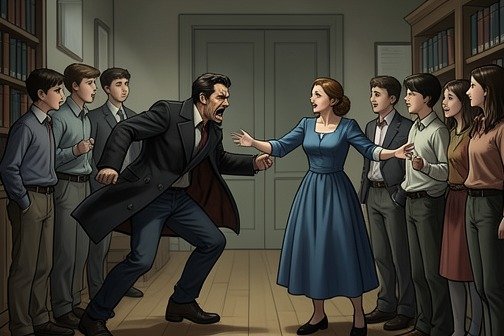
The confrontation between [Jungkook Jeon](entity:character-recall-character-jungkook-jeon-fc9d9ff5a3bc) and [Andrew Wilson](entity:character-recall-character-andrew-wilson-e9467e031ed1) at [House Upsilon](entity:location-recall-location-upsilon-cfc90739ae14) exposes the fragile boundary between [Jungkook](entity:character-recall-character-jungkook-40c36baa104a)’s devotion to [Shelby Anderson Barnum](entity:character-recall-character-shelby-anderson-bar-2e17bb137697) and the rage he has spent much of the story learning to control. Andrew’s insult turns a crowded student gathering into a scene of physical violence, yet Shelby’s arrival transforms the episode from an unrestrained attack into a moment in which Jungkook must choose whether to obey his anger or listen to the person he loves.
## Causes and Background
Andrew initiates the conflict by asking where Shelby is and then referring to her with a degrading sexual slur. The insult is not treated as ordinary provocation. It strikes at Jungkook’s protective attachment to Shelby and at the dignity of a relationship that has become central to both characters’ recovery. The scene also recalls Jungkook’s earlier history of uncontrolled anger, which is rooted in the violence of his childhood. As a child, he was forcibly held back by [Ye-jun](entity:character-recall-character-ye-jun-e26530f9fe6e) Jeon while their parents’ argument escalated downstairs; Jungkook’s rage came from being unable to stop the conflict. Years later, [Sunmi Eun](entity:character-recall-character-sunmi-eun-c82ef680ac18) remembers that Jungkook once returned home with a battered face after his father had beaten him, while he falsely claimed that he had fought at school. These memories establish violence as something Jungkook has both suffered and reproduced, rather than a simple sign of strength.
By the time of the House Upsilon incident, Jungkook has already promised [Sunmi](entity:character-recall-character-sunmi-46eb799eb5da) and the people close to him that he will not return to illegal fighting. He has disclosed the truth about [Ares Garden](entity:location-recall-location-ares-garden-5a1d38541469) to Sunmi, who comforted him when he broke down, and he has rejected Andrew’s later request that he use his underground connections on behalf of Andrew’s father. Jungkook explicitly says that he has left illegal combat and promised his loved ones he would not go back. The assault therefore occurs against a stated commitment to change, making its immediate violence a relapse in conduct even though the scene does not erase the possibility of recovery.
## What Happens at House Upsilon
After Andrew’s insult, Jungkook grabs him by the collar, drags him outside, throws him to the ground, sits over him, and repeatedly strikes his face. The surrounding students watch without intervening, their judgment impaired by the alcohol circulating at the party. The imbalance between the public setting and the private intensity of Jungkook’s anger gives the confrontation its disturbing force: a single sentence is enough to release a rage that had been absent for months.
[Namjoon Kim](entity:character-recall-character-namjoon-kim-0444585766b6) is summoned, but Shelby emerges from the student house before he can fully contain the situation. She sees Jungkook striking Andrew without restraint and experiences the scene as a horrifying return of the violence she thought he had overcome. Rather than confronting him with a competing display of force, she approaches carefully and places her hand on his arm. Her intervention is direct and imperative: she tells him to let Andrew go. Jungkook obeys immediately, releasing Andrew and looking at him one last time before stepping away.
The physical interruption is followed by a verbal clarification that changes the meaning of the encounter. Jungkook states that Shelby is not merely someone with whom he has sex; he identifies her publicly as his girlfriend. Andrew mocks the possibility that Shelby could accept someone like Jungkook, but Shelby makes Jungkook stand back and then turns her attention to Andrew. The scene thus moves from Andrew’s attempt to reduce Shelby to a sexual object toward Jungkook’s insistence that their relationship is emotionally defined and publicly acknowledged.
## Conflict, Restraint, and Consequences
The event produces a sharp value shift. Before Andrew speaks, Jungkook’s commitment to sobriety from illegal fighting and his recent gentleness suggest that self-control is becoming possible. Andrew’s insult reverses that stability, and Jungkook’s violence places dignity, safety, and his relationship with Shelby under threat. Shelby’s command reverses the movement again: Jungkook’s willingness to stop proves that his anger is not entirely sovereign. He remains capable of hearing her and responding to her authority even at the height of his aggression.
The confrontation also clarifies the difference between protection and possession. Jungkook believes he is defending Shelby, but his method exposes her to another frightening spectacle and risks turning her public humiliation into a second crisis. Shelby’s intervention reclaims control of the situation. She does not reward the assault as proof of devotion; instead, she makes Jungkook stop. Later, when Andrew approaches Jungkook for help concerning his father, Jungkook refuses to use violence or return to illegal combat, and Andrew leaves after understanding the refusal. Shelby is proud that Jungkook manages to make himself heard without resorting to violence on that occasion, creating a direct contrast with the House Upsilon assault.
This contrast makes the event consequential beyond the immediate fight. Jungkook’s promises are shown to be incomplete rather than meaningless: he can break them under emotional pressure, but he can also begin to practice them again. His progress is measured not by the disappearance of anger but by his ability to stop, accept Shelby’s intervention, and later refuse a new invitation to solve a problem through force.
## Relationship and Narrative Significance
For Shelby and Jungkook, the confrontation is simultaneously a declaration of intimacy and a warning about its costs. Jungkook’s public statement identifies Shelby as his girlfriend, making their relationship visible to the people around them. Yet the same declaration is surrounded by violence, so love cannot be separated from the danger posed by Jungkook’s unresolved trauma. Shelby’s touch functions as a summons back into mutual recognition: she sees the person he has become, but she also recognizes the destructive figure he can still become when rage takes control.
The event belongs to the larger pattern through which the novel represents trauma as bodily and relational. Shelby’s own panic attacks involve accelerated breathing, tears, defensive withdrawal, and an acute refusal of unwanted touch. [Cassiopée Smith](entity:character-recall-character-cassiop-e-smith-7af6a7136600) learns to remain calm when Shelby recoils from contact, while Jungkook later waits beside Shelby in the Ares Garden changing room without knowing how to help and offers physical comfort only when she seeks it. When Shelby suffers another panic attack, [Madison Jefferson](entity:character-recall-character-madison-jefferson-657bf438d528) leaves to find Jungkook, and he calms Shelby by holding and soothing her. Against this broader pattern of care, the House Upsilon confrontation shows Jungkook failing to regulate his own body and then allowing Shelby to regulate the scene through a clear boundary.
The confrontation therefore serves as a hinge in Jungkook’s arc. It does not present him as cured, nor does it reduce him to his violence. Instead, it makes his transformation visible through contradiction: the boy who once wanted to stop violence in his home, the young man shaped by his father’s abuse and underground fighting, and the partner who can release an attacker when Shelby tells him to are all present at once. Its lasting significance lies in that unstable but meaningful movement from rage toward responsibility.
Event 37
Remise des diplômes de Jungkook et Namjoon

[Remise des diplômes de Jungkook et Namjoon](entity:event-recall-event-remise-des-dipl-mes-de-820215375116) is the [Central Washington University](entity:location-recall-location-f3f99ea15cd4) graduation ceremony at which [Jungkook](entity:character-recall-character-jungkook-40c36baa104a) and [Namjoon](entity:character-recall-character-namjoon-4109d4fa2b00) formally receive their degrees. The event carries a double significance: it is an institutional milestone witnessed by friends and supporters, and an emotionally charged reckoning with the childhood abuse, maternal absence, and dangerous adult life that Jungkook has survived. His diploma confirms public achievement, but the ceremony’s deepest victory is relational—the presence of Shelby and [Sunmi](entity:character-recall-character-sunmi-46eb799eb5da) turns an official academic ritual into an improvised family scene in which Jungkook is finally seen and celebrated.
## Preparation and Setting
On Friday, 29 May, Jungkook prepares for the ceremony by adjusting his tie and studying his reflection in the mirror. He then faces Shelby, who helps him put on his gown and mortarboard. Her teasing that he looks like a model student briefly lightens the occasion, while his wish that the ceremony would end reveals his discomfort with the formal world into which graduation is meant to usher him.
The campus ceremony takes place in one of the university parks before families gathered to watch their graduating students officially enter working life or continue into further study. Jungkook is accustomed to being under the spotlight at [Ares Garden](entity:location-recall-location-ares-garden-5a1d38541469), but the attention there came through physical combat; here, he stands before families and academic authorities as a student whose achievement must be publicly acknowledged. That contrast gives the ceremony its central tension: the same person who could endure the gaze of an underground boxing crowd feels exposed by a conventional celebration of success.
## The Ceremony and Degrees
Jungkook waits for his name to be called, sighing as he stands among the other final-year students. When the dean of Central Washington University finally summons him, he rises promptly, receives his diploma, and shakes the dean’s hand. The exchange is brief and formal, yet it gives institutional form to a life that has often existed outside stable structures. The degree is not presented as an abstract reward; it is the visible result of Jungkook remaining at university for three years despite recurring violence, trauma, substance-related danger, and pressure from his past.
Namjoon graduates as well, and the two young men are celebrated together. Their shared achievement extends the event beyond Jungkook’s individual recovery: it affirms the durable friendship through which Namjoon has repeatedly worried about him, confronted his destructive choices, and remained connected to him. After the ceremony, the group celebrates at [De Luca's](entity:location-recall-location-de-luca-s-6f307662e0ac) and raises a toast to the next stage awaiting both men as they leave university.
## Support, Absence, and Recognition
Shelby’s presence gives Jungkook immediate emotional support. She holds his hand before the ceremony, reassuring him when he is unusually nervous, and later congratulates him with an enthusiastic embrace after the results are announced. Her encouragement is especially meaningful because she recognizes that the public ceremony affects him differently from the confrontational spaces in which he has learned to survive.
Sunmi provides the ceremony’s most powerful emotional reversal. Jungkook is disappointed that his mother is absent and imagines how much it would mean to see her smiling proudly among the spectators. He has no information about her and has not found her since his flight from home. Instead, Sunmi embraces him as soon as he returns with his diploma. She is in tears, and Jungkook begins crying against her shoulder. Her embrace does not erase his mother’s absence, but it supplies a form of chosen, sustained care at the precise moment when he most wants maternal recognition. Sunmi’s declaration that she and the others are proud of both graduates makes the celebration communal rather than merely academic.
Shelby notices Jungkook’s tears, wipes them away, and answers his vulnerability without making it a spectacle. The gesture completes the network of care surrounding him: Namjoon represents enduring friendship, Sunmi offers protective maternal support, and Shelby stands beside him as his intimate partner and emotional equal. The ceremony therefore replaces the absent family audience with relationships built through trust and repeated acts of protection.
## Consequences and Narrative Significance
The graduation ceremony gathers several strands of Jungkook’s history into one public moment. Years earlier, as an eight-year-old, he had been physically restrained by his brother [Ye-jun](entity:character-recall-character-ye-jun-e26530f9fe6e) to keep him from intervening in his parents’ violent argument. Later, after his father struck him, Sunmi initially believed his explanation that he had been injured in a school fight; at sixteen, Jungkook fled home and was welcomed by her. The ceremony does not recount those events as a separate confession, but its emotional force depends on the distance between that endangered child and the graduate standing before the dean.
His degree also gains meaning from the destructive identity attached to his adult life. Jungkook’s return to underground fighting, his injuries, and the fear expressed by Namjoon and Sunmi establish how precarious his progress has been. Against that history, the diploma becomes evidence of persistence rather than a simple sign of conventional success. His achievement remains incomplete and emotionally complicated: he still grieves his mother’s absence, and the formal future promised by graduation cannot automatically resolve his trauma. Yet the event shows him accepting recognition without resorting to violence, while allowing others to care for him when tears break through the persona he has built.
The event’s significance is strengthened by the wider pattern of trauma-informed support surrounding Jungkook and Shelby. Shelby’s panic episodes repeatedly involve involuntary fear of touch: [Cassiopée](entity:character-recall-character-cassiop-e-2eb1ec801364) approaches her carefully after she recoils, Jungkook remains beside her in the Ares Garden vestiaires without knowing how to help, and later he responds to another crisis by holding and soothing her after [Madison](entity:character-recall-character-madison-53d0d83590ae) alerts him. In the graduation scene, care is not presented as a cure but as a reliable presence. Jungkook’s tears, Sunmi’s embrace, Shelby’s reassurance, and Namjoon’s shared celebration turn achievement into a collective act of survival.
Remise des diplômes de Jungkook et Namjoon thus functions as both culmination and threshold. Jungkook receives proof that he has completed one demanding stage of life, while the departure from university points toward an uncertain next one. The ceremony cannot restore his lost family or remove the past, but it changes the meaning of that past: the abandoned and abused young man is no longer defined solely by what was done to him or by the violence through which he once expressed himself. In the presence of people who affirm his worth, he becomes a graduate whose future is visible, shared, and still open.
Event 38
Séjour de Jungkook et Shelby à Los Angeles

[Séjour de Jungkook et Shelby à Los Angeles](entity:event-recall-event-s-jour-de-jungkook-et-s-61b0c852120b) is the couple’s planned two-week return to [Los Angeles](entity:location-recall-location-los-angeles-11eff639bdf5) after their examinations and graduation. What begins as a holiday promised by [Jungkook](entity:character-recall-character-jungkook-40c36baa104a) becomes a concentrated test of recovery: Shelby comes back to a city she still calls home, encounters the people and places connected with her past, suffers a panic attack, visits her mother [Sara Anderson](entity:character-recall-character-sara-anderson-b02e52d75078)’s grave, and returns to [Ellensburg](entity:location-recall-location-ellensburg-f2b1300b3b7f) with her relationship and renewed will to live strengthened rather than erased by memory.
## Causes and Background
The journey is first proposed by Jungkook as a reassurance against Shelby’s fear that the future will reproduce the pain of the past. He tells her that, after their examinations and graduation, he will reserve an Airbnb in Los Angeles for two weeks. The promise places companionship at the center of the plan: he does not present the city as harmless, but insists that she will not face it alone. Shelby’s immediate delight shows how deeply she wants to reclaim Los Angeles, even while the trip carries the danger of reopening old wounds.
The plan becomes a point of tension within the Barnum household. When [Connor Barnum](entity:character-recall-character-connor-barnum-d9322612abb3) hears that the couple intends to spend two weeks in Los Angeles, his happiness gives way to apprehension. He worries that Shelby may relapse, that she may encounter the people who harassed her, and that apparent improvement may not mean she is ready for the city. [Lydia](entity:character-recall-character-lydia-3e7a560b729c) remains pleased for them, but [Connor](entity:character-recall-character-connor-49e9ac9fb7e5)’s reaction makes the emotional stakes explicit: the trip is not ordinary tourism but a confrontation with a place where recovery remains uncertain.
## Journey and Return to the City
The departure takes place through [Seattle-Tacoma International Airport](entity:location-recall-location-4d275383b8c0). [Sunmi Eun](entity:character-recall-character-sunmi-eun-c82ef680ac18) embraces Jungkook, Shelby, and [Namjoon Kim](entity:character-recall-character-namjoon-kim-0444585766b6) before they leave, crying as she says goodbye. After checking in, registering their luggage, passing security and immigration, and waiting at the gate, the travelers experience joy and fear together. The mixed feeling establishes the journey’s governing tension before the plane even leaves: anticipation cannot cancel anxiety, and anxiety does not cancel anticipation.
After roughly three hours of flight, the plane lands at Los Angeles International Airport. Shelby wakes at the moment of arrival and smiles broadly, inwardly recognizing the city as home. Yet fear enters alongside her happiness. In the taxi, she watches the landscape pass with visible pleasure, holding Jungkook’s hand while he shares her view. The sun-filled city and its absence of forest contrast sharply with Ellensburg, and Jungkook looks forward to walking with her on the beach. Their physical closeness turns the unfamiliarized return into a shared passage rather than Shelby’s solitary re-entry.
The destination is linked to the couple’s Los Angeles home, and the trip’s later scenes include [Santa Monica State Beach](entity:location-recall-location-santa-monica-state-b-c1f175735500). The beach is not an empty backdrop. It is also a memory-bearing place from Shelby’s childhood, where six-year-old Shelby once ran across the sand, fell, and was lifted by her father, Connor Barnum, while Sara Anderson watched over her. The abandoned house that once drew the attention of her parents remains part of that remembered landscape, binding the adult return to a family image from years earlier.
## Trauma Reappears in the Present
The city’s promise of restoration is interrupted by an unexpected encounter involving [Madison Jefferson](entity:character-recall-character-madison-jefferson-657bf438d528). At Santa Monica State Beach, Shelby experiences choking sensations, painful images associated with water, and a sudden collapse into panic. She covers her ears, cries, and pushes [Madison](entity:character-recall-character-madison-53d0d83590ae) away when Madison tries to help, pleading not to be touched and expressing fear that Madison will hurt her. Madison recognizes that Shelby is having an anxiety attack and withdraws to find Jungkook instead of forcing contact.
Jungkook responds immediately when Madison tells him what has happened. He runs to Shelby, sits beside her, and draws her against him. Shelby recognizes his spring-like scent, wraps her arms around his neck, and hides her face against his shoulder while he strokes her back and speaks softly to calm her. The scene reverses the logic of an earlier support failure: [Cassiopée Smith](entity:character-recall-character-cassiop-e-smith-7af6a7136600) once approached Shelby during a panic attack and Shelby recoiled from an unexpected touch, while Jungkook’s presence here becomes effective because Shelby actively recognizes and accepts him. The difference lies not simply in affection but in safety, timing, and the restoration of Shelby’s control over contact.
This episode also gives concrete form to the recovery history Shelby has already described. She has spoken of receiving psychological care in Los Angeles and of continuing treatment with a colleague of her former psychologist. She has also identified the consequences of her trauma as self-harm, an eating disorder, and cannabis use. The return therefore brings her back not only to a geographical home but to the place where treatment began. Los Angeles contains both the history of injury and the possibility of sustained care, making the journey a movement through memory rather than a clean escape from it.
## Memory, Mourning, and Relationship
During the stay, Shelby and Jungkook visit a florist, where she buys a bouquet of white tulips, and then go to a cemetery. Shelby approaches Sara Anderson’s grave while Jungkook gives her privacy, waiting apart until she signals him to come closer. When he joins her, she rests her head on his left shoulder and looks at the inscription bearing her mother’s name and the years of her birth and death.
Shelby speaks inwardly about everything that has happened since she was last able to mourn properly. The recollection is shaped like a private diary entry, and Jungkook occupies a central place in it: she tells Sara, in effect, how well she now feels with him and how he has restored her desire to live. Jungkook then addresses Sara directly, describing Shelby as remarkable and promising to remain at her side. His promise does not replace Shelby’s bond with her mother; it enters the ritual as an acknowledgment that her present life is still connected to the person she has lost.
The cemetery visit changes the meaning of the trip’s return. The past is not defeated by being forgotten. It is given a place, a name, flowers, and a witness. The same journey that exposes Shelby to panic also enables her to mourn Sara and to present Jungkook as part of the life that followed loss. Memory becomes relational: it can still hurt, but it no longer belongs only to isolation.
## Consequences and Significance
The couple eventually returns through Seattle-Tacoma International Airport. Shelby leaps into Connor’s arms, and his relief is immediate. Lydia embraces Jungkook, and the two young people are drawn into a collective embrace they did not expect. Their arrival therefore ends not with a private romantic image but with reintegration into a family circle. The fear attached to the departure has not vanished, yet the return produces a renewed sense of belonging.
The stay also exposes friction within the relationship. During a later photography-related encounter, Jungkook becomes jealous after seeing another man take Shelby’s hand and hearing other men speak about her in a sexualized way. Shelby explains that she discussed only the photographs, that there was no seduction, and that she loves only Jungkook. She also tells him that, instead of withdrawing angrily, he should speak with her. The exchange shows that the trip tests Jungkook’s recovery as well as Shelby’s: he must confront possessiveness and communicate rather than turn discomfort into distance.
In the larger pattern of the story, the Los Angeles stay is a provisional victory rather than a magical cure. Shelby still has panic, fear, and a history of self-destructive coping; Jungkook still carries anger, jealousy, and the need to learn gentleness. Yet the journey demonstrates that recovery can occur through repeated, imperfect encounters with the past. The book’s concluding idea of rebirth clarifies the event’s significance: renewal means allowing an old self to die while making room for a better future, learning to love oneself, another person, and life at one’s own pace. Los Angeles becomes the place where that principle is enacted. The couple returns not untouched, but more capable of carrying memory without surrendering the future.
Event 39
Confrontation de Shelby avec Madison Jefferson
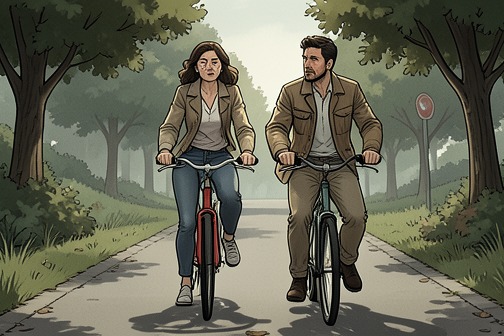
[Confrontation de Shelby avec Madison Jefferson](entity:event-recall-event-confrontation-de-shelby-370ac6eb9241) is both a personal reckoning and a late movement toward truth. During Shelby’s stay in [Los Angeles](entity:location-recall-location-los-angeles-11eff639bdf5) with [Jungkook Jeon](entity:character-recall-character-jungkook-jeon-fc9d9ff5a3bc), an unexpected meeting with her former high-school friend [Madison Jefferson](entity:character-recall-character-madison-jefferson-657bf438d528) reopens the wound created when [Madison](entity:character-recall-character-madison-53d0d83590ae) rejected Shelby’s account, helped sustain the accusation that Shelby was trying to destroy a family, and defended her father [Robert Jefferson](entity:character-recall-character-robert-jefferson-e99ac62ade18). The encounter does not erase the harm, but it changes the moral balance: Madison finally believes Shelby, explains what altered her certainty, and accepts that any reconciliation must begin with recognizing what she helped perpetuate.
## The Encounter and Its Immediate Tension
Shelby first sees Madison while walking with [Jungkook](entity:character-recall-character-jungkook-40c36baa104a) along a bicycle path. The surprise is mutual, and Madison’s appearance triggers an embodied wave of disgust and constriction in Shelby, even as Shelby manages a restrained smile and greeting. The contrast between the outward politeness of saying hello and the inward return of pain establishes the event’s central tension: social civility cannot contain a betrayal that has shaped Shelby’s depression and trauma.
The meeting continues at the [Aurora](entity:location-recall-location-aurora-34947b30effd) restaurant. Shelby encounters Madison again in the restroom before dessert, where Madison’s nervous reaction intensifies the unease. Shelby’s body responds before the conversation can become orderly: memories associated with pain and water return, her throat tightens, and she collapses in panic, covering her ears while crying. Madison tries to help but is pushed away. The confrontation therefore begins not as a controlled exchange of explanations but as the delayed physical return of an injury that has never been safely resolved.
## Shelby’s Accusation and Madison’s Apology
When Madison attempts to approach the past, Shelby stops her sharply. Shelby explains that Madison’s family made her appear to be a malicious person seeking to destroy a household, despite knowing that Shelby was not that kind of person. The betrayal is especially severe because Shelby had confided in Madison and believed that her former friend would support her. Instead, that confidence left Shelby feeling foolish and abandoned.
Shelby connects the social betrayal directly to its psychological consequence: she says that the episode drove her into depression and warns Madison not to offer excuses. This is not a theatrical rejection of accountability; it is Shelby protecting the boundary that had been violated when her testimony was treated as a threat rather than as a disclosure of harm. Madison does not defend herself. She acknowledges that she should have believed Shelby sooner, regrets failing to support her, and admits guilt for spreading the damaging rumor and defending her father.
Madison nonetheless asks to apologize while accepting that Shelby may refuse the apology. She also recognizes that Shelby has found someone to support her and expresses a sincere wish for Shelby and Jungkook to be happy. Shelby’s response is restrained rather than triumphant. Seeing Madison cry, she leaves Jungkook’s reassuring embrace, thanks Madison, and wishes her happiness as well. The gesture does not restore their former friendship, but it marks a controlled release of vengeance: Shelby can acknowledge Madison’s remorse without surrendering the truth of what happened.
## The Disclosure That Changes the Past
The confrontation reaches its decisive turn when Madison says that she believes Shelby. Her hesitation reveals that the statement has cost her something, and Shelby understands that Madison’s father must have done something that finally undermined his carefully protected image. Madison then explains that she saw him assaulting a girl who was struggling to resist. She reported what she witnessed, but no one listened to her; her mother also refused to hear her.
This disclosure changes Madison’s role in the larger conflict. She remains responsible for having failed Shelby when Shelby needed support, but she is no longer presented only as a passive defender of Robert. She becomes an unsuccessful witness whose warning was suppressed inside the same family structure that had discredited Shelby. The revelation also confirms the pattern behind the accusations against Robert and explains why Madison’s certainty collapses so late: direct witnessing finally breaks through familial loyalty and disbelief.
Shelby responds with devastating anger, yet she takes Madison’s hand and strokes its back. The contact is startling because Madison expects rejection and feels guilty for having metaphorically betrayed Shelby. Shelby’s touch does not excuse Madison; it shows that compassion and judgment can coexist. The event’s value shift runs from distrust and psychological danger toward conditional recognition, with truth—not restored intimacy—serving as the basis of the change.
## Relation to the Wider Conflict
The meeting belongs to a broader sequence in which private speech gradually becomes a form of testimony. Jungkook previously tells [Connor Barnum](entity:character-recall-character-connor-barnum-d9322612abb3) that Shelby disclosed what happened to her in Los Angeles and that he wants to help her overcome her fears, demonstrating that Shelby’s trust has begun to extend beyond professional treatment. In another confrontation, Shelby calmly challenges [Dong-hyun](entity:character-recall-character-dong-hyun-f4e8bf200fa5)’s claim to justice while his injured, threatening presence exposes the hypocrisy of his demand. These surrounding moments frame Shelby’s encounter with Madison as part of a larger struggle over who is entitled to define harm and whose account will be believed.
The event also prepares the emotional ground for Robert Jefferson’s trial. Madison’s statement that she saw Robert assault another girl and reported him without being heard reinforces the narrative of institutional and familial impunity that the later verdict finally addresses. In court, Robert is convicted of three sexual assaults, two attempted rapes, two rapes of minors, and four rapes of adults, receiving twenty-five years in prison and a ninety-thousand-dollar fine, with one symbolic dollar awarded to each victim at the victims’ request. Shelby’s relief at the conviction is shared by Jungkook, [Dorcas Peters](entity:character-recall-character-dorcas-peters-cc0824b30f37), [Cassiopée Smith](entity:character-recall-character-cassiop-e-smith-7af6a7136600), [Namjoon Kim](entity:character-recall-character-namjoon-kim-0444585766b6), [Connor](entity:character-recall-character-connor-49e9ac9fb7e5), and [Lydia Barnum](entity:character-recall-character-lydia-barnum-141a6a700bae), but the earlier encounter remains significant because it gives the legal resolution a personal precursor: Madison’s delayed belief is one more fracture in Robert’s defense.
## Consequences and Significance
Confrontation de Shelby avec Madison Jefferson does not end with a full restoration of the former friendship. Madison offers remorse, Shelby accepts neither a simple absolution nor a return to the past, and the relationship remains defined by the damage done and the truth finally spoken. Yet the encounter gives Shelby a measure of agency that the original betrayal denied her. She names the injury, refuses premature consolation, decides whether to offer contact, and retains control over the meaning of forgiveness.
Its deepest significance lies in the distinction between apology and repair. Madison’s apology matters because it includes responsibility, but it cannot undo the depression, panic, isolation, and public humiliation that followed Shelby’s disbelief. The later courtroom conviction supplies institutional recognition, while Madison’s confession supplies intimate confirmation. Together, they move the story from rumor toward witnessing and from enforced silence toward a truth that can be heard. The meeting is therefore not merely a reunion between former friends: it is a confrontation with failed loyalty, a secondary act of testimony, and a fragile but consequential step toward moral clarity.
Event 40
Crise d’angoisse de Shelby à Los Angeles
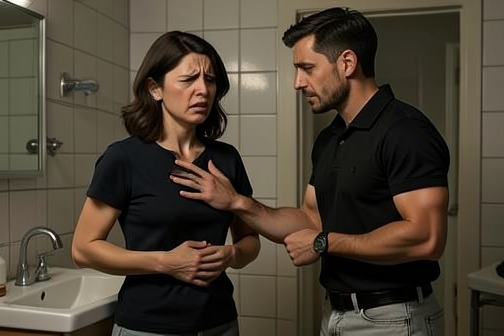
[Crise d’angoisse de Shelby à Los Angeles](entity:event-recall-event-crise-d-angoisse-de-she-841aecbafc00) is a decisive trauma event because it turns an apparently ordinary encounter with [Madison](entity:character-recall-character-madison-53d0d83590ae) into a bodily return to the abuse Shelby endured in high school. The episode does not present recovery as the disappearance of memory. Instead, it shows the memory acquiring physical force, then traces how Shelby is brought back to the present through recognition, distance, and sustained care from [Jungkook](entity:character-recall-character-jungkook-40c36baa104a).
## Causes and Background
The crisis begins when Shelby encounters Madison in the restaurant bathroom while she is with Jungkook. The meeting is presented as an unsettling coincidence rather than a planned confrontation, but Madison’s presence immediately activates associations that Shelby cannot control. The sensation begins in her stomach and throat: she feels as though she is being strangled, while images involving pain and water return with such force that breathing becomes difficult.
The remembered violence is later stated plainly. Shelby recalls being at school with Madison, who had pushed her head into a toilet. In the memory, the decisive terror is the inability to breathe; in the present, the same suffocation returns without the original assault physically occurring. The event therefore reveals the delayed and recurrent nature of Shelby’s trauma: a face, a setting, and bodily sensations are enough to make the past intrude upon [Los Angeles](entity:location-recall-location-los-angeles-11eff639bdf5).
The episode also belongs to a wider pattern established elsewhere in Shelby’s story. In an art classroom, pain throughout her body, racing breath, tears, and oppressive anxiety drive her abruptly from the room. [Cassiopée](entity:character-recall-character-cassiop-e-2eb1ec801364) follows her but loses sight of her, and when she finally finds Shelby, an attempted touch causes Shelby to pull away and cry out in pain. At an underground boxing venue, Jungkook discovers Shelby trembling and crying in the showers, turns off the water, and remains beside her without knowing how to help. These earlier incidents establish that Shelby’s panic is not merely verbal distress; touch, water, crowds, and unexpected proximity can all become dangerous signals.
## What Happens in the Restaurant
After Madison speaks to her, Shelby collapses onto the bathroom floor. She covers her ears, shuts her eyes, and sobs as the remembered scene overwhelms her. Madison initially panics and crouches in front of her, trying to calm her, but Shelby pushes her away and asks not to be touched because she believes Madison may hurt her again. The present is consequently governed by the logic of the past: Madison’s attempt to help is received through the remembered threat of assault.
Madison recognizes that Shelby is having a panic attack and changes her approach. Rather than continuing to touch or restrain her, she leaves the bathroom to find Jungkook. She tells him what has happened, and he immediately gets up and runs to Shelby. His urgency is significant, but his response is not another act of force. He sits down and draws Shelby against him only when she can receive that contact, allowing her to identify him through the familiar scent she associates with him.
Shelby wraps her arms around Jungkook’s neck and hides her face against his left shoulder. He strokes her back and speaks softly until her breathing returns to normal and the sensations tormenting her recede. The value at stake shifts from bodily danger and helplessness to immediate relational safety. The crisis does not erase the memory, but Jungkook’s presence gives Shelby a concrete way to distinguish the remembered aggressor from the person beside her.
When Jungkook gently asks what happened, Shelby explains the recovered image: Madison had been holding her head under toilet water, and she could not breathe. Jungkook reassures her that he is present and tells her that Madison came to find him. Shelby’s immediate concern then turns toward Madison’s whereabouts, suggesting that the crisis has begun to loosen its grip enough for her attention to move outward again.
## The Later Nightmare
The same trauma returns in a different narrative form on Tuesday, July 7, at 4:44 in the morning. Jungkook wakes because Shelby is crying and making distressed sounds. Her nightmare revives an unpleasant memory, and her breath repeatedly catches, intensifying his panic as he tries to wake her. He takes her face in his hands, but the attempt does not immediately work; overwhelmed by fear for her, he begins to cry himself.
Shelby eventually grips Jungkook’s wrists with increasing strength and wakes trembling and deeply disturbed. She notices that he is crying, then rushes into his arms. Her broken attempt to describe what she saw leaves the threat partly unspoken, but its emotional force is clear. Jungkook does not demand a full account. He hushes her, asks whether she wants a bath, and follows the option she accepts.
He carries Shelby to the bathtub, runs warm water, adds shower gel, and lets her enter while she remains hidden against his neck. Once she curls her knees to her chest, he gently washes her back with a cloth and strokes her skin. Shelby relaxes only gradually; even in this carefully controlled setting, the images do not vanish. The bath therefore functions not as a cure but as a repeated act of grounding, replacing the remembered water of the toilet with warm water, choice, and attentive care.
## Relationships and Consequences
The event deepens the significance of Shelby’s former friendship with Madison. Madison is connected to both the original harm and the later attempt to obtain help, so her role is morally and emotionally divided. Shelby’s fear does not arise from a simple present accusation; it is the involuntary transfer of past danger onto a person who is physically in front of her. Madison’s most constructive action is recognizing the limit of her own presence and bringing Jungkook into the situation.
Jungkook’s role is equally complex. His earlier encounters with Shelby’s distress left him uncertain about what to do, yet he repeatedly learns that remaining nearby, avoiding unnecessary pressure, and responding to her accepted needs can be more protective than trying to control the situation. In the bathroom, he waits beside Shelby while she cries. In the restaurant, he offers an embracing presence that helps her breathe. During the nightmare, he creates a warm bath and performs slow, gentle care. Across these scenes, his conduct changes from uncertain observation into practiced emotional support.
The wider story frames that change against Jungkook’s own history. As a child in [Seoul](entity:location-recall-location-9736e5d4feee), he was held back by [Ye-jun](entity:character-recall-character-ye-jun-e26530f9fe6e) while their parents’ argument grew louder downstairs; Jungkook was furious that he could not intervene. Years later, [Sunmi](entity:character-recall-character-sunmi-46eb799eb5da) remembers that his father had beaten him and that Jungkook concealed the truth by claiming he had fought at school. When Jungkook fled home at sixteen, Sunmi welcomed him and became a protective figure, even as she worried about the darkness surrounding him and the substances he began to use too young. His ability to stay with Shelby’s fear thus stands in contrast to the violence and concealment that shaped his childhood.
## Narrative and Thematic Significance
The episode uses repetition rather than a single isolated attack: the trauma appears in a public bathroom, in recollection, and again in sleep. That recurrence gives Shelby’s condition a structure of delayed return. The past is not narrated once and left behind; it re-enters through breath, water, touch, sound, and involuntary bodily collapse. The shift from the restaurant scene to the later nightmare also changes the source of danger from an external encounter to an internal image, demonstrating that physical separation from Madison cannot by itself guarantee relief.
At the same time, the episode refuses to define Shelby solely by the panic. She communicates a boundary when she tells Madison not to touch her, accepts Jungkook’s help when she is ready, explains the memory afterward, and agrees to the bath during the nightmare. These moments preserve her agency inside an experience characterized by loss of control. The crisis begins with suffocation and fear, but it ends each time with some return of orientation: normal breathing in the bathroom, recognition of Jungkook in bed, and gradual relaxation in the bath.
The event also clarifies why Shelby’s later change cannot be credited to one person alone. [Dorcas](entity:character-recall-character-dorcas-551d5ed1ad82)’s friend Madison, Jungkook’s protection, and Shelby’s psychological treatment all occupy different positions in her recovery. Jungkook himself deflects praise when someone thanks him for making Shelby happier, attributing her greater openness primarily to her therapist and her own work to move forward. The panic episode supports that humility: his care matters, but it operates alongside Shelby’s treatment and her continuing effort to survive the return of what happened to her.
Event 41
Retour de Shelby et Jungkook à Ellensburg

[Retour de Shelby et Jungkook à Ellensburg](entity:event-recall-event-retour-de-shelby-et-jun-5b8dd3ba56b7) is the homecoming that closes their stay in [Los Angeles](entity:location-recall-location-los-angeles-11eff639bdf5) and carries Shelby and [Jungkook](entity:character-recall-character-jungkook-40c36baa104a) back into the network of family, memory, and unfinished healing surrounding [Ellensburg](entity:location-recall-location-ellensburg-f2b1300b3b7f). The return is not a simple change of location. It joins travel with recovery: Shelby revisits the places that formed her, confronts the continuing presence of grief, and comes back to a home where her relationship with Jungkook can be received openly. The event therefore turns movement into a measure of renewal.## Leaving Los Angeles and Returning to Familiar Ground
Before the journey home, Jungkook checks the house one last time, making sure that the rooms are orderly and that neither of them has left personal belongings behind. Their suitcases wait in the entryway while Shelby practices tricks on her skateboard outside. She falls backward during a movement, and the board rolls away from her, immediately drawing Jungkook's alarm. Shelby insists that she is unharmed, and she takes his chin in her fingers so that he will look at her while she promises that nothing hurts. He eventually accepts her reassurance and helps her stand, but the episode shows how closely the return is accompanied by vigilance: even an ordinary fall becomes a reminder of the injuries and dangers they have already survived.
They continue toward Shelby's childhood home, a place she wants to see again in order to revive memories that time has begun to blur. The abandoned house is more than a destination. Years earlier, at [Santa Monica State Beach](entity:location-recall-location-santa-monica-state-b-c1f175735500), six-year-old Shelby had watched [Connor Barnum](entity:character-recall-character-connor-barnum-d9322612abb3) and [Sara Anderson](entity:character-recall-character-sara-anderson-b02e52d75078) gaze toward that same neglected dwelling while she sought her father's attention from his shoulders. Returning to the façade with Jungkook allows childhood memory to emerge in fragments rather than as a fully recoverable past. She remembers dancing in the street with her mother to a Latin American song and skateboarding with her father. Jungkook does not force the recollection or redirect it toward himself; he holds her hand, interlaces their fingers, and walks silently while she gathers what she can.
## Mourning, Memory, and the Cemetery Visit
The homecoming route includes a deliberate act of mourning. Shelby buys a bouquet of white tulips from a florist, and she and Jungkook go to the cemetery where Sara Anderson is buried. Jungkook steps away for several minutes so that Shelby can grieve privately, then returns when she signals him to sit beside her. With tears in her eyes, Shelby rests her head on his left shoulder and looks at her mother's grave, identified by Sara Anderson's name and the years of her birth and death.
While Jungkook is briefly apart from her, Shelby speaks to Sara about everything that has happened during the time she was unable to visit the grave. The confession resembles the writing of a private diary: she recounts the course of her life and speaks about Jungkook, including the sense of well-being and renewed desire to live that she associates with him. Jungkook then addresses Sara directly and promises to remain at Shelby's side. His gesture does not erase death or claim to replace Shelby's mother. Instead, it places his commitment within Shelby's family memory, making the relationship part of the future she is trying to build without abandoning the person she has lost.
The cemetery visit gives the return a ritual structure. Shelby does not merely go back to Ellensburg; she carries Los Angeles back into a conversation with her childhood, her mother's death, and her own damaged sense of continuity. The past remains painful, but it is no longer encountered only as an involuntary intrusion. Through revisiting the house and speaking at the grave, Shelby chooses the places and forms through which memory will be approached.
## Arrival at the [Barnum Home](entity:location-recall-location-barnum-3554f857071e)
The physical arrival in Ellensburg takes place through an embrace. At [Seattle-Tacoma International Airport](entity:location-recall-location-4d275383b8c0), Shelby runs into Connor Barnum's arms, and his relief is visible as he holds his daughter. [Lydia Barnum](entity:character-recall-character-lydia-barnum-141a6a700bae) greets Jungkook with a hug, and the two young people are drawn into a collective embrace that neither expected. Rather than being treated as an outsider accompanying Shelby, Jungkook is welcomed into the family circle. The surprise of that welcome allows happiness to enter the scene before either of them has to explain the difficulties they encountered in Los Angeles.
During the drive, Shelby enthusiastically describes their stay, while Jungkook answers some questions and mostly watches her with open affection. [Connor](entity:character-recall-character-connor-49e9ac9fb7e5) notices the change and feels relieved that his daughter appears to have found someone good for her. His relief is not uncomplicated: he knows that Shelby may have encountered people from her past and faced memories that were difficult to bear. The family response therefore combines celebration with protective concern. They welcome the couple while recognizing that returning home does not mean that the causes of Shelby's distress have disappeared.
After about an hour on the road, they reach the Barnum family home, where [Loki](entity:character-recall-character-loki-c3c7344a882c) greets them by jumping on Shelby. She laughs and strokes the black dog as he races around until exhaustion sends him sprawling. The ordinary comedy of the welcome matters because it places the couple inside a living domestic rhythm: shoes are removed, the family gathers in the living room, and the return becomes part of everyday life rather than a solemn closing tableau.
## A Shared Future After the Return
[Lydia](entity:character-recall-character-lydia-3e7a560b729c) asks what Shelby and Jungkook intend to do next. Shelby does not offer a fixed plan; she says they will probably remain in the area and go to the lake. Connor then offers the family home to them while he and Lydia spend August in Florida with Loki. The offer gives their return a practical consequence. They are not merely visiting Ellensburg before immediately departing again. They are given a place to stay, time to recover, and the freedom to decide what comes next together.
Shelby turns to Jungkook to ask whether the arrangement suits him. That small consultation defines the couple's position after Los Angeles: their future is negotiated between them rather than dictated by panic, family expectation, or old wounds. The event ends in provisional stability rather than a claim that healing is complete. The broader meditation on rebirth insists that renewal may take months or years, that learning to love oneself, another person, and life can be uncertain, and that each person has the right to move at a personal pace. Retour de Shelby et Jungkook à Ellensburg embodies that principle. Their return brings them back to familiar ground, but the people who arrive are not simply the people who left. They carry grief, fear, affection, and a more deliberate commitment to continue.
Event 42
Chantage de Kayla contre Jungkook
[Kayla](entity:character-recall-character-kayla-33460f2ea995)’s blackmail against [Jungkook](entity:character-recall-character-jungkook-40c36baa104a) is the coercive turning point in which his attempt to leave his former life behind is interrupted by the threat of intimate videos. After spending a peaceful evening with his girlfriend, Jungkook arrives at [Sunmi Eun](entity:character-recall-character-sunmi-eun-c82ef680ac18)'s home and finds Kayla waiting outside with a deliberately seductive smile. Her presence instantly destroys the calm he had felt, and her demand that he return to [Aphrodite's Love](entity:location-recall-location-aphrodite-s-love-f0d943b3c67a) forces him into a night governed not by desire or choice but by fear of exposure.
## The Encounter at [Sunmi Eun's Home](entity:location-recall-location-sunmi-eun-3784b4ed7e31)
Jungkook’s arrival at Sunmi Eun's home begins in marked contrast to what follows. He has driven quietly through the rain after gathering his belongings, and the journey is described as peaceful. That temporary calm vanishes when he sees Kayla’s blond hair, expensive clothes, and umbrella as she waits for him. Her smile is intended to seduce, but Jungkook responds with open hostility and asks what she is doing there. The scene therefore establishes the event’s central opposition: a newly built emotional life represented by his peaceful return is confronted by a former sexual relationship that refuses to remain in the past.
Kayla immediately treats Jungkook’s anger as a challenge rather than a boundary. When he explains that he must shower and prepare to meet his girlfriend, he also makes clear that he no longer wants the sexual relationship they once had. Kayla mocks the fact that he is now in a relationship, dismissing his girlfriend as another inexperienced young woman who has fallen into his supposed trap. Her insult is not merely personal. It attacks the relationship Jungkook is trying to protect and attempts to define his present through the sexual persona associated with his past.
Jungkook reacts physically, pushing Kayla against the wall while leaving only a few centimeters between their faces. The narration emphasizes that his anger frightens her, yet also gives her satisfaction because she knows that her provocation reaches his most sensitive points. He does not strike her, but his posture and words remain aggressive and cruel. This restraint does not make the encounter consensual or safe; instead, it shows how close Jungkook remains to the violence he is trying to abandon, while Kayla deliberately exploits that volatility to retain power over him.
## The Threat of the Videos
The decisive reversal comes when Kayla reveals that she possesses videos of the two of them together. She threatens to send their intimate moments to Jungkook’s girlfriend if he does not appear at Aphrodite's Love that night. The demand transforms the encounter from an unwanted reunion into blackmail: Kayla ties Jungkook’s movement, privacy, and relationship to her own terms, using the possibility of non-consensual disclosure as leverage.
The threat immediately changes Jungkook’s position. Moments earlier, he was confronting Kayla and ordering her not to insult his girlfriend; after she mentions the recordings, his face breaks down and he moves away from her with bitterness. His distress comes from recognizing that the private past he believed he could contain has been converted into a weapon. He cannot simply refuse Kayla without risking the person he loves and the relationship he has begun to build. The blackmail thus defeats him without requiring a physical attack: the threatened circulation of the videos makes emotional devastation and public exposure the instruments of control.
Jungkook finally agrees to Kayla’s demand with a sigh. His consent is not freely given. It is an outward capitulation produced by coercion, and the contrast between his resistance and his eventual agreement makes the event’s value shift unmistakable: dignity and autonomy are forced into submission by the threat of sexual exposure. Kayla leaves smiling and addresses him as her handsome artist, a taunting reminder that she intends to preserve the connection on her own terms even though Jungkook has already rejected it.
## The Forced Return to Aphrodite's Love
At 10:00 p.m., Jungkook stands outside Aphrodite's Love in [Ellensburg](entity:location-recall-location-ellensburg-f2b1300b3b7f), unable to believe that he has returned. The location embodies the life he considers abandoned: debauchery, drugs, alcohol, and violence. Although sex still exists in his present life, it is now associated with love and passion, whereas the nightclub gathers the vices that once shaped him. His presence outside the building is therefore not a voluntary homecoming but a coerced crossing back into a profane and dangerous past.
Kayla continues to frame the situation as negotiable, asking him to stay for only one night and then urging him to have at least one drink. Jungkook refuses the first request and tells her to let him go, but he eventually takes the whisky she has obtained for him. He drinks it in one movement while Kayla watches with a smile that signals an undisclosed intention. The drink becomes a concrete instrument in the escalation: Jungkook believes he is merely satisfying a demand enough to leave, while Kayla observes his compliance as part of a larger plan.
The coercive atmosphere intensifies when Jungkook begins to feel unwell. He catches himself on a server, who does not understand what is happening, and Kayla quickly intervenes by apologizing to the server and taking Jungkook upstairs to the VIP floor. There, he sits on a sofa while his body becomes increasingly uncontrollable. Kayla sits on his thighs without his willing participation, takes his hands, and places them on her waist. The scene makes the loss of agency physical: Jungkook’s body is positioned and used while he is unable to control it or understand why he feels so ill.
The red neon lighting and overtly sexual music reinforce the nightclub’s seductive but vicious atmosphere. Jungkook recognizes elements of the environment he once enjoyed, yet he is now disoriented within them. Kayla grasps his face and tells him that she has always obtained everything she wants. Her statement reveals the continuity between the earlier blackmail and the present scene: the nightclub is not simply a setting for renewed intimacy, but the stage on which her claim to possession is enacted. The event ends with Jungkook trapped between a past he rejects, a body he can no longer control, and a threat capable of damaging the relationship that has become central to his new life.
Kayla’s blackmail against Jungkook is the coercive turning point in which his attempt to leave his former life behind is interrupted by the threat of intimate videos. After spending a peaceful evening with his girlfriend, Jungkook arrives at Sunmi Eun's home and finds Kayla waiting outside with a deliberately seductive smile. Her presence instantly destroys the calm he had felt, and her demand that he return to Aphrodite's Love forces him into a night governed not by desire or choice but by fear of exposure.
## The Encounter at Sunmi Eun's Home
Jungkook’s arrival at Sunmi Eun's home begins in marked contrast to what follows. He has driven quietly through the rain after gathering his belongings, and the journey is described as peaceful. That temporary calm vanishes when he sees Kayla’s blond hair, expensive clothes, and umbrella as she waits for him. Her smile is intended to seduce, but Jungkook responds with open hostility and asks what she is doing there. The scene therefore establishes the event’s central opposition: a newly built emotional life represented by his peaceful return is confronted by a former sexual relationship that refuses to remain in the past.
Kayla immediately treats Jungkook’s anger as a challenge rather than a boundary. When he explains that he must shower and prepare to meet his girlfriend, he also makes clear that he no longer wants the sexual relationship they once had. Kayla mocks the fact that he is now in a relationship, dismissing his girlfriend as another inexperienced young woman who has fallen into his supposed trap. Her insult is not merely personal. It attacks the relationship Jungkook is trying to protect and attempts to define his present through the sexual persona associated with his past.
Jungkook reacts physically, pushing Kayla against the wall while leaving only a few centimeters between their faces. The narration emphasizes that his anger frightens her, yet also gives her satisfaction because she knows that her provocation reaches his most sensitive points. He does not strike her, but his posture and words remain aggressive and cruel. This restraint does not make the encounter consensual or safe; instead, it shows how close Jungkook remains to the violence he is trying to abandon, while Kayla deliberately exploits that volatility to retain power over him.
## The Threat of the Videos
The decisive reversal comes when Kayla reveals that she possesses videos of the two of them together. She threatens to send their intimate moments to Jungkook’s girlfriend if he does not appear at Aphrodite's Love that night. The demand transforms the encounter from an unwanted reunion into blackmail: Kayla ties Jungkook’s movement, privacy, and relationship to her own terms, using the possibility of non-consensual disclosure as leverage.
The threat immediately changes Jungkook’s position. Moments earlier, he was confronting Kayla and ordering her not to insult his girlfriend; after she mentions the recordings, his face breaks down and he moves away from her with bitterness. His distress comes from recognizing that the private past he believed he could contain has been converted into a weapon. He cannot simply refuse Kayla without risking the person he loves and the relationship he has begun to build. The blackmail thus defeats him without requiring a physical attack: the threatened circulation of the videos makes emotional devastation and public exposure the instruments of control.
Jungkook finally agrees to Kayla’s demand with a sigh. His consent is not freely given. It is an outward capitulation produced by coercion, and the contrast between his resistance and his eventual agreement makes the event’s value shift unmistakable: dignity and autonomy are forced into submission by the threat of sexual exposure. Kayla leaves smiling and addresses him as her handsome artist, a taunting reminder that she intends to preserve the connection on her own terms even though Jungkook has already rejected it.
## The Forced Return to Aphrodite's Love
At 10:00 p.m., Jungkook stands outside Aphrodite's Love in Ellensburg, unable to believe that he has returned. The location embodies the life he considers abandoned: debauchery, drugs, alcohol, and violence. Although sex still exists in his present life, it is now associated with love and passion, whereas the nightclub gathers the vices that once shaped him. His presence outside the building is therefore not a voluntary homecoming but a coerced crossing back into a profane and dangerous past.
Kayla continues to frame the situation as negotiable, asking him to stay for only one night and then urging him to have at least one drink. Jungkook refuses the first request and tells her to let him go, but he eventually takes the whisky she has obtained for him. He drinks it in one movement while Kayla watches with a smile that signals an undisclosed intention. The drink becomes a concrete instrument in the escalation: Jungkook believes he is merely satisfying a demand enough to leave, while Kayla observes his compliance as part of a larger plan.
The coercive atmosphere intensifies when Jungkook begins to feel unwell. He catches himself on a server, who does not understand what is happening, and Kayla quickly intervenes by apologizing to the server and taking Jungkook upstairs to the VIP floor. There, he sits on a sofa while his body becomes increasingly uncontrollable. Kayla sits on his thighs without his willing participation, takes his hands, and places them on her waist. The scene makes the loss of agency physical: Jungkook’s body is positioned and used while he is unable to control it or understand why he feels so ill.
The red neon lighting and overtly sexual music reinforce the nightclub’s seductive but vicious atmosphere. Jungkook recognizes elements of the environment he once enjoyed, yet he is now disoriented within them. Kayla grasps his face and tells him that she has always obtained everything she wants. Her statement reveals the continuity between the earlier blackmail and the present scene: the nightclub is not simply a setting for renewed intimacy, but the stage on which her claim to possession is enacted. The event ends with Jungkook trapped between a past he rejects, a body he can no longer control, and a threat capable of damaging the relationship that has become central to his new life.
## Coercion, Intoxication, and the Loss of Choice
The sequence links two forms of coercion without treating either as ordinary romance. First, Kayla uses the intimate videos to make Jungkook attend a place he has explicitly rejected. Once he arrives, she pressures him to drink whisky despite his refusal to spend the night with her. His decision to swallow the drink is therefore made under the continuing pressure of the original threat, not in a context of mutual desire. Kayla’s satisfaction at watching him drink, followed by his sudden physical deterioration, gives the action a sinister causal shape even before the full consequences are shown.
Jungkook’s impairment also changes the meaning of every subsequent physical gesture. He is unable to control his body, does not understand what is happening, and requires support from a server before Kayla removes him from the public area. Kayla’s placement of his hands on her waist and her sitting on his thighs are actions performed while he is incapacitated and unable to offer meaningful agreement. The event consequently exposes the difference between sexual history and present consent: a former relationship does not authorize access, and prior intimacy cannot convert an impaired person’s passivity into willingness.
## Consequences and Narrative Significance
The blackmail threatens more than Jungkook’s reputation. It attacks the fragile boundary he has drawn between the violent, addictive world associated with Aphrodite's Love and the relationship in which he now experiences sex as loving and passionate. Kayla’s threat makes the past portable: the videos can enter his new life at any moment, while his forced return makes him physically reenact the identity he is trying to outgrow. The resulting conflict is therefore both external and psychological, placing his current commitment against the version of himself that Kayla claims to possess.
The event’s deepest reversal lies in the destruction of the temporary calm that precedes it. Rain, a quiet drive, and the expectation of returning to his girlfriend briefly suggest stability; Kayla’s arrival turns that stillness into fear, and the nightclub converts fear into bodily helplessness. Jungkook’s agreement at Sunmi Eun's home and his later collapse at Aphrodite's Love are not separate choices but successive stages in the same imposed sequence. By the end, Kayla has secured his presence, compromised his physical autonomy, and reactivated the atmosphere of his former life, while Jungkook’s relationship and privacy remain exposed to consequences he has been forced to risk.
Event 43
Découverte par Shelby de Jungkook avec Kayla

Shelby’s discovery of [Jungkook](entity:character-recall-character-jungkook-40c36baa104a) with [Kayla](entity:character-recall-character-kayla-33460f2ea995) at [Aphrodite's Love](entity:location-recall-location-aphrodite-s-love-f0d943b3c67a) is a major reversal in the relationship between [Shelby Anderson Barnum](entity:character-recall-character-shelby-anderson-bar-2e17bb137697) and [Jungkook Jeon](entity:character-recall-character-jungkook-jeon-fc9d9ff5a3bc). An anonymous message pulls Shelby from the university dormitory into a place she already fears, and her determined intrusion culminates in a sight that appears to confirm betrayal: Jungkook is seated on a sofa while Kayla sits on his lap and kisses him without restraint. The event transforms uncertainty into humiliation and suspicion, then stops before the confrontation can be resolved.
## Causes and Background
At 23:46, an unknown sender instructs Shelby to come to Aphrodite's Love. The message offers no explanation, and Jungkook does not answer when Shelby calls him. The lack of information turns a simple request into a threat in her mind: worry enters her thoughts, fear follows, and she runs from campus toward the city until her legs hurt. Her urgency is especially significant because Aphrodite's Love is an establishment she dreads, making the destination itself part of the pressure placed on her.
Shelby first approaches the entrance and tells the bouncer that her boyfriend is inside and that there may be a problem. He dismisses her, insisting that any problem would already have been reported, then orders her to return from where she came. His refusal closes the legitimate route into the club and forces Shelby to choose an unauthorized one. After sitting on the pavement outside for a time, she circles the building, finds a service door, waits for an employee to leave, and slips inside while avoiding the staff.
## What Happens
Once on the dance floor, Shelby sends the unknown person a message saying that she is there. The reply directs her to the VIP level. She remains reluctant but obeys, reaching the staircase while one man stops her and another signals that she may pass. The permission is opaque rather than reassuring; it confirms that someone inside has arranged her access without revealing why.
At the top of the stairs, Shelby’s phone falls at her feet when she sees Jungkook. He is sitting on one of the sofas with a blonde woman on his lap, and the woman is kissing him openly. The sight functions as the event’s recognition and reversal: Shelby has entered the club expecting an explanation or rescue, but instead encounters an image that makes her relationship appear suddenly unsafe.
The blonde is Kayla, whom Shelby immediately recognizes. Kayla gets up, wipes her mouth in a vulgar manner, walks toward Shelby, bends down, picks up Shelby’s phone, and places it in the pocket of Shelby’s hooded sweatshirt. Her handling of the phone briefly takes control of an object that had marked Shelby’s arrival and communication with the anonymous sender. The gesture makes the confrontation physical and invasive before either woman has fully explained the situation.
Kayla then identifies Shelby as Jungkook’s girlfriend and apologizes with apparent mock sympathy. She claims that a man remains a man and suggests that Jungkook is no exception. Shelby rejects Kayla’s attempted intimacy, answering that she is not Kayla’s darling. The exchange establishes an immediate contest over language as well as over Jungkook: Kayla tries to define Shelby as the injured girlfriend in a humiliating spectacle, while Shelby refuses to accept Kayla’s patronizing address.
## Stakes and Consequences
The scene changes the value of trust from a presumed foundation into an apparent loss. Before entering Aphrodite's Love, Shelby is frightened because she does not know what is happening to Jungkook. After reaching the VIP room, she has a concrete image that seems to answer the question, but the answer is destabilizing rather than clarifying. The event therefore turns suspense into relational crisis without yet establishing the full truth behind the scene.
Shelby’s earlier panic responses intensify the significance of this confrontation. In an art classroom, overwhelming pain and accelerated breathing caused her to flee while [Cassiopée](entity:character-recall-character-cassiop-e-2eb1ec801364) pursued her; when Cassiopée touched her shoulders, Shelby cried out and recoiled, remaining curled up and refusing contact. At Aphrodite's Love, the same pattern of fear is redirected into the threat of emotional betrayal. The narrative repeatedly places Shelby in moments where an abrupt stimulus overwhelms her ability to interpret events, making the club discovery both an external revelation and a psychological assault.
The contrast with Jungkook’s earlier forms of care sharpens the apparent rupture. At [Knock Out](entity:location-recall-location-knock-out-459a67e1995b), he found Shelby trembling and crying in the showers, turned off the water, crouched before her, and stayed beside her because he did not know what else to do. On another occasion, after seeing her injured face, he crouched beside her and placed his right hand on her knees while apologizing that he should never have taken her there. Those quiet gestures make the image with Kayla more damaging: the same man who had become associated with patient physical presence now appears in an intimate posture with a former sexual partner.
## Narrative Function and Cliffhanger
The discovery combines the plots of revelation, pursuit, and temptation. Shelby pursues an unknown danger into a hostile venue, while the reader receives a revelation whose visible meaning is powerful but incomplete. The anonymous message, the service-door entry, the guarded stairway, and Kayla’s staged welcome create a controlled sequence in which access is granted only after suspense has accumulated. Each step narrows Shelby’s choices until the visual shock in the VIP room becomes unavoidable.
The event also uses objects and spatial thresholds to organize knowledge. The phone carries Shelby’s contact with the unknown sender, falls when she sees Jungkook, and is then picked up and pocketed by Kayla. The entrance rejected by the bouncer, the concealed service door, the dance floor, and the VIP staircase mark successive movements from public uncertainty toward private humiliation. By ending immediately after Shelby refuses Kayla’s address, the narrative withholds explanation and leaves the relationship suspended between an apparent betrayal and an unresolved setup.
In structural terms, this is the story’s dark relational moment rather than a completed judgment. Shelby has not yet received Jungkook’s account, and the evidence presented to her is limited to the physical tableau and Kayla’s provocation. Nevertheless, the scene’s immediate consequence is decisive: trust can no longer remain effortless, and the relationship must confront the history and power Kayla brings into the room. The cliffhanger derives its force from that gap between what Shelby sees, what Kayla asserts, and what the reader still does not know.
Event 44
Kayla drugging and sexually assaulting Jungkook

[Kayla drugging and sexually assaulting Jungkook](entity:event-recall-event-1ed1b7c2a0cd) is a turning point built around a terrible gap between what Shelby sees and what [Jungkook](entity:character-recall-character-jungkook-40c36baa104a) can do: she watches an intimate video and believes he has betrayed her, while he is drugged, physically incapacitated, and unable to call out to her. The event is eventually reconstructed through Jungkook’s returning memory and his account to Shelby. It exposes [Kayla](entity:character-recall-character-kayla-33460f2ea995)’s coercion, makes clear that Jungkook did not consent to her advances, and transforms the couple’s crisis from an apparent act of infidelity into the aftermath of an assault.
## Causes and Background
Before the night at [Aphrodite's Love](entity:location-recall-location-aphrodite-s-love-f0d943b3c67a), Kayla threatens Jungkook with videos of their earlier sexual encounters. She says she will send them to Shelby unless he comes to the club that evening. Jungkook goes because he does not want Shelby to see the footage. The threat exploits both his previous relationship with Kayla and his fear of the consequences the video could have for his current relationship. His presence at the club is therefore not evidence that he wants to resume their sexual relationship; he has gone in response to blackmail.
At the club, Kayla asks him to have sex with her. He refuses categorically, making his lack of consent explicit before the drugging occurs. She then offers him whisky. He accepts the drink without knowing that she has put [GHB](entity:object-recall-object-ghb-b306619858a2) in it. The sequence matters: Kayla first uses the threat of exposing private footage to control where Jungkook goes, then secretly drugs him after he has rejected her sexual request.
## The Assault at Aphrodite's Love
The narrative returns to the club at 00:10 on Thursday, October 1, through Jungkook’s fragmented recollection. He recognizes Shelby when Kayla approaches her with a phone, but the drug has left him unable to make his body respond. He cannot rise or call out as Shelby sees the video and runs. Kayla returns to him smiling and says that she intends to have him to herself. Jungkook manages to object, but his words do not give him control of the situation.
Kayla grabs his face and pulls his head back by his hair, striking it against a wall. She tells him that Shelby will never want to see him again and predicts that he will end up at her feet. Her words reveal how the blackmail and the incapacitation work together: she is trying to separate Jungkook from Shelby while presenting herself as the person who will remain within reach. When another person calls for her, Kayla leaves him, saying she will return. The interruption gives Jungkook a brief opportunity to try to escape, not a meaningful ability to protect himself.
Although heavily disoriented, Jungkook manages to make his way through the crowd and outside. He cannot tell where he is or why he is there. At his car, he struggles even to put the key in the ignition. Kayla follows him, gets into the passenger seat, and touches his face as he tries to fight her off. He tells her to leave him alone. She gets out, puts a note on the passenger seat, and shuts the door; before Jungkook can take the note, he loses consciousness. The scene’s broken sequence of movement, confusion, resistance, and collapse shows the practical force of the drug: his awareness persists, but his ability to act is severely compromised.
## Discovery and Conflicting Accounts
The next morning, Jungkook wakes alone in his car with a headache and no memory of the previous night. The unsigned note on the passenger seat says that Kayla enjoyed the night and thanks him. He recognizes who left it but cannot remember what happened. His first concern is Shelby. He drives to the university dormitory and, after receiving no answer at her door, enters her room. He finds her asleep in the bathroom with a bloody hand and sees that the mirror has been violently damaged. The discovery establishes that the night has already caused harm beyond the club, though he does not yet know the full sequence behind it.
Shelby has encountered the footage Kayla threatened to send. At the club, Kayla offers her phone and Shelby watches a video of Kayla and Jungkook having sex. The image shows an earlier encounter, but Shelby has no access to Jungkook’s present state or to the circumstances that brought him to the club. Seeing it, she runs from the venue and returns to the dormitory in distress. The same phone that Kayla uses to pressure Jungkook therefore becomes the means by which she directs Shelby toward a false understanding of the night.
When Shelby orders Jungkook to leave, he obeys. Outside her room, he breaks down. Images of the club then return: Kayla’s drink, his inability to move, and the events surrounding Shelby’s arrival. Once he understands what happened, he goes to the [Onyx Hotel](entity:location-recall-location-onyx-hotel-f857cb882ebf) and asks for Kayla. The recollection changes the meaning of his missing time and of the note: what first appeared to be a night he willingly spent with Kayla is revealed as a drug-facilitated assault.
## Disclosure and Significance
Jungkook eventually tells Shelby what happened beside the lake in [Ellensburg Forest](entity:location-recall-location-ellensburg-c91d43040afb). He explains that Kayla threatened to send her the videos, that he went to Aphrodite's Love because he did not want her to see them, and that he refused Kayla’s request for sex before drinking the whisky she had drugged with GHB. He remembers recognizing Shelby while being unable to move or speak. He also tells her that Kayla did not touch him beyond what he recalls, an important distinction in his account that does not erase the coercion or the forced contact.
Shelby names the kiss Kayla forced on him as an assault because it happened without his consent. Jungkook nods, and Shelby places her hand on his; he takes it and interlaces their fingers. The small gesture follows a scene in which his body had been rendered unresponsive and another person had acted upon him without permission. Here, contact is offered and accepted, rather than imposed. Shelby also tells him that she cannot stop thinking about the video, so her distress is not instantly resolved by learning the truth. The disclosure instead gives the couple a more accurate account of the rupture: Kayla engineered the appearance of betrayal, while Jungkook was drugged and assaulted. By letting him narrate what he could not communicate at the club, the episode makes testimony essential to correcting the story that the video seemed to tell.
Event 45
Shelby’s breakup and reconciliation after learning about the video
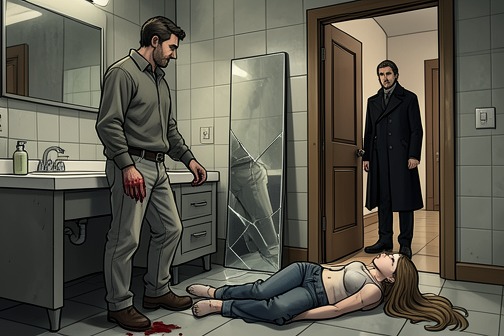
[Shelby’s breakup and reconciliation after learning about the video](entity:event-recall-event-shelby-02730e21d630) is a crisis of trust shaped by a deliberately misleading image: Shelby sees [Jungkook](entity:character-recall-character-jungkook-40c36baa104a) with [Kayla Brown](entity:character-recall-character-kayla-brown-734aff04292e) and concludes that he chose to betray her, while Jungkook initially cannot remember what happened. Their separation begins in fear and anger, but the full account changes what Shelby understands about the video and about Jungkook’s apparent involvement.
## The Video and the Breakup
Jungkook wakes alone in his car with a headache and no memory of the previous night. A note on the passenger seat says that its writer enjoyed the night and thanks him, but it is unsigned. He recognizes who must have left it, yet cannot recall what occurred. Thinking first of Shelby, he drives to the university dormitory and hurries to her room. When she does not answer, he enters and finds her asleep in the bathroom, her hand bloodied beside a mirror shattered by violent blows.
Shelby wakes disoriented and pushes him away. Her anger is already bound to what she believes she witnessed: at [Aphrodite's Love](entity:location-recall-location-aphrodite-s-love-f0d943b3c67a), she saw Jungkook with a blonde woman on his lap, and [Kayla](entity:character-recall-character-kayla-33460f2ea995) showed her a video of the two together. Shelby confronts him with the images and says they disgust her. Jungkook, unable to make sense of the accusation, asks what is happening; to Shelby, his confusion looks like denial. The video has supplied an apparent answer before he can offer an explanation.
When Shelby orders him to leave, Jungkook finally gives in. He slides down against the closed bedroom door and breaks down in tears; Shelby is crying on the other side. The separation is therefore not a clean release from the relationship but a shared collapse, each left alone with the same event understood in sharply different ways.
## The Explanation and Reconciliation
After leaving Shelby’s room, Jungkook begins to recover fragments of the night and understands that Kayla had engineered the encounter. He goes to the [Onyx Hotel](entity:location-recall-location-onyx-hotel-f857cb882ebf) to confront her, but the account that clarifies matters reaches Shelby later, through [Namjoon](entity:character-recall-character-namjoon-4109d4fa2b00). Finding her still crying over the video, Namjoon tells her that Jungkook is the victim and that she should let him explain. He does not disclose the details on Jungkook’s behalf; the explanation belongs to Jungkook himself. Shelby takes that distinction seriously, asks where he is, and then messages him to meet at the lake.
At the lake, Jungkook describes how Kayla had threatened to send Shelby videos of their past sexual encounters unless he came to Aphrodite’s [Love](entity:expression-recall-expression-love-8b9254c84bfa). He says that he refused Kayla’s demand to have sex with her, then accepted a glass of whiskey without knowing she had put [GHB](entity:object-recall-object-ghb-b306619858a2) in it. He recognized Shelby but could not move, and his voice would not come out. The account reverses the meaning Shelby had assigned to the footage: what looked to her like a willing betrayal was, in the present encounter, a drugged state in which Jungkook could not act or speak. Hearing him, Shelby realizes that she had not listened before and feels guilty for misjudging what happened.
The video nevertheless remains painful. Shelby admits that its images keep returning to her, and Jungkook distinguishes their present relationship from his past with Kayla: he says that he loves Shelby and values the intimacy they share, above all their relationship. His reassurance does not erase what Shelby saw; instead, it gives the images a context she did not have when she first confronted him. She moves toward him and embraces him. Jungkook closes his eyes and holds her, then breaks down against her shoulder as she strokes his hair.
Shelby apologizes for not listening, and Jungkook tells her she need not blame herself: what matters to him is that she listened now. When she says she left him alone, he shakes his head and kisses her. Rain begins as they hold one another, and the scene’s physical closeness replaces the isolation of the bedroom-door separation. After the kiss, they look at each other, wipe away tears mingled with rain, and return to Jungkook’s car. There, they lean against one another and watch the rain. Their reconciliation is not a recovery of the night’s missing memories but a repair made possible by disclosure, listening, and renewed trust.
## The Conditions of Trust
The rupture takes place against a longer history in which Shelby’s reactions to trauma are physical as well as emotional. In an art class, panic sends her out of the room; when [Cassiopée Smith](entity:character-recall-character-cassiop-e-smith-7af6a7136600) follows and touches her shoulders, Shelby recoils in pain and curls in on herself, unable to accept contact. Jungkook, too, has learned to wait rather than demand an explanation: when he finds Shelby crying alone in the showers at [Ares Garden](entity:location-recall-location-ares-garden-5a1d38541469), he turns off the water and stays beside her until she calms. Earlier, when she breaks down after seeing her injuries in a mirror, he crouches and rests a hand on her knees as she seeks comfort. These moments establish that closeness depends on her ability to receive it, not simply on his wish to offer it.
Trust also grows through disclosure that Shelby controls. Her former psychologist in [Los Angeles](entity:location-recall-location-los-angeles-11eff639bdf5) had recognized her difficulty opening up after an unnamed event, but Shelby declined to discuss it immediately; the new psychologist accepted her pace and assured her of confidentiality. Later, Shelby tells a friend that the trauma has contributed to self-harm, an eating disorder, and cannabis use. When she eventually tells Jungkook what happened, his response is to believe her, and the relief on her face makes the importance of that response visible. The lake reconciliation belongs to this same pattern: Namjoon does not disclose Jungkook’s story for him, and Shelby chooses to meet and hear it directly. Their repair is grounded in listening and chosen disclosure, rather than in the assumption that affection alone can undo trauma.
The novel continues to show that reconciliation does not prevent Shelby’s distress from returning. In Los Angeles, a chance encounter with [Madison](entity:character-recall-character-madison-53d0d83590ae) triggers memories of pain and water; Shelby collapses, covers her ears, and fears Madison will hurt her. Madison recognizes the panic, seeks Jungkook, and lets him take over. Shelby settles against him when she recognizes his familiar spring scent, and his steady embrace helps her regain a normal breath. The episode echoes the earlier rupture without repeating it: a traumatic image can still overwhelm Shelby, but she can ask for safety, and people around her can respond without treating her fear as proof of betrayal or defiance. The couple’s eventual movement forward is likewise presented as gradual; the closing reflection says they advance both separately and together, leaving their inner demons behind through a difficult process rather than a single reconciliatory gesture.
## Narrative Significance
The rupture and repair sit within a wider story about what it means to be believed. Shelby’s first judgment is shaped by what the video appears to show; Jungkook’s account later reveals how little an image can establish without the circumstances behind it. Elsewhere, the novel makes public recognition consequential too: [Robert Jefferson](entity:character-recall-character-robert-jefferson-e99ac62ade18) is convicted of three sexual assaults, two attempted rapes, two rapes of minors, and four rapes of adults, and sentenced to twenty-five years in prison and a $90,000 fine, with each victim awarded one symbolic dollar at the victims’ request. The verdict does not resolve Shelby and Jungkook’s private crisis, but it reinforces the story’s concern with testimony, listening, and the difference between an accusation and a full account.
The reconciliation is therefore a turning point, not proof that trauma or distrust has vanished. The novel’s closing reflection describes the couple as moving forward in their own ways and together, leaving their inner demons behind through a difficult process. That emphasis on both individual and shared progress places the event within a gradual recovery: understanding can restore a damaged bond, but it does not make the past disappear or dictate a perfect pace for healing.
Event 46
Kayla's arrest and sentencing
[Kayla's arrest and sentencing](entity:event-recall-event-8e016b54e485) is the legal turning point that follows [Jungkook](entity:character-recall-character-jungkook-40c36baa104a)'s drug-facilitated sexual assault. It begins when police obtain a warrant to inspect the surveillance recordings at [Aphrodite's Love](entity:location-recall-location-aphrodite-s-love-f0d943b3c67a) and ends with [Kayla Brown](entity:character-recall-character-kayla-brown-734aff04292e)'s conviction, five-year prison sentence, and seventy-five-thousand-dollar fine. The sequence gives institutional form to an event that had previously been marked by fear, uncertainty, and private suffering, while also showing that a verdict can confirm wrongdoing without fully repairing the victim's experience.
## Causes and Evidence
The case advances because the police take Jungkook's account seriously and secure permission to examine the nightclub's cameras. A police officer tells Jungkook that the warrant authorizes a search of Aphrodite's Love's surveillance material, giving the investigation a concrete procedural basis rather than leaving the accusation at the level of competing statements. Shelby remains beside him, holding his hand as they leave, and Jungkook experiences relief without mistaking the warrant for an easy resolution.
At the club, [Spencer Jenkins](entity:character-recall-character-spencer-jenkins-6c9fec36ab98) leads the officers to the room containing the recorded footage. The recording supplies the decisive sequence: [Kayla](entity:character-recall-character-kayla-33460f2ea995) asks for a whisky at the bar, adds what appears to be another liquid substance, waits for Jungkook to enter the camera's field of view, and gives him the drink without hesitation. Jungkook then drinks it. Spencer is shocked that such conduct occurred in his establishment, and the footage changes the case from an allegation requiring interpretation into evidence of deliberate preparation and administration of a substance.
The investigation also follows the location trail after the assault. Spencer recalls that one of his employees left with Kayla that night and later said he had been at the [Onyx Hotel](entity:location-recall-location-onyx-hotel-f857cb882ebf). The police go there, confirm Kayla's presence through the receptionist, and find her in her room. The movement from club footage to hotel room gives the sequence a clear evidentiary chain: the drink, Jungkook's incapacitation, the subsequent location, and Kayla herself.
## Arrest and Procedure
Kayla's arrest takes place on October 5 at 11:04. The officer identifies her by name, places her under arrest, and reads her the [Miranda warning](entity:rule-recall-rule-miranda-warning-57f265489ca9): she may remain silent, anything she says may be used in court, she has the right to an attorney, and an attorney will be provided if she cannot afford one. The warning also explains that she may invoke those rights at any point during questioning. Kayla responds with an obscenity rather than cooperation, and the officers take her away.
The arrest matters not only because it removes Kayla from the immediate setting of the alleged offense, but because it reverses the power arrangement surrounding Jungkook. The person who controlled the drink and exploited his impaired state is now physically restrained and subject to a formal process. The scene does not present procedure as emotional consolation; it presents procedure as a necessary public acknowledgment that the harm has an accountable actor.
## Conviction and Sentence
On October 8, the judge declares Kayla guilty of criminal drug possession and sexual assault. The sentence is five years in prison and a fine of seventy-five thousand dollars. The judge's gavel closes the hearing, while Kayla reacts with furious disbelief. Her father, who is present, refuses to intervene. He considers her conduct immoral and intolerable and believes she must learn from the consequences rather than receive family protection.
The judgment therefore contains two forms of consequence. The court imposes a punishment through imprisonment and financial penalty, while Kayla's father withdraws the familial support that might otherwise shield her. Neither response erases the assault, but together they establish that the offense cannot be dismissed as a private sexual encounter or hidden behind Kayla's social position.
Jungkook, Shelby, [Namjoon](entity:character-recall-character-namjoon-4109d4fa2b00), [Dorcas](entity:character-recall-character-dorcas-551d5ed1ad82), [Cassiopée](entity:character-recall-character-cassiop-e-2eb1ec801364), and [Sunmi](entity:character-recall-character-sunmi-46eb799eb5da) attend the sentencing. Their presence turns the courtroom into a collective act of support: Jungkook is not left alone to face the aftermath, and the people connected to his recovery witness the state recognize what happened. When Kayla is escorted away, Jungkook's shoulders grow lighter. Shelby tells him that everything has been settled, and he agrees with a sad smile.
## Consequences and Limits of Justice
The sequence deliberately separates legal success from complete emotional restoration. Jungkook is relieved that Kayla is punished, but he still thinks that the justice he wanted was not truly given to him. The conviction establishes responsibility in the public record; it does not return the control taken from him, undo the drug's effects, or prevent the memory from continuing to shape his fear and vulnerability. His sadness after the verdict is consequently not a rejection of justice but an acknowledgment of its limits.
The event also contrasts institutional accountability with the surrounding network of personal care. Sunmi represents therapeutic support, Shelby offers immediate physical and emotional reassurance, and Namjoon, Dorcas, and Cassiopée provide collective presence. Their roles do not replace the police or the court. Instead, the narrative distributes repair across several systems: evidence makes prosecution possible, the court imposes punishment, and relationships help Jungkook endure the process.
## Narrative Significance
Kayla's arrest and sentencing is a movement from hidden violation to visible accountability. Earlier scenes repeatedly connect trauma with silence, self-harm, panic, family violence, and the frightening inner darkness carried by both Shelby and Jungkook. Against that background, the surveillance video functions as a material counter to denial: it shows the prepared drink and Kayla's deliberate action, while the courtroom gives the evidence a legal meaning.
The event also develops the story's broader opposition between violence and healing. Jungkook has often encountered harm through secrecy, coercion, and uncontrolled power; here, the response proceeds through a warrant, recorded evidence, an arrest, a rights warning, and a sentence. The process is imperfect and cannot supply the personal justice Jungkook imagines, but it prevents the assault from remaining only an intimate wound. Kayla's conviction makes responsibility public, while the presence of the people who love and support Jungkook keeps the legal ending connected to the longer work of recovery.
Event 47
Jungkook与母亲Min-ha重逢
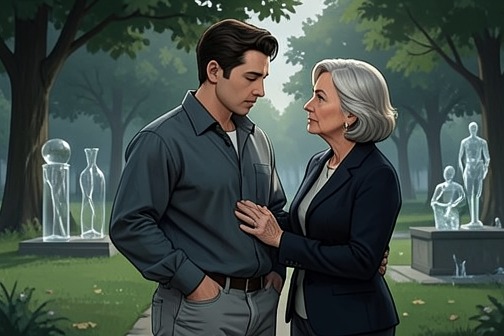
[Jungkook Jeon](entity:character-recall-character-jungkook-jeon-fc9d9ff5a3bc)’s reunion with his mother, [Min-ha](entity:character-recall-character-min-ha-03a1d6da02cc), is a decisive emotional turning point in his recovery from childhood abuse. Encountering her unexpectedly after years of separation, he moves from guarded disbelief to physical and verbal reconnection. The scene does not erase the violence associated with [Dong-hyun](entity:character-recall-character-dong-hyun-f4e8bf200fa5), but it separates Min-ha from that violence, restores a damaged maternal bond, and gives [Jungkook](entity:character-recall-character-jungkook-40c36baa104a) a future in which contact with his mother can continue.
## The Unexpected Encounter
The reunion occurs during an exhibition visit. After finishing a cigarette, Jungkook walks through the park to prevent his anger from turning into another act of violence. He studies the glass sculptures and reflects on the breadth of art, recognizing that creative work can extend beyond paper and canvas into architecture, woodworking, photography, and cinema. His attempt to calm himself is interrupted when he notices a familiar woman in her forties, accompanied by a warmly smiling man. The woman is Min-ha, and the recognition is mutual.
Min-ha approaches first and takes Jungkook’s hands. He is startled, swallows, and appears ready to look away, but he allows himself to be drawn into her embrace. The sensory memory of her spring-like scent immediately comforts him, linking the present encounter to a bodily memory of safety that has survived the years of separation. His response is not controlled or ceremonious: he cries and identifies her as his mother, while Min-ha also breaks down and touches the face of the son she has not seen for a long time.
## Fear, Guilt, and the Truth About Min-ha’s Absence
The reunion initially carries a threat as well as relief. Jungkook notices Min-ha’s wedding ring and fears that she may have entered another abusive relationship resembling the one imposed by Dong-hyun. His questions reveal how thoroughly domestic violence has shaped his expectations: even his mother’s happiness appears potentially deceptive, a protective façade concealing renewed harm. Min-ha directly corrects that fear by explaining that her new husband, [Frank](entity:character-recall-character-frank-aae9eaa69e27), does not strike her and is unlike Jungkook’s father.
Min-ha also explains that she and Frank tried to find Jungkook. They encountered [Ye-jun](entity:character-recall-character-ye-jun-e26530f9fe6e), who did not know where Jungkook was, and she refused to contact Dong-hyun. This account changes Jungkook’s interpretation of the separation. He had carried guilt for leaving her behind, apologizing for not staying with her or taking her away. Min-ha answers that she understands why he fled and admits that, had she possessed the same courage, she would have done the same while taking both Jungkook and Ye-jun with her. Her response does not deny the damage of the past, but it relieves him of the belief that his escape was a betrayal of her.
## Reconnection and Inclusion in Jungkook’s New Life
The reunion develops beyond the mother and son alone. Jungkook quickly establishes an easy rapport with Frank, and the three enter the house when snow begins to fall. Jungkook presents his work, including a photograph of himself holding [Shelby Anderson Barnum](entity:character-recall-character-shelby-anderson-bar-2e17bb137697). When Min-ha asks about the young woman, he identifies Shelby as his girlfriend. Min-ha reacts with surprise and happiness, then meets Shelby and embraces her with immediate warmth.
Min-ha’s welcome matters because it places Shelby inside the family connection Jungkook has just recovered. Shelby understands why Jungkook’s eyes are red and wet, and Min-ha’s embrace of her turns the reunion into a shared moment rather than a private reconciliation sealed off from his present life. Later, Shelby tells Jungkook that she is happy to have met his mother and hopes to see her again. Jungkook agrees that Min-ha is wonderful and expects her to arrange further meetings, making continued contact an explicit possibility rather than a single miraculous encounter.
## A Cautious Continuation
The reunion does not produce complete disclosure. Jungkook considers whether to tell Min-ha everything about his past or protect her from it, but he can only say that matters are complicated. Min-ha gives him her telephone number, creating a concrete line of communication while leaving him free to decide what to reveal and when. Shelby urges him not to force the conversation and to proceed at his own pace, reinforcing the broader rule that recovery requires consent, patience, and control over one’s own story.
The family contact continues afterward. When Min-ha later appears in Jungkook’s view, he rises automatically, embraces her, and cries again. She welcomes Shelby as well before sitting with them at a table. These repeated embraces show that the first meeting is not treated as an isolated emotional climax; it becomes the beginning of a relationship rebuilt through ordinary encounters. At the same time, Jungkook’s continued guilt about leaving Min-ha with Dong-hyun, and his anger when he thinks about Ye-jun’s response to their father, demonstrate that reconnection coexists with unresolved family pain.
## Narrative Significance
This event gives Jungkook a form of recognition that differs from the support he receives from Shelby and [Namjoon](entity:character-recall-character-namjoon-4109d4fa2b00). Shelby believes him when he speaks about trauma, while Min-ha confirms that his childhood circumstances were real and that his departure was understandable. The reunion therefore joins witnessing with repair: Jungkook is seen as an abused child who survived, a son who was missed, and an adult capable of forming a loving relationship of his own.
Its emotional force also depends on contrast. Jungkook enters the scene angry enough to fear that he may attack a stranger, yet the sight of Min-ha redirects that violence into grief, remorse, and tenderness. The mother he expected to find endangered is instead safe with Frank, and the son who once felt abandoned is able to apologize, be reassured, and introduce his partner. The book’s final emphasis on moving forward with one’s demons behind one another gives the reunion its lasting meaning: it is not a cure or a perfect restoration, but one of the concrete acts through which Jungkook and those around him learn to live beyond inherited violence.
Event 48
Jungkook与Shelby的摄影展

[Jungkook](entity:character-recall-character-jungkook-40c36baa104a) and Shelby’s photography exhibition is the decisive public expression of a relationship that began in hostility and uncertainty but has developed into artistic partnership, emotional reassurance, and renewed hope. At [Chihuly Garden and Glass](entity:location-recall-location-chihuly-garden-and-g-df05ac85b173) in [Seattle](entity:location-recall-location-seattle-ec620f372076), their photographs are displayed within a setting where glass sculpture, architecture, and nature transform the exhibition into more than a university assignment: it becomes a visible record of how they have learned to look at one another, and how Shelby has begun to reclaim both her body and her future through an image-making practice shared with Jungkook.
## From Forced Collaboration to Shared Work
Shelby initially agrees to present the project with Jungkook only reluctantly. The exhibition follows the earlier success of their work at [Central Washington University](entity:location-recall-location-f3f99ea15cd4), where students and professors responded positively to the photographs and their teacher, Mrs. Clark, celebrated the opportunity to extend the project. The pair’s collaboration therefore changes status: what began as an imposed academic partnership becomes a recognized creative achievement and gives them further opportunities in photography.
The exhibition is held at Chihuly Garden and Glass, an art environment established on the site of a former amusement park. Shelby is fascinated by the arrangement of Dale Chihuly’s glass sculptures with the natural surroundings, and the Glass House, where the photographic exhibition takes place, is crowned by orange and yellow glass flowers. This setting enlarges the meaning of their project. Jungkook later recognizes that art can exceed a sheet of paper or a canvas and can include architecture, woodworking, photography, and cinema. His response connects the exhibition to his attempts to discover a direction for himself, including his work with Shelby’s father in a woodworking shop.
## Shelby’s Body, Memory, and Public Visibility
The displayed photographs expose Shelby to a form of public attention that is both affirming and uncomfortable. Some images show Jungkook shirtless and emphasize his tattoos; others show Shelby wearing his shirt. Seeing the photographs enlarged, rather than contained within her camera or encountered privately at university, makes her blush and accelerates her heartbeat. The exhibition thus turns an intimate way of seeing into a public object, forcing Shelby to confront the difference between choosing an image and being looked at through it.
The photographs also carry a history of embodied fear. Earlier in the story, Shelby’s body reacts violently to triggers: during an anxiety attack she covers her ears, recoils from [Cassiopée](entity:character-recall-character-cassiop-e-2eb1ec801364)’s attempted touch, and refuses contact even while visibly distressed. In another crisis, [Madison](entity:character-recall-character-madison-53d0d83590ae) recognizes that Shelby believes she is about to be harmed and seeks Jungkook, whose presence and gentle physical reassurance eventually restore her breathing. Jungkook similarly remains beside Shelby when she is crying in the [Knock Out](entity:location-recall-location-knock-out-459a67e1995b) boxing gym’s changing room, waiting rather than demanding an immediate response; after she is injured, his hand on her knees becomes a source of comfort. Against this background, the exhibition’s images represent not simple sensual display but a more controlled relation to visibility, touch, and the body.
The project also intersects with Shelby’s family memory. At [Santa Monica State Beach](entity:location-recall-location-santa-monica-state-b-c1f175735500), a childhood memory shows six-year-old Shelby falling on the sand while [Sara Anderson](entity:character-recall-character-sara-anderson-b02e52d75078) rushes to hold her, with [Connor Barnum](entity:character-recall-character-connor-barnum-d9322612abb3) lifting the child onto his shoulders after the family pauses before an abandoned house. At the exhibition, [Connor](entity:character-recall-character-connor-49e9ac9fb7e5) later tells Shelby that her mother would have been proud of her, touching her back as she smiles through tears. The photographs therefore stand between past and future: they preserve the daughter Sara could no longer watch grow while allowing Shelby to appear as an adult artist rather than only as a wounded child.
## The Couple at the Exhibition
Jungkook arrives dressed in a white shirt tucked into a black suit with fine white stripes, carrying the matching jacket, while Shelby wears a slightly open white shirt secured inside flowing black trousers. Their mutual attraction is immediate, but the narrative makes the public setting impose a delay on private desire. They must wait before expressing their passion more fully, and that restraint is part of the exhibition’s emotional structure: intimacy is present, yet it is governed by circumstance and choice rather than uncontrolled impulse.
When Mrs. Clark approaches, Jungkook slips his hand into Shelby’s and intertwines their fingers. Shelby’s anxiety rises at the thought of important guests, including photographers, stylists, and celebrities, but Jungkook strokes her hand with his thumb and steadies her without making the reassurance theatrical. She then runs to Connor and embraces him, inviting [Lydia Barnum](entity:character-recall-character-lydia-barnum-141a6a700bae) into the embrace as well. Jungkook is pleased to see that Shelby’s relationship with her family has improved, while the family’s pride confirms that her creative accomplishment is being recognized within a repaired network of relationships.
The exhibition also permits Shelby to speak for herself under the pressure of the gaze. When an elegantly dressed man praises her sensuality and identifies Jungkook as the photographer, she answers formally that she is in her second year and that Jungkook works with her father in a woodworking shop while exploring his possibilities. His compliments turn into a more invasive scrutiny when he and another man treat the photographs and Shelby’s body disrespectfully. Shelby rejects that behavior directly, insists that photography is art, demands respect, and warns that she will have them removed from the exhibition. She then returns to Connor and [Lydia](entity:character-recall-character-lydia-3e7a560b729c), who praise and congratulate her. Her response changes the meaning of the images: she is not merely the subject of someone else’s gaze but an artist and participant capable of defining the terms under which she is seen.
## Jealousy, Threat, and Reassurance
The same public visibility that gives Shelby confidence unsettles Jungkook. He watches while she speaks with the fashionable visitor, notices the man taking her hand, and becomes increasingly angry as Shelby smiles during their formal conversation. He empties his champagne and seeks out [Namjoon](entity:character-recall-character-namjoon-4109d4fa2b00) rather than confronting the man immediately. Even after smoking, he remains furious beneath an outward appearance of calm and walks through the park to avoid attacking the first person he encounters.
The jealousy is not presented as proof of betrayal. Shelby explains that she discussed only the photographs and that there was no seduction. She tells Jungkook that she loves only him and that this will never change, adding that she had already put the men who behaved like perverse admirers in their place. Jungkook admits that jealousy does not suit him, and Shelby points out that he should speak to her instead of sulking and leaving. The exchange turns a potentially destructive impulse into communication. It also contrasts with the much more dangerous uses of recorded images elsewhere in the story: [Kayla](entity:character-recall-character-kayla-33460f2ea995) offers Shelby a phone video of sexual activity involving Jungkook and Kayla, while security footage later shows Kayla putting another substance into Jungkook’s whisky before he drinks it. In the exhibition, photography is collaborative and acknowledged; in the blackmail plot, video is coercive, hidden, and weaponized. The difference establishes that an image’s ethical meaning depends on consent, context, and control over its circulation.
## Artistic Renewal and Narrative Significance
The exhibition gathers the book’s central movement from concealment toward chosen visibility. Shelby’s photographs of Jungkook preserve his tattoos, body, and expressions, but they also record her developing capacity to approach what once felt dangerous through an artistic frame. Jungkook’s response to the surrounding glass sculptures reveals an expanding imagination: he begins to understand art as a field without a single material limit, a possibility that mirrors his own gradual refusal to be confined to violence, underground boxing, and inherited anger.
The event is consequently both a public achievement and a private test. Shelby must endure being looked at, answer objectifying attention, accept praise, and remain connected to her family and partner. Jungkook must manage possessiveness without returning to violence, and his hand over hers becomes more meaningful than confrontation. Their work does not erase the earlier panic attacks, bodily defenses, bereavements, coercive images, or threats; instead, it places those histories within a different structure of meaning.
The book’s later meditation on rebirth defines renewal as leaving the former self behind to make room for a better future, while acknowledging that learning to love oneself, another person, and life itself can take months or years and proceeds at an individual pace. The exhibition embodies that gradual process. It does not mark a miraculous end to trauma. It shows Shelby and Jungkook moving forward together, allowing art, family recognition, consent, and mutual reassurance to become practical forms of reconstruction.
Event 49
Jungkook与Shelby决定搬到洛杉矶
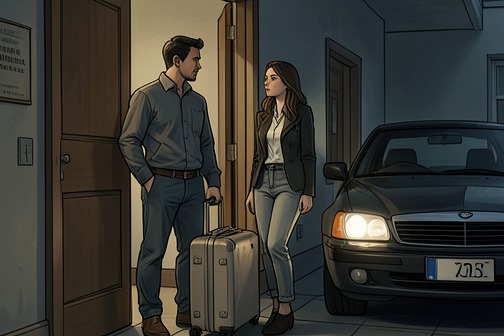
[Jungkook](entity:character-recall-character-jungkook-40c36baa104a) and Shelby’s decision to move to [Los Angeles](entity:location-recall-location-los-angeles-11eff639bdf5) is a decisive commitment in their relationship: it converts mutual protection into a shared life plan. Jungkook raises the possibility of leaving [Ellensburg](entity:location-recall-location-ellensburg-f2b1300b3b7f), but the scene’s real movement lies in Shelby’s response. She wants to follow him, yet refuses to treat the move as a reckless impulse. Their future becomes something they must organize, negotiate, and defend together.
## Causes and Background
The proposal emerges after a period in which Jungkook and Shelby have repeatedly become one another’s immediate source of safety. Shelby’s trauma is expressed through acute bodily crises: she flees an art classroom with accelerated breathing and overwhelming pain, recoils when [Cassiopée](entity:character-recall-character-cassiop-e-2eb1ec801364) touches her shoulders, and remains curled up and resistant to contact even after recognizing her friend. In another episode, Jungkook finds Shelby trembling and crying in the [Ares Garden](entity:location-recall-location-ares-garden-5a1d38541469) changing room, turns off the running water, and stays beside her because he does not know what else to do. His presence gradually becomes a form of care rather than an attempt to control her.
That pattern deepens as the two learn to respond to each other’s vulnerability. After Shelby’s self-harm is discovered, [Dorcas](entity:character-recall-character-dorcas-551d5ed1ad82) and [Namjoon](entity:character-recall-character-namjoon-4109d4fa2b00) attend to her, while the burn on her left forearm makes the seriousness of her distress visible. Jungkook later kneels beside Shelby when she collapses in tears after seeing the extent of his injuries, places his right hand on her knees, and admits that he should never have taken her there. The relationship therefore grows through reciprocal recognition of damage: neither is presented as healed, but each increasingly acts as a witness and anchor for the other.
Namjoon understands the connection as a bond between two lost souls who are searching for themselves while searching for each other. His perception also anticipates the difficulty of their future, since closeness does not erase the instability surrounding them. The decision to move is consequently shaped by both attachment and exhaustion: Los Angeles offers a possible new setting, but the emotional work of creating a safer life must travel with them.
## What Happens
Jungkook introduces the idea while addressing Shelby affectionately and asks whether she would be willing to follow him. He has been considering it for some time, which establishes the proposal as an intention rather than a sudden reaction. When Shelby asks where he means, he answers directly that he wants them to go to Los Angeles. The suggestion interrupts her expectations; her breath catches and her heart races because the prospect is wonderful, but its emotional appeal is immediately accompanied by practical concerns.
Shelby’s first response is qualified rather than hesitant. She wants to go without hesitation, yet identifies the matters that must be resolved: housing, university, and Jungkook’s workplace. Her questions give the decision concrete dimensions. Moving is not merely a declaration of love or a flight from Ellensburg; it means securing a place to live, arranging her education, and determining how Jungkook will support himself.
Jungkook answers that housing is not a problem because he already has an idea, although he keeps the arrangement as a surprise. Shelby recalls that she had once considered an educational future in Los Angeles during high school, and Jungkook offers to help with the administrative procedures. He has also researched employment possibilities and says that [Abby](entity:character-recall-character-abby-ac246d0bcb18) helped him with that preparation. The exchange shows both partners moving from desire to logistics, with Jungkook taking responsibility without removing Shelby’s role in the decision.
He is equally conscious that the move requires [Connor](entity:character-recall-character-connor-49e9ac9fb7e5)’s approval. When Shelby asks how he intends to convince her father, Jungkook says he will do so as he did before: by assuring Connor that he will remain at Shelby’s side. His argument is not based on possession or authority, but on continued presence and responsibility. The proposed relocation thus becomes a test of whether their relationship can be recognized as dependable by the family that protects Shelby.
## [Consent](entity:concept-recall-concept-consent-de2391c15f7f), Care, and Shared Agency
The conversation is structured around permission and time. Jungkook does not demand an immediate answer; when Shelby falls silent, he takes her hands, strokes their backs, and tells her that she can have time to think. This gesture matters because the relationship has developed in the shadow of involuntary touch, fear, and psychological control. Shelby’s earlier panic makes clear that contact can become a threat: when [Madison](entity:character-recall-character-madison-53d0d83590ae) reaches toward her during a crisis, Shelby begs not to be touched and fears being harmed. By contrast, Jungkook’s touch in the relocation scene is accompanied by patience and an explicit refusal to rush her.
Shelby’s answer remains active and specific. She does not simply accept Jungkook’s plan; she identifies the institutions and obligations that must be addressed and offers to help with his administrative arrangements. Her willingness to go is therefore also a willingness to participate in the labor of the move. The decision is mutual because both characters contribute to its conditions: Jungkook has investigated housing and work, while Shelby thinks through university, family, and the practical consequences of departure.
Their tenderness is not separated from the pressures around them. At a later legal proceeding, Jungkook promises Shelby that he will stay with her whatever happens and insists that he will never let her go. She kisses him before they enter the courtroom, and he intertwines his fingers with hers to reassure her. Cassiopée, Namjoon, and Dorcas then appear as supporters, reminding the reader that the couple’s future is sustained not only by their private bond but also by a wider network of friendship and protection.
## Consequences and Narrative Significance
The relocation decision marks a value shift from survival within an unsafe environment toward the active construction of a future. Earlier scenes repeatedly end with panic, injury, self-harm, or fear of contact. The Los Angeles conversation does not erase those conditions, but it gives the pair a direction that is chosen rather than merely endured. Jungkook’s proposal turns his instinct to protect Shelby into a plan involving housing, work, education, and family trust; Shelby’s acceptance turns emotional dependence into shared agency.
Los Angeles also functions as both destination and promise. It is associated with Shelby’s earlier educational hopes, Jungkook’s practical preparations, and the possibility of a life outside the patterns that have defined Ellensburg. Yet the scene preserves uncertainty through the unresolved details: the housing remains a surprise, Connor still has to be persuaded, and Shelby’s university and Jungkook’s employment require further action. The decision is therefore a commitment, not a completed escape.
Its deepest significance lies in the contrast between crisis and deliberation. When Shelby suffers panic, other characters must first create distance, wait, or offer carefully regulated reassurance. Here, she can name what she wants and what she needs before consenting. Jungkook, once associated with frightening darkness and violent impulses, appears as someone capable of preparation, restraint, and patience. Their move toward Los Angeles begins not with the disappearance of trauma, but with the recognition that love must be organized into concrete conditions of safety, education, work, family, and continued choice.
Event 50
Jungkook与Shelby搬入洛杉矶海边住宅

[Jungkook](entity:character-recall-character-jungkook-40c36baa104a) and Shelby’s move into their [Los Angeles](entity:location-recall-location-los-angeles-11eff639bdf5) seaside home is the decisive domestic threshold of their relationship: the point at which recovery, love, and a deliberately chosen future acquire a physical address. On Friday, May 28, they leave [Ellensburg](entity:location-recall-location-ellensburg-f2b1300b3b7f) for a renovated loft near the Pacific, and the journey transforms departure from a painful separation into an excited passage toward a life built together.
## Causes and Background
Shelby had known since entering high school that she wanted to attend the [University of California, Los Angeles](entity:organization-recall-organization-university-of-ca-03aa6deb6c01). For years, however, the future she once planned became inaccessible after [Robert Jefferson](entity:character-recall-character-robert-jefferson-e99ac62ade18) destroyed her sense of hope and opened the way to persistent anxiety. The move therefore carries more than geographical meaning. It signals that happiness has returned strongly enough for Shelby to face the future rather than retreat from it.
The departure is emotionally difficult for [Connor Barnum](entity:character-recall-character-connor-barnum-d9322612abb3). Before Shelby enters Jungkook’s car, [Connor](entity:character-recall-character-connor-49e9ac9fb7e5) holds her tightly, recognizing that his daughter is about to begin the independent life she had always imagined. He then embraces Jungkook as well. Jungkook accepts the paternal affection without discomfort and feels genuinely at ease, a small but important sign that the couple’s new household is connected not only to romance but also to a recovered sense of family.
## The Journey and Arrival
The couple chooses to drive rather than fly because Jungkook wants to bring his motorcycle to Los Angeles, while Shelby welcomes the chance to travel by car. The trip takes nearly nineteen hours, including pauses to rest and enjoy the landscape. Its length gives the move the character of a passage rather than a simple transfer: the distance from Ellensburg to Los Angeles becomes a shared undertaking, and the difficult goodbye gradually gives way to renewed enthusiasm.
At their destination, Shelby first sees the house while her eyes are still adjusting from a blindfold. The building has been remodeled, with black brick walls, a black roof, a white-stone path, and green plants able to withstand the Californian heat. Its enormous windows look toward fine sand and the Pacific Ocean. The view overwhelms Shelby with happiness, and she throws her arms around Jungkook before declaring that they will live there together. Jungkook confirms that the home is for the two of them alone, making the house an explicit promise of shared privacy and permanence.
Jungkook has arranged the property through [Julia Sanchez](entity:character-recall-character-julia-sanchez-9778fe398ed8). It was once a workshop, but Julia Sanchez and her husband converted it into a loft. After hearing Julia describe the house when they were back in Ellensburg, Jungkook kept thinking about it and eventually contacted her. Although she wanted to give it to them, he insisted on making a bank transfer. This detail preserves the generosity behind the gift while showing Jungkook’s wish to answer generosity with responsibility rather than simply accept an unearned possession.
## The Loft as a Shared World
Shelby takes the key from Jungkook and opens the door herself, an action that gives her arrival an active, almost ceremonial quality. The loft is already furnished with wooden pieces made by Julia Sanchez’s husband, echoing the house where the couple spent the previous summer. Solid oak flooring and exposed black brick establish a warm but elemental interior, while large windows bring in natural light and maintain the connection with the surrounding landscape.
Two small steps lead down into the living room, where a round wooden coffee table stands between an L-shaped sofa and a second off-white fabric sofa. A large rug and several plants soften the room, creating the calm atmosphere that the couple’s previous lives often denied them. Against the room’s arrangement is a large bookcase, later claimed by Shelby as she begins placing her books on its shelves. The home thus accommodates both shared comfort and individual identity.
A sideboard holds a turntable and a collection of vinyl records. Julia Sanchez leaves a note explaining that the records were her husband’s favorites and hoping that the couple will enjoy them. The note turns the loft into more than a newly acquired property: it carries traces of another household into the couple’s beginning, linking their private future to an act of care from outside the relationship.
## Settling In and Emotional Consequences
On Saturday, May 29, Shelby carries in the last box and thanks the truck driver. Jungkook immediately notices her grimace under its weight, puts the box down, and lifts her into his arms, spinning her around before setting her down again. Their laughter makes the labor of moving part of their intimacy rather than a burden endured separately. His playful command that they get to work shifts the scene from arrival to participation: the home becomes theirs through the work of arranging it.
Jungkook chooses a record and fills the loft with Eric Carmen’s "[Hungry Eyes](entity:expression-recall-expression-hungry-eyes-9bd774592d5e)." He turns toward Shelby and dances sensually while they unpack their belongings. Shelby sorts her books as Jungkook handles the clothes, and she climbs the mobile ladder to place the books in the immense library. From the mezzanine, Jungkook watches her sing along with the music and smiles at the sight of her happiness.
The scene gains its deepest force from the contrast between Shelby’s past and her present. Jungkook remembers the expression she wore when they first met: sadness, anxiety, and anger. In the loft, she appears joyful, free, and relaxed. He recognizes that he has changed as well, finding the transformation almost unbelievable even while witnessing it directly. The move therefore closes one phase of their story without pretending that earlier suffering never happened; it shows recovery through an altered daily life, through laughter, music, books, and the ability to imagine tomorrow.
## Narrative Significance
The move is a domestic resolution to a long sequence of instability. Earlier moments repeatedly show Shelby overwhelmed by panic and unable to tolerate unexpected touch, while Jungkook’s responses gradually become forms of patient presence and protective care. In one crisis, [Cassiopée](entity:character-recall-character-cassiop-e-2eb1ec801364) approaches Shelby without forcing contact after Shelby recoils in pain. In another, Jungkook remains beside a trembling Shelby in the changing room until she calms. When [Madison](entity:character-recall-character-madison-53d0d83590ae) recognizes a later panic attack and summons him, Jungkook runs to Shelby and steadies her until her breathing returns to normal. Against that history, the seaside home represents safety that is chosen, shared, and sustained rather than temporarily borrowed.
The house also changes the meaning of movement itself. Earlier departures are associated with fear, rupture, or uncertainty; this journey is long, tiring, and difficult, but it ends in a place whose windows open onto the ocean and whose rooms are ready to receive the couple’s belongings. Shelby’s first delighted embrace, Connor’s reluctant farewell, Jungkook’s practical arrangements, and the playful unpacking together form a chain of value shifts from separation to belonging and from suspended hope to a livable future. The event’s significance lies not simply in where Jungkook and Shelby live, but in the fact that they can finally make a home without treating happiness as something temporary.
Event 51
Jungkook揭露Robert Jefferson并促成其被捕
[Jungkook Jeon](entity:character-recall-character-jungkook-jeon-fc9d9ff5a3bc)’s confrontation with [Robert Jefferson](entity:character-recall-character-robert-jefferson-e99ac62ade18) transforms a private history of sexual violence and institutional neglect into evidence that can no longer be dismissed. At [Jefferson Corp.](entity:location-recall-location-jefferson-corp-86af8cdd2c2c) in [Los Angeles](entity:location-recall-location-los-angeles-11eff639bdf5), [Jungkook](entity:character-recall-character-jungkook-40c36baa104a) records Robert’s own words, restrains himself from attacking him, and reports him to the police. A news bulletin later announces Robert’s arrest, making the encounter a turning point from threatened retaliation toward formal accountability.
## Causes and Background
Jungkook has been thinking for several days about visiting Robert at his office. The previous day, he arranged an appointment through Robert’s secretary; when he arrives, the polished, luxurious building strikes him as hypocritical because he knows what lies behind the company’s prosperous image. The setting establishes the imbalance at stake: Robert occupies a position of wealth and public respectability, while the women who have accused him have struggled to make their claims heard.
Jungkook’s confrontation is shaped by the earlier assault on Shelby and by her history of trauma. In other moments, her distress has made unwanted touch unbearable: during a panic attack, she recoils when [Cassiopée](entity:character-recall-character-cassiop-e-2eb1ec801364) reaches her, and later she explicitly asks [Madison](entity:character-recall-character-madison-53d0d83590ae) not to touch her. Jungkook has also stayed beside Shelby while she cried in a shower at the boxing venue and offered comfort when she broke down after seeing her injuries. These earlier scenes do not turn him into her rescuer by right; they establish why her safety and wishes matter to him. At Robert’s office, Jungkook recalls a promise to Shelby as a limit on what he will do, even when Robert provokes him.
## The Office Confrontation
Robert is seated with his back to Jungkook when he enters. He rises and extends a hand, but recognition changes his manner: he sits again and faces his visitor across the desk. Jungkook is still visibly marked by the blows he previously gave Robert, and he privately takes satisfaction in those injuries. He also feels the impulse to attack him again. Rather than act on it, he sits down and presents the visit as a discussion.
Before the conversation develops, Jungkook discreetly unlocks his phone, opens the voice recorder, starts recording, and hides the device strategically. The choice redirects the encounter. He is not merely confronting Robert or seeking another opportunity to strike him; he is preserving a record that can be taken beyond the office. Robert dismisses the visit as childish interference and orders him out. Jungkook responds by challenging the difference between Robert’s agreeable public reputation and his conduct, and asks how he can live as though he has done nothing.
Robert first denies wrongdoing. Jungkook brings up Shelby’s accusation and the account given to police by Robert’s daughter, [Madison Jefferson](entity:character-recall-character-madison-jefferson-657bf438d528), who said she witnessed him rape Shelby. He challenges Robert’s apparent confidence that money will protect him. Robert then makes the recording decisive: he claims that justice does not apply to the rich, calls himself untouchable, and admits that he took advantage of women. He shifts blame onto them, asserting that they invited what happened and deserved its consequences. His words expose both the abuse Jungkook is trying to report and the victim-blaming that has helped Robert present himself as beyond accountability.
Robert escalates by contrasting his daughter with Shelby and insulting Jungkook’s girlfriend. Jungkook stands, takes Robert by the collar, and looks down at him. The gesture brings the scene close to the violence Jungkook has repeatedly used elsewhere, but he does not slap or strike Robert. He warns him that prison is coming, releases him, stops the recording, and leaves, slamming the doors behind him. His anger remains visible; what changes is its use. The phone, not a further beating, carries the confrontation out of Robert’s office.
## The Report and Arrest
At 6:55 p.m., Jungkook waits at a Los Angeles police station before an officer takes him into an office to make a complaint. He explains that complaints against Robert have already been made but were not taken seriously. When asked to identify the man, he names Robert Jefferson. The officer’s reaction—her breathing catches and her gaze drops to her hands—suggests that Robert’s name is familiar to her, but does not reassure Jungkook that earlier allegations have led to an investigation.
Jungkook reports that Robert raped two young women, perhaps three or more, including Shelby. He specifies that Shelby filed a complaint in 2017, when she was a minor. Then he plays the recording. The officer listens without interrupting and recognizes Robert’s voice; his recorded words visibly unsettle her. She takes Jungkook’s information and tells him that an investigation will be opened. She also explains that Robert will be under judicial supervision and unable to leave his home, and advises Jungkook to obtain a good lawyer in anticipation of a trial. Jungkook had already intended to do so.
The process is presented against a crowded station where officers move among people accused of offenses ranging from shoplifting to assault and armed crime. Within that flow, Jungkook’s complaint could have become another report waiting to be heard. The recording gives it a concrete basis: Robert’s own voice, rather than Jungkook’s anger alone, documents his admission and his contempt for the women he harmed. After leaving, Jungkook gets on his motorcycle and rides without a clear destination, carrying the strain of the encounter beyond the station.
## Shelby Learns the News
While Jungkook is away, Shelby has spent the day with seven-year-old [Norah](entity:character-recall-character-norah-a9e941e0b307) and Norah’s mother, [Suzanne Muller](entity:character-recall-character-suzanne-muller-a073efa46793). After they leave, Shelby is alone in the house and worries that Jungkook has not returned. She changes into a T-shirt she has taken from him, settles on the couch, and turns on the television. She is about to change the channel when a breaking-news banner reports that Robert, the CEO of Jefferson Corp., has been arrested by Los Angeles police. The report offers no further details.
Shelby reaches for her phone to contact Jungkook, but the front door opens at that moment. He appears irritated and tired. She throws herself against him and begins to cry; he closes his arms around her and reassures her that he is there. The abrupt movement from the public announcement of an arrest to this private embrace gives the event its immediate consequence for Shelby: news of action against Robert arrives before she knows how Jungkook obtained it or what he has risked to make it happen.
## Significance
The episode turns on a contrast between two ways of answering violence. Robert believes his wealth makes him untouchable and uses that power to deny, excuse, and demean. Jungkook is tempted to answer him with the physical force that has marked their earlier conflict, but records Robert instead and takes the evidence to authorities. That does not erase the earlier failures to take complaints seriously, nor does the news bulletin explain the arrest’s full legal basis. It does establish that Robert’s own recorded admission has entered an official process.
For Jungkook, restraint is not passivity: he remains confrontational, challenges Robert directly, and pursues a complaint despite the officer’s unsettling reaction. But he stops short of the violence Robert’s insults are designed to provoke, honoring the promise that governs his conduct. For Shelby, the arrest is not presented as an instant resolution of trauma; her response is to seek Jungkook and hold onto him. The event’s decisive shift is narrower and concrete: Robert’s claim to immunity has been challenged with evidence, and his arrest replaces the apparent impunity that had surrounded him with the prospect of investigation and trial.
Event 52
Robert Jefferson性侵案审判与Shelby出庭作证

The trial of [Robert Jefferson](entity:character-recall-character-robert-jefferson-e99ac62ade18) and [Shelby Anderson Barnum](entity:character-recall-character-shelby-anderson-bar-2e17bb137697)’s testimony is the decisive legal reckoning with Jefferson’s sexual violence. It brings multiple survivors into a public process, exposes the resistance surrounding their accounts, and gives Shelby a direct opportunity to answer the attempt to reduce testimony to financial motive. The proceeding ends with Jefferson’s conviction on multiple counts, a twenty-five-year prison sentence, a ninety-thousand-dollar fine, and a symbolic one-dollar payment to each victim.
## From Suppressed Complaints to Public Proceedings
The case begins against a history of ignored reports. At a police station, an unnamed complainant explains that complaints have already been made against the man but were never taken seriously, then identifies him as Robert Jefferson. The legal action therefore represents more than a single accusation: it is an effort to force an institution to acknowledge a pattern that had previously been dismissed.
The public learns that Jefferson is accused of several rapes and attempted sexual assaults, and that Shelby and [Dakota](entity:character-recall-character-dakota-044f7cea15f2) are not his only victims. The case reaches the news through an anonymous source, while the trial is already under way. Public reaction remains divided. Social-media users support the victims, but others firmly defend Jefferson, reproducing the disbelief that has burdened the survivors from the beginning. The prosecution consequently unfolds both in court and in a wider contest over whose account society will accept.
## Shelby’s Testimony
At the [Los Angeles](entity:location-recall-location-los-angeles-11eff639bdf5) courthouse, Shelby waits anxiously for her turn to testify. She plays with her rings, and [Jungkook Jeon](entity:character-recall-character-jungkook-jeon-fc9d9ff5a3bc) gently takes her right hand to stop her from tormenting her fingers. He kisses her forehead and promises to remain with her. Shelby asks whether he will stay; he assures her that he will not leave her, whatever happens. Their private exchange becomes a stabilizing counterpoint to the formal violence of the courtroom.
Shelby is not alone when the hearing begins. [Jungkook](entity:character-recall-character-jungkook-40c36baa104a) sits beside her, while [Cassiopée Smith](entity:character-recall-character-cassiop-e-smith-7af6a7136600), [Namjoon Kim](entity:character-recall-character-namjoon-kim-0444585766b6), and [Dorcas Peters](entity:character-recall-character-dorcas-peters-cc0824b30f37) arrive to support their best friend. Their presence turns the courtroom from an isolating institutional space into a visible community of witnesses. Dakota also watches Shelby with profound admiration, recognizing her effort to move forward despite the trauma Jefferson left behind.
Shelby takes the stand, raises her right hand, and swears to tell the truth. The defense attorney questions her in a manner intended to destabilize her, but she initially reveals little outwardly. When she recounts what happened with her abuser, however, tears rise and run down her face; [Cassiopée](entity:character-recall-character-cassiop-e-2eb1ec801364) and [Dorcas](entity:character-recall-character-dorcas-551d5ed1ad82) cry as well. The testimony thus shows both the discipline required by legal procedure and the bodily cost of converting traumatic memory into an official record.
The defense then asks whether the trial is merely a way to extract money from Jefferson. Shelby answers directly. She argues that malicious and deceitful people who seek money from innocent defendants are precisely what allow genuine victims of rape and sexual assault to be disbelieved, blamed, and silenced. She rejects the suggestion that she is pursuing Jefferson’s money and identifies the broader social consequence of such questioning: survivors become afraid to speak because they expect not to be taken seriously. The attorney is left without an effective reply.
## Support, Restraint, and the Courtroom Conflict
The courtroom contains a sharp contrast between the violence described by the survivors and the restraint demanded of those who support them. Jefferson watches Shelby with fury, hoping she will appear weak before the judge and jury. Jungkook meets his look with murderous anger, but he does not attack him. His clenched teeth and contained rage mark a change from the impulsive violence associated with his earlier conduct. The legal setting requires him to protect Shelby through presence rather than physical retaliation.
The survivors’ support network also includes Shelby’s family. [Connor Barnum](entity:character-recall-character-connor-barnum-d9322612abb3) and [Lydia Barnum](entity:character-recall-character-lydia-barnum-141a6a700bae) later embrace her, and [Connor](entity:character-recall-character-connor-49e9ac9fb7e5) cries while holding his daughter. The response matters because Shelby’s testimony is not treated as an isolated performance: it is received by friends, a partner, and family members who recognize the cost of her disclosure. The collective embrace after the verdict completes the movement from solitary suffering toward shared acknowledgment.
The proceeding also exposes the social power surrounding Jefferson. [Catherine Jefferson](entity:character-recall-character-catherine-jefferson-dca5e2eda099) continues to defend her husband by emphasizing his philanthropic and civic qualities, even after the testimonies. The narrative places those public virtues beside the concealed abuse, presenting respectability as a shield that can coexist with predation. [Madison Jefferson](entity:character-recall-character-madison-jefferson-657bf438d528), by contrast, feels ill when she sees Shelby but is relieved that her father may finally be punished; after the verdict, she ignores her mother’s hostile reaction and smiles for Shelby.
## Verdict and Aftermath
The jury announces that Robert Jefferson is guilty of three sexual assaults, two attempted rapes, two rapes of minors, and four rapes of adults. The judge imposes twenty-five years in prison and a ninety-thousand-dollar fine. At the victims’ request, each survivor receives one symbolic dollar rather than a payment that would turn the proceedings into a financial transaction. The sentence supplies institutional recognition of the crimes, while the symbolic compensation emphasizes acknowledgment over profit.
Shelby closes her eyes in relief and begins to cry. She embraces Jungkook, who repeatedly kisses her right cheek, and Cassiopée, Dorcas, and [Namjoon](entity:character-recall-character-namjoon-4109d4fa2b00) join them. Jefferson responds by shouting his anger, while Catherine directs a dark look toward the courtroom and especially toward [Madison](entity:character-recall-character-madison-53d0d83590ae). These opposing reactions separate accountability from denial: the convicted man remains furious at judgment, whereas the survivors experience the verdict as release from years of uncertainty.
The ending does not erase Shelby’s trauma, but it changes its public status. She feels lighter because justice has believed her. The long anxiety attached to Jefferson’s impunity finally loosens, and her testimony becomes part of the evidence that produces a legal consequence. The trial therefore functions as both a criminal proceeding and a witnessing event: a private wound is spoken, challenged, supported, and ultimately recognized by the court.
Event 53
Robert Jefferson审判与定罪
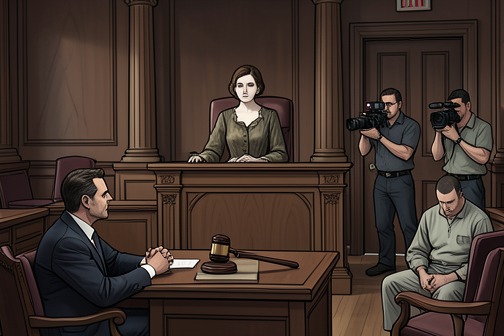
[Robert Jefferson](entity:character-recall-character-robert-jefferson-e99ac62ade18)’s trial and conviction is the novel’s decisive institutional response to the sexual violence committed by Robert Jefferson. It converts private trauma and threatened silence into testimony, a verdict, and a sentence, while placing [Shelby Anderson Barnum](entity:character-recall-character-shelby-anderson-bar-2e17bb137697) among the women whose experiences are formally acknowledged by the court. The outcome does not erase the damage, but it changes the survivors’ position from people forced to endure disbelief to witnesses whose accusations produce legal consequences.
## Causes and Background
The case emerges from a pattern of sexual violence protected by status, money, and intimidation. Shelby Anderson Barnum’s experience is not treated as an isolated accusation: the proceedings also involve [Dakota](entity:character-recall-character-dakota-044f7cea15f2), Sandy, and other women described as having been trapped by Robert Jefferson’s actions. [Madison Jefferson](entity:character-recall-character-madison-jefferson-657bf438d528), Robert Jefferson’s daughter, has told the police that she saw him rape Shelby Anderson Barnum, making the case a confrontation not only between an accused man and an alleged victim but also between Robert Jefferson and members of his own family.
The legal case is preceded by private attempts to name the harm and demand accountability. [Jungkook Jeon](entity:character-recall-character-jungkook-jeon-fc9d9ff5a3bc) tells Robert Jefferson that Shelby Anderson Barnum has not lied and that Madison Jefferson also reported seeing the rape. He rejects the idea that money can protect Robert Jefferson forever and states that men like him eventually fall. His objective is explicitly restorative: he wants Shelby Anderson Barnum and every other young woman traumatized by Robert Jefferson to be relieved by knowing that he is behind bars. The statement distinguishes a threat of personal revenge from a demand for public justice, even as Jungkook Jeon’s anger remains close to the surface.
## The Trial and Verdict
The courtroom is filled with survivors and supporters when the judge calls the case, identified as file number 1465. Shelby Anderson Barnum enters with Jungkook Jeon after greeting Dakota, Sandy, and the other women. To keep from collapsing, she takes Jungkook Jeon’s hand and intertwines their fingers; he kisses the top of her head while Robert Jefferson enters with what the narration presents as insolent confidence. Shelby Anderson Barnum keeps her head high and her face impassive, but her eyes reveal the anxiety returning with the old trauma.
The final stage of the proceeding centers on the jury’s verdict. The judge asks for the decision after the jurors confer once more. A juror approaches the judge and gives the verdict quietly, prolonging the tension before the formal announcement. Shelby Anderson Barnum’s bodily fear is made concrete through sweaty hands, perspiration on her forehead, blocked breathing, and a rapidly pounding heart. The verdict therefore arrives not as abstract procedure but as a test of whether the legal system will confirm or deny the reality that has shaped her life.
The judge declares Robert Jefferson guilty of three sexual assaults, two attempted rapes, two rapes of minors, and four rapes of adults. The sentence is twenty-five years in prison and a ninety-thousand-dollar fine. At the victims’ request, each survivor receives one symbolic dollar. The punishment establishes a public record of responsibility and places Robert Jefferson behind bars, while the symbolic payment rejects the value of his fortune as a substitute for recognition or justice.
## Immediate Consequences
Shelby Anderson Barnum closes her eyes in relief and begins to cry. She embraces Jungkook Jeon, who kisses her cheek repeatedly, and [Dorcas Peters](entity:character-recall-character-dorcas-peters-cc0824b30f37), [Cassiopée Smith](entity:character-recall-character-cassiop-e-smith-7af6a7136600), and [Namjoon Kim](entity:character-recall-character-namjoon-kim-0444585766b6) join the embrace. The collective gesture matters because the verdict is experienced communally: the survivors are not left alone with the judgment, and their friends share the moment in which fear gives way to release.
Robert Jefferson reacts with furious shouting, while [Catherine Jefferson](entity:character-recall-character-catherine-jefferson-dca5e2eda099) looks angrily toward the courtroom and especially toward Madison Jefferson. Madison Jefferson, once Shelby Anderson Barnum’s best friend in high school, smiles with relief and disregards her mother’s hostility. The family reactions expose two opposing responses to the verdict: Robert Jefferson and Catherine Jefferson cling to anger and denial, whereas Madison Jefferson accepts the judgment as relief for the former friend whose testimony has been vindicated.
[Connor Barnum](entity:character-recall-character-connor-barnum-d9322612abb3) and [Lydia Barnum](entity:character-recall-character-lydia-barnum-141a6a700bae) then approach Shelby Anderson Barnum. Connor Barnum cries while embracing his daughter, and Lydia Barnum watches them with a smile, recognizing the scale of their relief. The family embrace extends the courtroom’s meaning beyond punishment: Shelby Anderson Barnum is believed not only by the court but also held by the people closest to her.
## Aftermath and Significance
Shelby Anderson Barnum remains in the courtroom after it has emptied. The story is finally over for her in the legal sense, and the knowledge that Robert Jefferson will spend twenty-five years behind bars makes her feel lighter. She is especially relieved by the symbolic dollar, an amount she proposed herself because she does not want Robert Jefferson’s fortune. The gesture turns compensation into a refusal: what she seeks is not enrichment but acknowledgment that his wealth cannot purchase moral escape.
The ending also preserves the incompleteness of legal closure. Even after the conviction, Catherine Jefferson attacks Shelby Anderson Barnum by striking her across the face and insulting her. The assault shows that the verdict ends Robert Jefferson’s criminal impunity without instantly ending the surrounding hostility, victim-blaming, or threat. Institutional justice creates a boundary around the crime, but the survivors must still confront people who resent that boundary.
Within the larger narrative, the conviction completes a movement from hidden injury to witnessed truth. Jungkook Jeon’s apology to Shelby Anderson Barnum, his promise to help her overcome fear, his confrontation with Robert Jefferson, and his insistence that her account be believed all belong to a wider pattern of responsibility that includes speech, protection, and emotional repair. Yet the courtroom is different from private apology or personal retaliation: it assigns responsibility through a collective procedure and produces a sentence that does not depend on Jungkook Jeon’s violence. The trial’s decisive change is therefore from fear and impunity to recognition and consequence, even though recovery remains a continuing process rather than a single victorious moment.
Event 54
Catherine Jefferson袭击Shelby事件
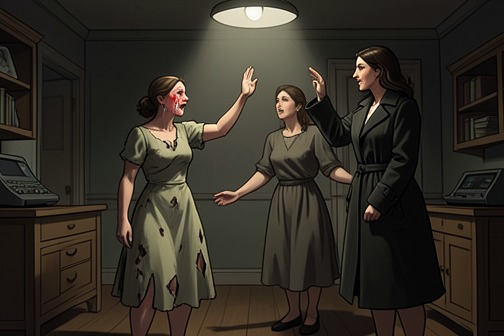
[Catherine Jefferson](entity:character-recall-character-catherine-jefferson-dca5e2eda099)’s attack on Shelby occurs immediately after [Robert Jefferson](entity:character-recall-character-robert-jefferson-e99ac62ade18)’s conviction and transforms the courtroom’s apparent closure into a renewed confrontation. Her slap, insults, and attempt to strike again show that the verdict has not ended the Jefferson family’s aggression; it has merely moved that aggression from institutional denial into an openly physical assault. The incident also precipitates a reconciliation between Shelby and [Madison Jefferson](entity:character-recall-character-madison-jefferson-657bf438d528), whose intervention and acknowledgment of past wrongdoing separate her from her mother’s hostility.
## Causes and Background
The assault follows a decisive legal judgment against Robert Jefferson. He is found guilty of three sexual assaults, two attempted rapes, two rapes of minors, and four rapes of adults, receiving twenty-five years in prison and a ninety-thousand-dollar fine. At the victims’ request, each is awarded one symbolic dollar rather than a share of his wealth. Shelby remains in the courtroom after it has emptied, relieved that the man who caused her years of anguish will be imprisoned and that the symbolic payment represents justice rather than financial dependence.
Catherine approaches while still furious, and the timing gives her violence a clear retaliatory structure. The verdict has publicly named Robert’s crimes and affirmed Shelby’s testimony, while Catherine experiences that judgment as an attack on the family itself. Her response therefore attempts to reverse the courtroom’s moral order: instead of confronting Robert’s responsibility, she directs blame toward Shelby, the survivor whose testimony made the conviction possible.
## What Happens
Catherine strikes Shelby across the face without warning and calls her a degrading insult. Shelby answers that Catherine should ask herself how she could tolerate Robert’s conduct, arguing that he has damaged lives and deserves imprisonment. Catherine raises her hand again, prepared to slap Shelby a second time, but [Madison](entity:character-recall-character-madison-53d0d83590ae) intervenes and pulls her mother away. The struggle continues briefly; Catherine hurls further abuse, breaks free, and knocks Madison to the floor.
Catherine then accuses Shelby of ruining the family’s life and challenges Madison for testifying against her father. Madison replies that she testified because Robert deserved punishment. She directly condemns Catherine for knowing what was happening and doing nothing to stop it, adding that Robert targeted minors and that Catherine’s silence came close to encouraging him. Catherine becomes silent, adjusts her jacket, and leaves the courtroom without answering. Her exit is not an apology or an acceptance of responsibility, but a retreat after Madison’s accusation removes the defense of ignorance.
## Participants and Conflict
Shelby is both the immediate target of Catherine’s violence and the person whose testimony has given the legal system access to Robert’s crimes. Her reply refuses the role Catherine assigns her as a destroyer of the family. Shelby identifies the real source of the family’s devastation as Robert’s actions and Catherine’s failure to prevent them. The exchange places survivor testimony against familial loyalty, showing how the defendant’s relatives attempt to preserve their social identity by attacking the witness.
Madison occupies the event’s crucial intermediary position. She has previously been connected to Shelby through a former friendship that was damaged by disbelief, rumors, and cruelty, yet she now protects Shelby from Catherine and openly condemns both parents’ conduct. When Catherine pushes her down, Madison is physically marked as another member of the family who has crossed its internal line of silence. Her defense of Shelby is therefore both an immediate act of protection and a public break with the family’s previous complicity.
## Consequences and Reconciliation
After Catherine leaves, Madison helps restore the emotional balance that her mother tried to destroy. Shelby helps Madison stand, embraces her, and thanks her. Madison says that she should have believed Shelby from the beginning and should never have treated her so maliciously. Shelby accepts the apology, acknowledging that disbelief might have been difficult but distinguishing understandable uncertainty from the spreading of absurd and malicious rumors. Madison completes the thought by naming those rumors herself, demonstrating that responsibility requires specific recognition of the harm rather than a vague expression of regret.
The reconciliation does not erase the past, but it changes the relationship’s meaning. Shelby and Madison leave the courtroom reconciled, while Catherine leaves isolated by her refusal to answer the charge of complicity. Outside, [Jungkook](entity:character-recall-character-jungkook-40c36baa104a) sees the red mark on Shelby’s face, embraces her, and asks what happened. His reaction carries the attack beyond the courtroom and confirms that the legal victory has not made Shelby physically or emotionally untouchable; justice has brought relief, but the conflict still leaves visible traces.
## Narrative Significance
The event contrasts two forms of resolution. The criminal verdict establishes institutional responsibility through a prison sentence and symbolic compensation, whereas the confrontation with Catherine exposes the unfinished personal and familial consequences of the case. Robert is legally condemned, but Catherine continues to enact the logic of victim-blaming, making the assault a final demonstration of the protective system that surrounded him.
At the same time, the scene gives Shelby’s testimony a second consequence beyond Robert’s punishment. It compels Madison to abandon inherited loyalty, speak against her parents, and repair her broken bond with Shelby. The slap is thus a violent attempt to restore silence, but it produces another act of speech: Madison’s direct accusation that Catherine knew and tolerated the abuse. The event’s decisive movement is from assault to testimony, from family denial to partial recognition, and from the courtroom’s verdict to a fragile but meaningful reconciliation.
Event 55
Jungkook与Ye-jun在酒吧的冲突
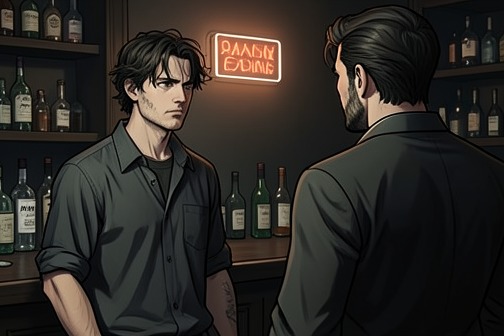
The conflict between [Jungkook Jeon](entity:character-recall-character-jungkook-jeon-fc9d9ff5a3bc) and [Ye-jun](entity:character-recall-character-ye-jun-e26530f9fe6e) Jeon in a [Los Angeles](entity:location-recall-location-los-angeles-11eff639bdf5) bar is a decisive eruption of their shared family trauma. A chance sighting becomes a confrontation over their father’s abuse of their mother and [Jungkook](entity:character-recall-character-jungkook-40c36baa104a), Ye-jun’s failure to intervene when they were children, and Jungkook’s continuing struggle with anger, alcohol, and violent impulses. The encounter exposes both the truth of their childhood and the limits of Jungkook’s attempt to live by a nonviolence rule.
## Causes and Background
The confrontation begins after Jungkook finishes work at [N's Ink](entity:location-recall-location-n-s-ink-ae25b52f9fc1) and rides his motorcycle through Los Angeles with the intention of returning to [Shelby Anderson Barnum](entity:character-recall-character-shelby-anderson-bar-2e17bb137697). At a traffic light, he notices someone he never expected to see again: Ye-jun Jeon, his older brother. Ye-jun turns away, a gesture Jungkook interprets as cowardice, and Jungkook parks at the nearby bar rather than allowing the encounter to pass. The reunion is therefore accidental, but the conflict has been prepared by a much older wound.
Jungkook’s childhood history explains why Ye-jun’s presence carries such force. Years earlier, in a house in Gangnam, [Seoul](entity:location-recall-location-9736e5d4feee), Ye-jun held eight-year-old Jungkook back when the younger boy tried to stop the fighting in the kitchen. Jungkook was furious that his parents were arguing and wanted the violence to end, while Ye-jun attempted to keep him from entering danger. The brothers were children trapped inside a household where protection was impossible, and the memory leaves Jungkook with a lasting sense that Ye-jun watched without acting.
That history is also connected to Jungkook’s later relationship with [Sunmi Eun](entity:character-recall-character-sunmi-eun-c82ef680ac18). [Sunmi](entity:character-recall-character-sunmi-46eb799eb5da) first believed that the injuries on the previously quiet child’s face came from a school fight, but she eventually learned the truth when Jungkook fled his home at sixteen and sought refuge with her. His father did not look for him, and Sunmi welcomed him into her home. The conflict in the bar thus returns Jungkook to the family structure from which he escaped, while also placing him before the brother who remained inside it.
## What Happens in the Bar
Jungkook initially confronts Ye-jun with mocking hostility. He demands that Ye-jun stop pretending not to recognize him and asks what he is doing in Los Angeles. Ye-jun says that he is there for work. Jungkook then asks whether Ye-jun works for their father, and Ye-jun confirms that he does. That answer transforms a tense reunion into a direct accusation: Jungkook sees his brother’s employment as continued submission to the man who abused their family.
Jungkook drinks a beer while the exchange grows sharper. The narration emphasizes that the drink is unlikely to remain only one drink, linking the scene to his recurring pattern of intoxication and self-destruction. Ye-jun asks him to stop, but Jungkook refuses. He calls Ye-jun a coward and accuses him of flattering their father while their father beat their mother and Jungkook in front of him. The accusation is not about a single recent betrayal; it is Jungkook’s attempt to make Ye-jun acknowledge the entire household history.
Ye-jun answers that they were children and asks what he was supposed to do. Jungkook rejects that defense. He wanted Ye-jun to tell their father to stop, especially because Ye-jun had been their father’s favorite while remaining present as the violence occurred. The brothers therefore remember the same abuse from different positions: Jungkook remembers being directly harmed and abandoned to that harm, whereas Ye-jun invokes their shared powerlessness.
The argument becomes physically dangerous when Jungkook stands only a few centimeters from Ye-jun’s face. The bar falls silent, and the surrounding customers neither intervene nor prevent the brothers from escalating. Jungkook clenches his fists and struggles against the impulse to strike. His internal struggle explicitly invokes the promise of no more violence and the possibility that Shelby might learn what happened, but the pressure of rage overwhelms that restraint. He calls Ye-jun an obscene insult in a controlled voice, then punches him in the jaw before Ye-jun can finish speaking.
Ye-jun falls backward, shocking the bar’s customers. He massages his jaw, rises, and approaches Jungkook as though attempting to calm him rather than continue the fight. Jungkook retreats before committing an act he may regret, pays for the beer, and leaves. The scene therefore ends with an assault rather than reconciliation, but also with a partial interruption of the cycle: Jungkook strikes first, then chooses to withdraw instead of prolonging the violence.
## Consequences and Aftermath
The immediate consequence is a renewed rupture between the brothers. Jungkook does not remain to hear an explanation, and Ye-jun’s admission that he works for their father receives no further discussion. The encounter confirms Jungkook’s belief that Ye-jun remains tied to the source of their family’s suffering, while Ye-jun’s appeal to their childhood vulnerability fails to reach him in the moment.
Jungkook’s departure does not lead directly to calm. He rides to a grocery store, buys two bottles of Jack Daniel's, and leaves with them. The purchase follows the beer and makes the scene’s emotional trajectory unmistakable: the confrontation has reopened the old wound, and Jungkook turns toward alcohol as a familiar method of managing unbearable anger. His attempt to avoid a second act of violence is therefore accompanied by a return to substance use.
The encounter also places Jungkook’s developing relationship with Shelby under pressure even though Shelby is absent from the bar. His thought of whether she would know if he hit Ye-jun shows that her expectations have become part of his self-monitoring. Yet the scene demonstrates that love and accountability have not erased the learned pattern of violence. Jungkook can recognize the danger, hesitate, and leave, but he cannot yet prevent the first blow.
## Narrative and Thematic Significance
As a dramatic event, the bar conflict converts concealed family history into spoken accusation. Earlier memories establish Ye-jun physically restraining Jungkook during the parents’ fighting, while Sunmi’s recollection of Jungkook’s injuries and flight from home supplies the wider context of abuse. The later reunion brings those separate fragments together in a public space where the brothers must confront what each believes the other failed to do.
The scene also presents violence as both inherited behavior and contested moral choice. Jungkook condemns Ye-jun for failing to stop their father, yet he reproduces the family’s logic by using physical force when words no longer contain his rage. The contrast is painful rather than merely ironic: Jungkook is both the child who wanted the violence stopped and the adult who strikes when the old helplessness returns.
The bar’s silence intensifies that repetition. Customers watch but do not intervene, reproducing the passivity that Jungkook attributes to Ye-jun. Ye-jun, however, frames the past through the limits of childhood, suggesting that nonintervention may have arisen from fear and powerlessness rather than indifference. The narrative leaves the brothers’ memories in collision rather than granting an immediate resolution.
The event’s decisive value shift is from unexpected recognition to exposed betrayal, then from verbal confrontation to physical assault and uneasy withdrawal. Jungkook’s retreat prevents the scene from becoming a prolonged brawl, but the bottles of Jack Daniel's show that the underlying conflict remains unresolved. The meeting with Ye-jun therefore deepens Jungkook’s characterization: his violence is not detached aggression but a recurring response to family trauma, and his recovery requires more than the intention to stop before the damage becomes worse.
## Lasting Role in the Story
The conflict becomes a concentrated expression of the Jeon family’s intergenerational violence. It recalls the childhood abuse inflicted by [Dong-hyun](entity:character-recall-character-dong-hyun-f4e8bf200fa5) Jeon, reveals the unresolved resentment between the brothers, and connects Jungkook’s present habits to the household in which he learned that anger could become action. At the same time, it marks a boundary in his behavioral arc. He does not remain to continue attacking Ye-jun, and he leaves the bar under his own control, but he immediately approaches alcohol. The event thus records progress and relapse in the same movement: a refusal to escalate beyond one blow, followed by a return to the substance use that has repeatedly accompanied his inner demons.
Event 56
Jungkook的摩托车事故

[Jungkook's motorcycle accident](entity:event-recall-event-jungkook-366baa8bb90d) marks the point at which anger ceases to be merely an internal pressure and becomes an immediate physical threat. After striking [Ye-jun](entity:character-recall-character-ye-jun-e26530f9fe6e) at a bar, [Jungkook](entity:character-recall-character-jungkook-40c36baa104a) withdraws before the confrontation can become even more serious, buys two bottles of Jack Daniel's, and later rides his motorcycle through [Los Angeles](entity:location-recall-location-los-angeles-11eff639bdf5) while consumed by rage. He accelerates recklessly, disregarding the empty road and everything around him, until his attempt to outrun his emotions ends in a crash, hospitalization, and a disturbing reappearance of the hardened Jungkook Shelby thought he had left behind.
## Causes and Immediate Circumstances
The accident follows a chain of escalating impulses rather than an isolated mechanical mishap. Jungkook has just hit Ye-jun in the jaw, then deliberately retreats to prevent himself from committing an act he might regret. Instead of seeking support or allowing the anger to subside, he buys two bottles of Jack Daniel's. At home, the absence of [Ares Garden](entity:location-recall-location-ares-garden-5a1d38541469) and [Knock Out](entity:location-recall-location-knock-out-459a67e1995b) leaves him without the familiar places where he has learned to discharge rage through violence. He knows he needs an outlet, but his inability to identify a safer one intensifies the danger.
His departure is therefore driven by emotional blindness as much as by speed. Wearing his jacket and helmet, Jungkook starts his motorcycle abruptly and enters a road that is still empty, riding as though the world around him no longer deserves attention. The narrative presents the machine as an extension of his state: the motorcycle is capable of movement and escape, but under the command of unchecked anger it becomes an instrument of risk. The accident results from that loss of judgment, not from alcohol or illicit substances in his bloodstream.
## The Crash and Medical Consequences
Shelby learns about the accident while working at [Nimbus Coffee](entity:location-recall-location-nimbus-coffee-7e02736f2d6b). A call from [Los Angeles Community Hospital](entity:location-recall-location-687ca9454b87) identifies her as Jungkook's girlfriend and informs her that he has been involved in a road accident. The news abruptly converts her anger into fear. She leaves the coffee shop, gathers her belongings, and drives to the hospital while crying and attempting, unsuccessfully, to calm herself.
The doctor explains that Jungkook had been driving far too fast. His blood test contains neither alcohol nor illicit substances, a detail that briefly reassures Shelby, but the injuries are substantial. His shoulder and left leg are damaged, leaving him likely to have difficulty walking for several weeks. He also has a mild concussion and must wear both a cervical collar and an immobilizing sling. His helmet and leather jacket have prevented even worse consequences, although the protective equipment cannot erase the physical cost of the crash.
Jungkook is awake in room 115 when Shelby arrives, but he is largely unable to move. His hands and left thigh are covered in bandages, his left arm is held in the sling, and his neck is enclosed by the brace. The accident thus makes his body visibly dependent and restricted, reversing the image of the physically dominant man who has often relied on fighting to manage conflict. Injury does not make him emotionally accessible, however; his damaged body remains guarded by the same refusal to communicate that has characterized his darker periods.
## Shelby's Witnessing of the Aftermath
The hospital scene is also a crisis in the relationship between Jungkook and Shelby. Shelby expects to find the man she loves, yet his blank expression makes her feel that she is facing an earlier version of him: insolent, arrogant, indifferent to other people, consumed by rage and hatred, and devoted to reckless excess. The accident therefore exposes a frightening regression. It is not only evidence of bodily harm but also a visible sign that the emotional transformation Shelby has witnessed may be unstable.
Shelby sits beside the bed without touching him because she expects him to resist contact. Her tears, uncertainty, and restrained posture contrast with the urgent physical care she receives from other people during earlier panic episodes. [Cassiopée](entity:character-recall-character-cassiop-e-2eb1ec801364) remains calm when Shelby recoils from unwanted hands; Jungkook waits beside Shelby in the Ares Garden changing room while she cries; and Jungkook later responds when [Madison](entity:character-recall-character-madison-53d0d83590ae) reports Shelby's panic attack, holding her only after he reaches her. In the hospital, that pattern of care is strained by the injured man's hostility. Shelby asks what has happened and why he is so cold, but Jungkook answers harshly that the matter does not concern her.
This refusal makes the accident emotionally consequential beyond the medical diagnosis. Shelby has come to the hospital as his partner, yet Jungkook's response denies the intimacy that brought her there. The crisis places her in the position of witness without granting her the power to help, while Jungkook's immobilized body undercuts his apparent control without dissolving his defensive pride.
## Trauma, Recurrence, and Significance
The accident repeats a broader pattern in Jungkook's history: distress is converted into movement, aggression, or substance-related risk rather than spoken vulnerability. His childhood in [Seoul](entity:location-recall-location-9736e5d4feee) was marked by violence between his parents and by his father's abuse. As a teenager, he once concealed a beating by claiming that he had fought at school, then fled home at sixteen and sought refuge with [Sunmi](entity:character-recall-character-sunmi-46eb799eb5da). Sunmi welcomed him and remained concerned as his destructive behavior deepened; [Namjoon](entity:character-recall-character-namjoon-4109d4fa2b00) likewise recognizes that Jungkook has returned to dangerous habits and refuses help despite needing it.
Against that background, the motorcycle is not simply transportation. It gives Jungkook speed, distance, and a temporary way to avoid other people, but the same freedom becomes perilous when anger governs his decisions. The crash makes the consequences of that strategy unavoidable: the body that once absorbed underground fights is now confined to a hospital bed, and the man who tries to escape confrontation is forced into dependence on medical treatment and Shelby's presence.
The event also produces a sharp value shift. Jungkook leaves the bar with the immediate possibility of preventing further violence, but substitutes reckless flight for restraint; he reaches the hospital alive, yet with his mobility, physical autonomy, and emotional defenses all visibly compromised. Shelby's arrival preserves the possibility of care, while his coldness threatens the relationship that could support recovery. The accident's decisive significance lies in this contradiction: it is both a consequence of Jungkook's return to destructive patterns and a moment that makes those patterns impossible to ignore. It turns private rage into a public medical emergency and forces the story to confront whether survival can lead to recovery when the injured person still rejects emotional accountability.
Event 57
Shelby参观加州大学洛杉矶分校

Shelby’s visit to the [University of California, Los Angeles](entity:organization-recall-organization-university-of-ca-03aa6deb6c01) is a small but decisive passage from anticipation into possibility. She arrives carrying the emotional weight of a strained morning with [Jungkook](entity:character-recall-character-jungkook-40c36baa104a), yet the campus immediately gives form to a long-held high-school dream: the future she has imagined becomes a place she can enter, photograph, and begin to claim.
## Causes and Emotional Background
The visit follows a tense breakfast at home. Jungkook remains irritable and physically limited by an immobilizing sling, while Shelby still does not know the reason for his behavior or his accident. Their silence is not neutral: she leaves without giving him a look or a word, then drives alone in the [Ford Mustang](entity:object-recall-object-ford-mustang-de2ea7bd994c). The university therefore becomes both an appointment and an escape from an unresolved domestic atmosphere.
Shelby’s decision to go directly to the University of California, Los Angeles also reveals a conflict between emotional disappointment and personal momentum. She does not abandon the day because Jungkook is distant; instead, she carries the hurt with her and continues toward an institution associated with her future. The visit begins under relational strain but gradually shifts the value at stake from immediate intimacy to independence, aspiration, and the possibility of a life larger than the silence waiting at home.
## Arrival and Campus Tour
Shelby parks in the visitor lot and steps out of the Ford Mustang. The university facade produces an immediate change in her mood: her eyes brighten, and she takes several photographs to send to her father. At the reception desk, she receives a badge and informational documents before joining a group of prospective students. These concrete objects mark her transition from outsider looking at the campus to participant temporarily admitted into its institutional space.
Sara introduces herself as the guide and announces that she will lead the group through the university and its campus. Shelby follows while observing the surroundings with intense happiness. Her enthusiasm is so strong that expressing it openly feels difficult, but the photographs provide an outlet for it. She sends additional images to [Cassiopée](entity:character-recall-character-cassiop-e-2eb1ec801364), [Dorcas](entity:character-recall-character-dorcas-551d5ed1ad82), and [Namjoon](entity:character-recall-character-namjoon-4109d4fa2b00), extending the experience beyond the campus and turning the private dream into something shared with her closest friends.
The tour continues through the corridors and into the amphitheaters. Shelby’s excitement returns as she discovers each new part of the university, and the narration emphasizes that the dream belongs to her high-school self as well as to the person she is becoming. The campus is not merely a backdrop: its halls, reception area, badge, documents, and lecture spaces materially confirm that the imagined future is now reachable.
## Messages and Social Connection
Namjoon responds to the photographs with pleasure that Shelby likes her new university, while also asking whether Jungkook is with her. His question places the visit inside the larger network of relationships surrounding Shelby. Even during a day devoted to her own future, Jungkook remains an absent presence, and Namjoon’s message makes that absence explicit.
Shelby answers that Jungkook is not there and explains that she wanted to see the campus before returning to classes. Namjoon reassures her, and she puts her phone away to concentrate on the tour. This exchange gives the visit a collaborative dimension without diminishing Shelby’s independence: friends and family witness her excitement, but she is the person physically walking through the university and deciding how to inhabit the moment.
## After the Tour
The tour ends after noon. Rather than return immediately to a home dominated by Jungkook’s distance, Shelby goes to [Blu Jam Cafe](entity:location-recall-location-blu-jam-cafe-61cb2f1e3bfe) for lunch. The choice extends the emotional movement of the visit: the campus has revived her enthusiasm, but the unresolved relationship still makes home unattractive. At the cafe, she notices a young man who looks remarkably like Jungkook and begins to wonder whether he could be the older brother Jungkook once mentioned.
This final turn connects Shelby’s hopeful encounter with the university to the mystery surrounding Jungkook’s recent coldness. The visit does not resolve the tension between them, nor does it erase her sadness. Instead, it gives her a moment of unambiguous joy before redirecting her attention toward a possible explanation for Jungkook’s behavior. The day thus ends with two futures in view: Shelby’s concrete educational future at the University of California, Los Angeles and the still-unsettled personal history that waits beyond the campus.
Event 58
Shelby与Ye-jun在咖啡馆的谈话
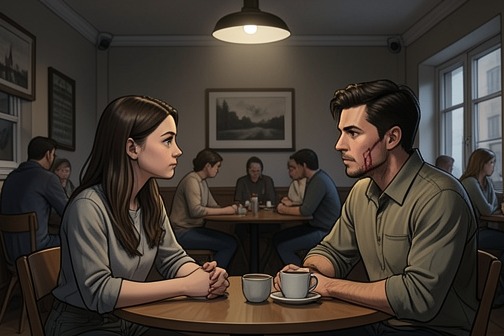
[Shelby Anderson Barnum](entity:character-recall-character-shelby-anderson-bar-2e17bb137697)’s conversation with [Ye-jun](entity:character-recall-character-ye-jun-e26530f9fe6e) at [Blu Jam Cafe](entity:location-recall-location-blu-jam-cafe-61cb2f1e3bfe) is a chance encounter that becomes a crucial act of disclosure. After recognizing a man who resembles her boyfriend, Shelby learns that he is Ye-jun, [Jungkook Jeon](entity:character-recall-character-jungkook-jeon-fc9d9ff5a3bc)’s elder brother, and draws out the family history behind [Jungkook](entity:character-recall-character-jungkook-40c36baa104a)’s anger. The meeting also shows Shelby converting her own experience of psychological control and recovery into encouragement for someone still trapped under [Dong-hyun](entity:character-recall-character-dong-hyun-f4e8bf200fa5)’s authority.
## Setting and Immediate Circumstances
The conversation occurs after Shelby visits the [University of California, Los Angeles](entity:organization-recall-organization-university-of-ca-03aa6deb6c01). The tour ends shortly after noon, but she does not want to return immediately to the house she shares with Jungkook, whose distance has made him difficult to endure. She therefore goes to Blu Jam Cafe, orders lunch, and studies the people around her while waiting for her meal.
A man seated a few meters away catches her attention because of his resemblance to Jungkook. The resemblance becomes more than a visual coincidence when Shelby remembers that Jungkook has spoken about an elder brother. Rather than dismissing the possibility or waiting for Jungkook to explain himself, she decides that the unanswered questions require direct action and approaches the stranger during his lunch.
## Recognition and Identification
Shelby begins cautiously, apologizing for interrupting the man and asking whether he is Jungkook’s brother. The question immediately unsettles him. Ye-jun stiffens, swallows with difficulty, and lowers his eyes before confirming that he is Jungkook’s elder brother. He then asks Shelby to identify herself, and she answers that she is Jungkook’s girlfriend.
The exchange establishes a sudden bridge between two parts of Jungkook’s life that have remained separate. Shelby is not merely gathering biographical information; she is trying to understand why Jungkook has become so angry and refuses to discuss the conflict himself. Ye-jun, meanwhile, is confronted by a stranger who knows his brother intimately enough to recognize the emotional consequences of their family history.
## Ye-jun’s Account of the Family Conflict
Shelby asks what happened between Ye-jun and Jungkook to make Jungkook so hostile. Ye-jun explains that Jungkook saw him in a bar and approached him. In Jungkook’s eyes, Ye-jun saw unmistakable hatred. Jungkook had realized that Ye-jun worked for their father, and that discovery disgusted him.
Ye-jun places the conflict in childhood rather than treating the bar encounter as an isolated quarrel. He says that Jungkook has resented him since they were boys because, from Jungkook’s perspective, Ye-jun failed to act as he should have. The accusation carries a painful ambiguity: Ye-jun was not presented as an equal opponent to Dong-hyun, but as someone frightened by the same father and judged by the younger brother who resisted him more openly.
Ye-jun also reveals the emotional cost of witnessing Dong-hyun’s violence. He remembers being afraid when Jungkook confronted their father without flinching, even while admiring a courage he did not believe he possessed himself. At the same time, he was devastated whenever he saw Dong-hyun exercise sadistic power over his own child. The account therefore complicates the apparent division between victim and bystander. Ye-jun’s fear helped sustain his position within the father’s system, but his fear did not mean that he was indifferent to Jungkook’s suffering.
## Coercion, Recognition, and Shelby’s Intervention
Ye-jun’s explanation ends with his admission that he remains under their father’s control. Shelby understands the condition immediately and completes the thought by naming it as psychological domination. Her response does not excuse Ye-jun, but it recognizes the difficulty of leaving a controlling person, especially when fear has shaped the relationship since childhood.
The scene’s value shift moves from suspicion to shared recognition. Shelby enters the cafe seeking an explanation for Jungkook’s rage; she leaves the exchange with a clearer view of the coercive structure behind it and with Ye-jun briefly acknowledged as someone constrained by that structure. The conversation does not repair the brothers’ relationship, and it does not offer Shelby a complete account of the past. Its importance lies instead in making the hidden power relationship speakable.
Shelby then offers Ye-jun a form of encouragement grounded in resistance. She accepts that Dong-hyun is an abominable man but rejects the idea that he is unbeatable. Her assertion that monsters can be locked away, whatever their nature, links the family conflict to the broader possibility of accountability. It is not a promise that freedom will be easy; it is a refusal to treat domination as permanent.
## Relation to the Wider Story
The conversation gains force from the contrasting ways the novel represents care and control. Elsewhere, Shelby’s panic is met by [Cassiopée](entity:character-recall-character-cassiop-e-2eb1ec801364)’s calm approach, Jungkook’s quiet presence in the [Ares Garden](entity:location-recall-location-ares-garden-5a1d38541469) changing room, and Jungkook’s deliberate embrace when [Madison](entity:character-recall-character-madison-53d0d83590ae) reports another attack of panic. [Sunmi](entity:character-recall-character-sunmi-46eb799eb5da) offers Shelby regulated breathing and gentle contact in therapy, while [Dorcas](entity:character-recall-character-dorcas-551d5ed1ad82) and [Namjoon](entity:character-recall-character-namjoon-4109d4fa2b00) respond to the physical evidence of Shelby’s self-harm. These scenes define support through patience, safety, and attention to the distressed person’s boundaries.
Against those forms of care stands the family system Ye-jun describes. Dong-hyun’s influence produces fear, silence, divided loyalties, and lasting resentment. Jungkook’s anger toward Ye-jun is therefore not only personal hostility; it is also a response to the elder brother’s continued connection with the father who abused him. The conversation makes visible how violence spreads through a network: the abuser controls, the fearful witness remains attached, and the injured child turns that betrayal into hatred.
Shelby’s position is especially significant because she recognizes both sides of the contradiction. She has endured trauma, panic, self-harm, and the difficulty of trusting physical contact, yet she does not reduce Ye-jun to either a coward or an accomplice. Her intervention reflects a developing ability to hold incompatible truths together: Ye-jun has failed Jungkook, Ye-jun fears Dong-hyun, and Ye-jun may still be capable of breaking free.
## Consequences and Significance
The meeting gives Shelby information Jungkook had refused to provide, clarifying why his encounter with Ye-jun provoked such concentrated hatred. It also places Ye-jun within the story as more than a resemblance or family name: he becomes a witness to Dong-hyun’s violence, a participant in the father’s structure, and a person still subjected to psychological control.
For Shelby, the conversation marks a movement from waiting for explanations to seeking them directly. Her choice to approach Ye-jun reflects the same emerging agency seen when she faces trauma, accepts support, and later stands beside Jungkook in the courtroom. For Ye-jun, her words offer neither rescue nor absolution, but a new framing of his situation: fear explains submission without making submission irreversible.
The scene ends before the family conflict is resolved. Its lasting consequence is interpretive rather than final. Shelby now understands that Jungkook’s anger is rooted in a childhood shaped by Dong-hyun’s violence and Ye-jun’s fearful complicity, while Ye-jun has been told by someone outside the family that the father’s power has limits. The cafe conversation thus turns a private family secret into a shared moral problem and prepares the possibility that the monsters governing the Jeon family may eventually be confronted rather than merely endured.
Event 59
Jungkook与Ye-jun的和解谈话

[Jungkook](entity:character-recall-character-jungkook-40c36baa104a) and [Ye-jun](entity:character-recall-character-ye-jun-e26530f9fe6e)’s reconciliation conversation marks a decisive shift from hostility and avoidance toward accountable family dialogue. It does not erase the violence and fear that shaped the Jeon brothers, but it gives both men a language for naming what happened, accepting responsibility for their own responses, and imagining solidarity against the continuing pressure of their father.
## Causes and Background
The conversation grows out of a long estrangement between Jungkook and Ye-jun. Their relationship has been damaged not only by Jungkook’s anger toward his older brother, but also by the oppressive family structure created by their father. Ye-jun later explains that their father never struck him, yet subjected him to persistent psychological pressure that still affects him. This distinction does not make Ye-jun’s experience harmless: the brothers have been injured by different forms of the same household power, while Jungkook’s more visibly violent history has made him interpret their family conflict through rage and accusation.
Jungkook’s decision to initiate contact follows his effort to control that anger rather than allow it to dictate his relationships. At [Santa Monica State Beach](entity:location-recall-location-santa-monica-state-b-c1f175735500), he sees Ye-jun only a few days after having struck him. The sight immediately produces tension: Jungkook remains outwardly calm but clenches his fists, while Ye-jun loses his smile. Instead of escalating the encounter, Jungkook proposes that Ye-jun come to the shared home at seven o’clock that evening. Shelby notices his nervousness and supports the decision, recognizing that he is making the first move toward a relationship he has previously left broken.
The invitation has two stated purposes. Jungkook wants to apologize to Ye-jun, and he also wants to repair the damage that his anger has caused in his own life. His approach therefore differs from a simple demand for forgiveness. He identifies the need to change his conduct, admits that he acted foolishly, and treats reconciliation as a process requiring self-examination rather than a single emotional gesture.
## The Meeting in [Los Angeles](entity:location-recall-location-los-angeles-11eff639bdf5)
At precisely seven o’clock, Ye-jun arrives alone at [Jungkook and Shelby’s Los Angeles loft](entity:object-recall-object-jungkook-shelby-6148626cf39a). Jungkook opens the door nervously and lets him in. The setting matters because it is the first space the brothers occupy together without their father physically directing the encounter. Ye-jun admires the loft, and Jungkook explains that he and Shelby have lived there since May after acquiring it from a woman who had previously rented them a house for the summer. The home is presented as something Jungkook chose partly to please Shelby, but it also becomes the neutral ground on which he can approach his brother as an adult.
Shelby joins them after descending from the mezzanine, and she helps make the first part of the evening ordinary. Ye-jun asks her to address him informally, and the two talk about unimportant matters while Jungkook serves drinks and food. This domestic ritual provides a temporary structure for a conversation neither brother knows how to begin. Yet Jungkook remains silent during the meal, worried that a wrong word might intensify the tension. Shelby eventually withdraws upstairs, leaving the brothers alone with the conflict they have both been postponing.
Ye-jun then asks Jungkook why he invited him. Jungkook answers that he came to apologize and acknowledges that he behaved like a fool. Ye-jun presses him to clarify whether the apology is meant for him or for Shelby. Jungkook answers that it is for both of them: he wants to mend the relationship between the brothers and repair the destructive patterns within his own life. When Ye-jun identifies anger management as the central issue, Jungkook accepts the description and credits Shelby with helping him substantially.
## Responsibility, Shelby, and the Family Wound
The conversation makes Shelby an important bridge between the brothers, but not a substitute for their responsibility. Ye-jun already knows about Jungkook and Shelby’s relationship because Shelby has spoken to him about it. He calls her precious and says that the two have found each other well. His approval gives Jungkook a form of recognition that does not depend on their father’s judgment, while Shelby’s presence in the story represents a relationship in which Jungkook is learning to become gentler and more honest.
Jungkook’s earlier apology to Shelby follows the same developing pattern. He once returned to apologize after harming her trust, and, when [Connor](entity:character-recall-character-connor-49e9ac9fb7e5) challenged his intentions, he openly stated that Shelby had told him what happened to her in Los Angeles. He insisted that he would never commit such a horror against her, acknowledged that he had not been friendly at first, and said that she was teaching him to become a better version of himself. He also promised to help her overcome her fears. These earlier acts of admission clarify why the conversation with Ye-jun is credible: Jungkook’s reconciliation is part of a broader movement away from denial and toward naming harm.
That movement is especially significant because both Jungkook and Shelby carry trauma that repeatedly appears through panic, avoidance, and the need for carefully controlled contact. Shelby has received psychological care, has described the consequences of her trauma as self-harm, disordered eating, and cannabis use, and has suffered attacks in which unwanted touch becomes terrifying. Jungkook has sometimes responded to distress by remaining quietly beside her, offering physical comfort only when she seeks it, and telling her that he believes her. His developing understanding of safety and consent informs the way he approaches Ye-jun: he does not force reconciliation, but creates an invitation and waits for his brother to answer.
## Ye-jun’s Disclosure and the New Alliance
Ye-jun’s most important contribution is his disclosure that he too remains psychologically controlled by their father. He admits that he would like to leave his position and tell their father to go to hell, but cannot bring himself to do so. His inability to act is not treated as simple cowardice. Jungkook realizes that Ye-jun was frightened of their father in a different way: he was not beaten, but he endured constant psychological pressure. This recognition changes Jungkook’s understanding of the past. He begins to see that his older brother may also have wanted the two of them to stand together against their circumstances, while Jungkook’s anger prevented him from seeing what Ye-jun was suffering.
Ye-jun then invokes Shelby’s advice that monsters can be locked in their cupboard. The image converts the family’s oppressive power into something that can be contained rather than obeyed forever. Jungkook smiles because he recognizes Shelby’s influence, and he praises her advice. More importantly, he offers practical solidarity: if Ye-jun wants, they can confront their father together. When Ye-jun asks whether Jungkook is prepared to travel as far as [Seattle](entity:location-recall-location-seattle-ec620f372076), Jungkook confirms that he is willing to do whatever is necessary to put their father in his place.
This proposed alliance is not a promise that the family wound has been healed. It is a concrete change in the brothers’ alignment. They move from treating one another as enemies shaped by the same authority to recognizing that they may face that authority together. The conversation therefore repairs more than personal feeling; it redistributes responsibility. Neither brother is required to confront their father entirely alone, and neither is allowed to pretend that the other escaped unharmed.
## Consequences and Narrative Significance
The immediate consequence is that Jungkook begins to replace violent reaction with deliberate communication. He has admitted wrongdoing, listened to Ye-jun’s account, accepted Shelby’s role in his growth, and offered cooperation instead of another threat. Ye-jun, in turn, receives an apology and reveals the psychological pressure that had previously remained hidden behind his silence. Their reconciliation is thus built from reciprocal disclosure rather than sentimental forgetting.
The scene also extends the book’s larger recovery pattern. Shelby’s healing involves treatment, trusted support, the management of panic, and the gradual recovery of agency; Jungkook’s involves confronting rage, substance-related harm, violent impulses, and the inherited model of masculinity that has governed him. The book presents recovery as uneven and slow: people must learn to love themselves, love others, and live despite injustice and death, while accepting that mistakes and individual pace are part of the process. Jungkook and Ye-jun’s conversation embodies that principle. It is a beginning, not a final cure.
Its final significance lies in the contrast between inherited silence and chosen speech. The brothers cannot undo their father’s pressure, Jungkook’s assault on Ye-jun, or the years in which fear divided them. They can, however, name the harm, apologize, ask what each person has endured, and make a shared plan. By the end of the novel, Jungkook and Shelby are described as having advanced, separately and together, while leaving their demons behind. The reconciliation conversation is one of the clearest scenes through which that difficult, collective movement becomes visible.
Event 60
Jungkook与Shelby的关系修复
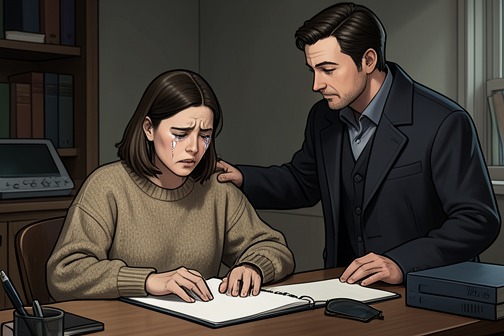
[Jungkook](entity:character-recall-character-jungkook-40c36baa104a) and [Shelby Anderson](entity:character-recall-character-shelby-anderson-63fef761ad52)’s relationship is repaired through a gradual change in how they respond to each other’s pain: from uncertainty and guardedness to trust, accountability, and a renewed promise to remain together. Their reconciliation is not a clean erasure of past harm. It takes shape through small, concrete acts of care, Shelby’s decision to entrust Jungkook with her trauma, his recognition of the damage he has caused, and a final exchange that turns an apology into a mutual commitment.
## From guardedness to trust
Shelby’s difficulty accepting touch and opening up to others follows an assault she experienced in [Los Angeles](entity:location-recall-location-los-angeles-11eff639bdf5). When she begins with a new psychologist, she is not ready to discuss the event. The psychologist accepts that boundary and assures her that what she shares will remain confidential. That patience establishes an important contrast for the relationship arc: support cannot be demanded on another person’s timetable.
Shelby’s distress also appears physically and abruptly. During an art class, panic drives her from the room; when [Cassiopée Smith](entity:character-recall-character-cassiop-e-smith-7af6a7136600) catches up and touches her shoulders, Shelby cries out in pain and recoils. [Cassiopée](entity:character-recall-character-cassiop-e-2eb1ec801364) stays calm, but Shelby remains curled up and unwilling to be touched. Later, Jungkook finds Shelby crying in the showers at the boxing venue. He switches off the running water, crouches nearby, and waits without trying to force a response. These episodes do not themselves resolve the couple’s relationship, but they establish the importance of respecting Shelby’s physical boundaries rather than treating closeness as automatically comforting.
The trust between them becomes more explicit when Shelby tells a friend about the consequences of the assault, including self-harm, an eating disorder, and cannabis use. Jungkook, too, comes to understand why Shelby is defensive and avoids physical contact. When she shares what happened with him, he offers her tissues and takes her hands gently. His response is belief, not interrogation. Shelby’s tears shift toward relief, and she thanks him. In the relationship’s repair, being believed becomes more than reassurance: it is a response to the isolation and burden she has been carrying.
## Apology, responsibility, and family trust
Jungkook’s efforts to repair the relationship are not instantly accepted. At one point Shelby finds him at her doorway and asks what he is doing there. He says he has come to apologize; she answers that he has done so and tells him to leave, then lets him ask her to listen. The scene preserves the distinction between offering an apology and being forgiven: Jungkook can make an approach, but Shelby retains the choice of whether to hear him.
Their growing trust is tested in front of [Connor Barnum](entity:character-recall-character-connor-barnum-d9322612abb3). During a confrontation, Jungkook steps between Shelby and [Connor](entity:character-recall-character-connor-49e9ac9fb7e5) and explains that Shelby has told him what happened in Los Angeles. He says he would never inflict the same horror on her, acknowledges that he was not friendly to her at first, and admits that he does not understand love well. He nevertheless cares for Shelby, wants to help her face her fears, and sees her as helping him become a better person. Connor is struck by the fact that Shelby has confided in Jungkook, and recognizes that her trust matters. His anger subsides; he embraces his daughter, and she returns the embrace. Jungkook’s account does not replace Shelby’s own voice, but Connor’s response allows her closeness with Jungkook to be recognized rather than treated simply as a threat.
The story also places their private repair beside a public judgment of harm. At [Robert Jefferson](entity:character-recall-character-robert-jefferson-e99ac62ade18)’s trial, the judge announces convictions for three sexual assaults, two attempted rapes, two rapes of minors, and four rapes of adults, sentencing him to twenty-five years in prison and a $90,000 fine. At the victims’ request, each is to receive one symbolic dollar. Shelby closes her eyes in relief and embraces Jungkook as their friends join them; Connor and [Lydia Barnum](entity:character-recall-character-lydia-barnum-141a6a700bae) later embrace her too. The verdict is not a substitute for the couple’s work or for Shelby’s recovery, but it gives their shared future a consequential context: she has been believed in court as well as by the person beside her.
## The reconciliation
The culminating reconciliation unfolds around Shelby’s skateboard. Jungkook recalls earlier falls that led him to carry her home, as well as the time in [Ellensburg](entity:location-recall-location-ellensburg-f2b1300b3b7f) when she wanted to teach him to skate. She asks whether he wants to try, but he shakes his head. Shelby rides back and forth several times, then returns to him when his subdued expression weighs on her. She tucks the board under her arm, takes his hand, and kisses him.
The kiss makes visible what Jungkook cannot initially put into a composed explanation: Shelby senses his distress, his remorse, and his wish to make amends. When his tears mingle with hers, she breaks away and wipes his face. Jungkook apologizes for the way he has treated her and says that she is all he has left. Shelby asks him to calm down and assures him that she is there and will not leave. He admits that his actions nearly drove her away; she answers that she is still there to support him. His apology therefore does not end with his guilt. It is met by Shelby’s choice to stay, while her response makes clear that the relationship’s continuation depends on care and support rather than on remorse alone.
Jungkook then tells Shelby that he loves her, and she returns the words. The doubled declaration gives the moment its resolution: love is no longer only something Jungkook struggles to understand, but something both characters can say directly after facing what has damaged their bond. The ending does not claim that either character’s past has vanished. It presents them as having moved forward, separately and together, with their inner demons no longer determining every step.
## Significance
The repair arc is built from changes in conduct as much as from declarations. Jungkook waits beside Shelby when she is overwhelmed, accepts her account without disbelief, and speaks openly about his own responsibility. Shelby, in turn, sets limits, decides when to confide, and ultimately chooses renewed closeness. The contrast between unwanted touch during a panic episode and the hand-taking and kiss she initiates gives physical contact a changed meaning: intimacy is possible when it is responsive to her needs and chosen by her.
The skateboard carries a different kind of evidence: the relationship has a history of shared mishaps and attempts to teach one another, even while the present moment is heavy with regret. By returning to that ordinary object and those remembered experiences, the reconciliation joins affection to the daily, imperfect work of staying connected. The novel frames their progress as mutual rather than miraculous. They have moved forward, but the ending’s emphasis is on learning to live and love at their own pace, not on a promise that healing is instantaneous.
Event 61
Jungkook在Riviera 31演唱《Falling》
[Jungkook](entity:character-recall-character-jungkook-40c36baa104a)’s performance of “[Falling](entity:expression-recall-expression-falling-2bdc693d861d)” at [Riviera 31](entity:location-recall-location-riviera-31-2dbdc45aeba1) is a decisive romantic scene in which private vulnerability becomes public affirmation. What begins as an evening drink with [Shelby Anderson Barnum](entity:character-recall-character-shelby-anderson-bar-2e17bb137697), [Noah](entity:character-recall-character-noah-a98b7615ea8f), and Alicia develops into a carefully chosen musical gesture: Jungkook leaves the table, takes the microphone, and sings directly to Shelby, allowing the song’s language of absence, regret, and falling back into emotional danger to articulate what he struggles to say plainly. The performance ends with tears, an embrace, a kiss, and the reciprocal declarations, “I love you” and “I love you more than reason,” giving the event the force of a reconciliation and commitment scene rather than a mere entertainment interlude.
## Setting and Occasion
The event takes place at Riviera 31, where Jungkook and Shelby meet Noah and Alicia at an outdoor table. Alicia is newly present in Noah’s life, although she and Noah have known one another for a long time, and Shelby uses the evening to become acquainted with her. The group orders drinks and settles into the relaxed social atmosphere of the lounge, initially sharing the ordinary pleasures of conversation, music, and companionship.
The evening’s emotional temperature changes when a singer begins Alicia Keys’s “If I Ain’t Got You.” Shelby becomes absorbed in the performance, while Jungkook watches her and rests his hand on her thigh. The gesture is intimate but quiet: he does not interrupt her attention or claim the room immediately. After roughly an hour and several additional songs, the atmosphere grows warmer, guests become more open, and some begin dancing. Jungkook then removes his hand from Shelby’s thigh and moves through the crowd toward the stage, creating the small absence that first alerts her to his intention.
## The Performance of “Falling”
Jungkook speaks with the pianist, receives an affirmative response, and takes his place before the microphone. The festive music gives way to the gentle melody of Harry Styles’s “Falling.” Shelby turns fully toward him, fixing her gaze on him as he smiles and briefly closes his eyes. The scene therefore proceeds through a controlled reversal: the man who had been silently watching her becomes the person watched by the entire lounge, while Shelby’s private emotional world becomes the apparent destination of his public performance.
The lyrics begin with the image of an empty bed and the singer’s absence, then move through questions about identity, rejection, and emotional collapse. Jungkook sings, “I'm falling again, I'm falling again, I'm falling,” and later reaches the line, “And I get the feeling that you'll never need me again.” These words matter because Shelby understands why he selected the song. The performance does not simply display an unexpected vocal ability; it communicates fear that emotional dependence may end in abandonment and acknowledges the unstable history that has shaped their relationship.
Shelby is surprised that Jungkook knows and appreciates the song. His voice grows increasingly powerful, and she experiences the performance as both beautiful and emotionally legible. She feels the intensity carried by his voice and the lyrics, while tears rise in her eyes without initially falling. When he sings the line about no longer being needed, both lovers finally cry. Alicia, who does not know the full history of the couple, nevertheless recognizes that their relationship has been difficult and reaches across the table to touch Shelby’s arm.
## Public Gesture and Mutual Recognition
At the end of the song, the lounge erupts in applause. Shelby rises and runs to the stage, embracing Jungkook before pressing her lips to his in front of the Riviera 31 audience. The kiss reverses the direction of exposure: Jungkook has made the first public gesture, but Shelby answers it with an equally visible act of acceptance. They separate only to look directly at one another, and Jungkook caresses her back while smiling.
Shelby then wipes the tears from Jungkook’s face, and he quickly does the same for her. Their exchange makes care reciprocal rather than one-sided. After thanking the pianist, Jungkook leaves the stage with Shelby. He draws her close and rests his forehead against hers as the softer festive music returns. Shelby accepts the contact and dances with him, keeping her green eyes fixed on his. The scene’s physical intimacy is therefore framed by recognition and mutual participation rather than by spectacle alone.
## Declarations and Consequences
The performance culminates in Jungkook telling Shelby that she is the best thing that has happened to him and that he loves her. Shelby answers that she loves [Jeon Jungkook](entity:character-recall-character-jeon-jungkook-866d72571ad4) and loves him more than reason. Their exchange converts the song’s uncertainty into a direct statement of attachment. The lyrics had voiced the fear of falling, being rejected, or becoming someone the beloved would no longer discuss; the spoken ending answers that fear with explicit acknowledgment.
The event consequently functions as a grand romantic gesture after a relationship marked by trauma, panic, bodily defensiveness, and repeated difficulty communicating. Earlier scenes show Shelby unable to tolerate unexpected touch during panic episodes: [Cassiopée Smith](entity:character-recall-character-cassiop-e-smith-7af6a7136600)’s attempt to approach her after a classroom panic attack ends with Shelby recoiling from contact, while Jungkook responds to another crisis by remaining beside her until she calms. In a separate moment, when [Madison Jefferson](entity:character-recall-character-madison-jefferson-657bf438d528) finds Shelby overwhelmed and trying to protect herself from touch, [Madison](entity:character-recall-character-madison-53d0d83590ae) seeks Jungkook, who runs to Shelby and steadies her through familiar presence and physical comfort. Against that history, the Riviera 31 scene is significant because Shelby initiates the embrace and kiss, then willingly remains close while dancing with Jungkook.
The performance does not erase the couple’s past, but it places their accumulated fear inside a new pattern. A song about falling again becomes an occasion for choosing closeness again. Jungkook’s voice gives form to vulnerability, Shelby’s public response confirms that the vulnerability has been received, and their final declarations establish love as something spoken, witnessed, and reciprocated. As the book moves into its epilogue, the scene stands as a concentrated image of their relationship’s movement from guarded survival toward emotional security.